Brief-Form Post #64: Mid-June Visit to a WNWR Bottomland Forest and a Drying Buckeye Impoundment!
NOTE: Some of my GBH photo essays were not routinely distributed from mid-February through mid-June. I will resend those one by one, beginning the first week of July. Here is my Post from April 15 (https://stevejonesgbh.com/2026/04/15/brief-form-post-56-quick-circuit-of-the-dallas-fanning-nature-preserve/)
I am pleased to add the 64th of my GBH Brief-Form Posts (Less than five minutes to read!) to my website. I get wordy with my routine Posts. I don’t want my enthusiasm for thoroughness and detail to discourage readers. So, I will occasionally publish these brief Posts.
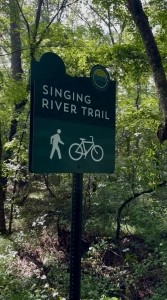
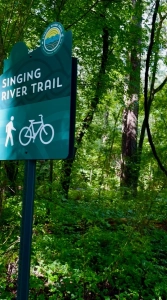
I am fortunate to live just a dozen miles due north of Alabama’s 35,000-acre Wheeler National Wildlife Refuge, where I decided to wander for several hours on June 9, 2026. I searched in a familiar bottomland hardwood forest for wild edible mushrooms: early chanterelles, oysters, boletes, chicken of the woods, and black-staining polypores. Finding only non-edibles, I made acquaintance with a road-crossing river cooter, photographed new Singing River Trail signage, and explored the sights and sounds of the Refuge’s Buckeye Impoundment, an important wildlife management feature.
Bottomland Forest
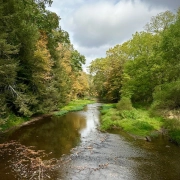
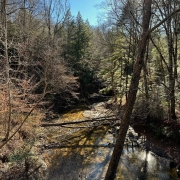
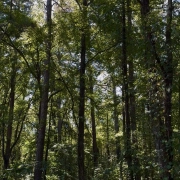
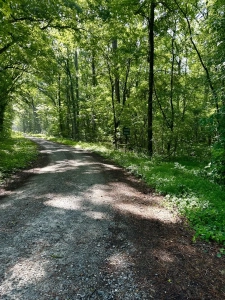
Search my website Blog link (https://stevejonesgbh.com/blog/) for Wheeler National Wildlife Refuge; choose from more than 50 prior posts on aspects of this nationally significant refugium. Were the refuge a single mile wide, it would extend 55 miles. Here is the interior road (HGH Road) that runs east-west about a mile north of the Tennessee River (Lake Wheeler), just into Limestone County, adjoining Madison County to the east. I often bushwalk (bushwhack) through this rich bottomland, which if not for the TVA/COE purchasing land to buffer the 1936 Wheeler Dam inudation property, would now probably be in private agricultural production.
Mushroom Venture
I ventured for 90 minutes in the bottomland finding abundant mushrooms of various inedible species.
Amanita were scattered in the deep and damp understory shade. This one served as a luncheon buffet for underside invertebrates.
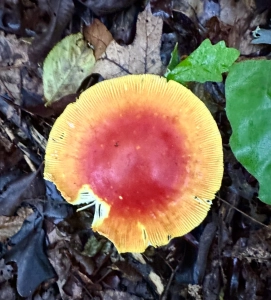
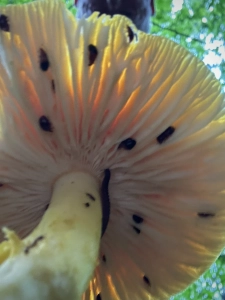
Amanita color hue and sharpness vary with age.
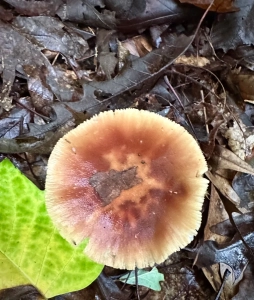
Yet another Amanita species.
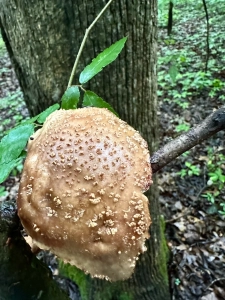
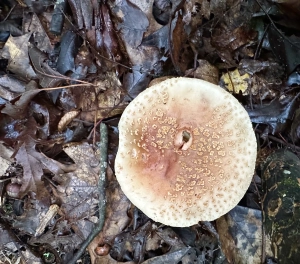
Unlike the gilled Amanitas, all Boletes have spongy pores under their caps. This is known as bitter Bolete, a common name that suggests it may not be inedible, but it assuredly is not suitable for consumption.
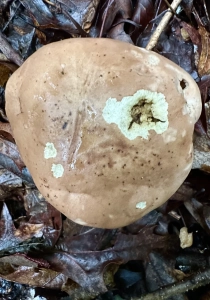
This Caloboletus firmus, considered too bitter to consume, bears perfect leaf impression artwork.
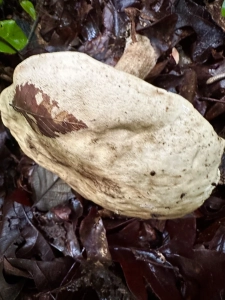
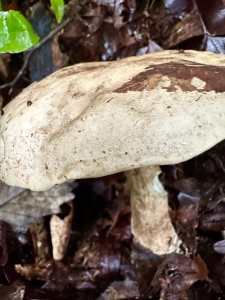
Its pink underside shows the characteristic spongy Bolete pore surface.
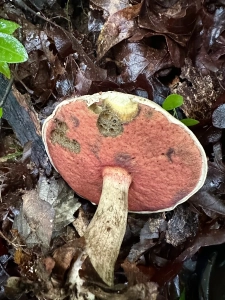
A Mushroom Consumer
I stopped for a friendly river cooter gravel road crossing chat. The shell-shocked retile refused to share edible mushroom location secrets with me!
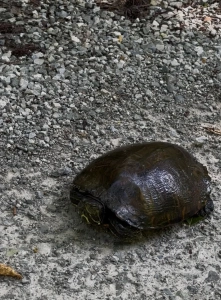
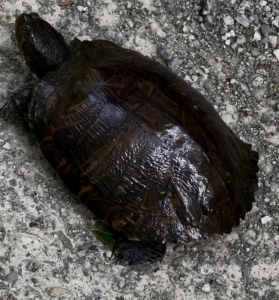
I recorded this 43-second video of my turtle friend.
Singing River Trail Thoroughfare
The Singing River Trail will be a 200+ mile greenway system once completed. The Refuge recently posted signage delineating the SRT route. I recorded this 60-second video introducing the route. My narrative incorrectly identifies the road as Jolly B. It is HGH Road, which ties in to Jolly B a mile to the east.
The sign below is at the northern entrance to the Refuge on Jolly B Road.
Buckeye Impoundment
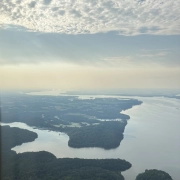
Buckeye Impoundment lies just beyond the point where HGH Road turns north (where I recorded the SRT video). Here is my Great Blue Heron Post from my 2024 overflight of WNWR and the image below of Buckeye Impoundment: https://stevejonesgbh.com/2024/12/05/buckeye-impoundment-in-early-october-on-the-wheeler-national-wildlife-refuge-part-one/
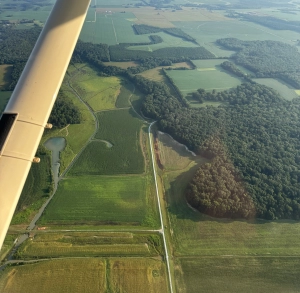
I entered the aerial photo image above on June 9, 2026 where the straight N/S road candy-canes into Buckeye Impoundment from the bottomland forest to the east.
I recorded this 60-second Buckeye Impoundment video.
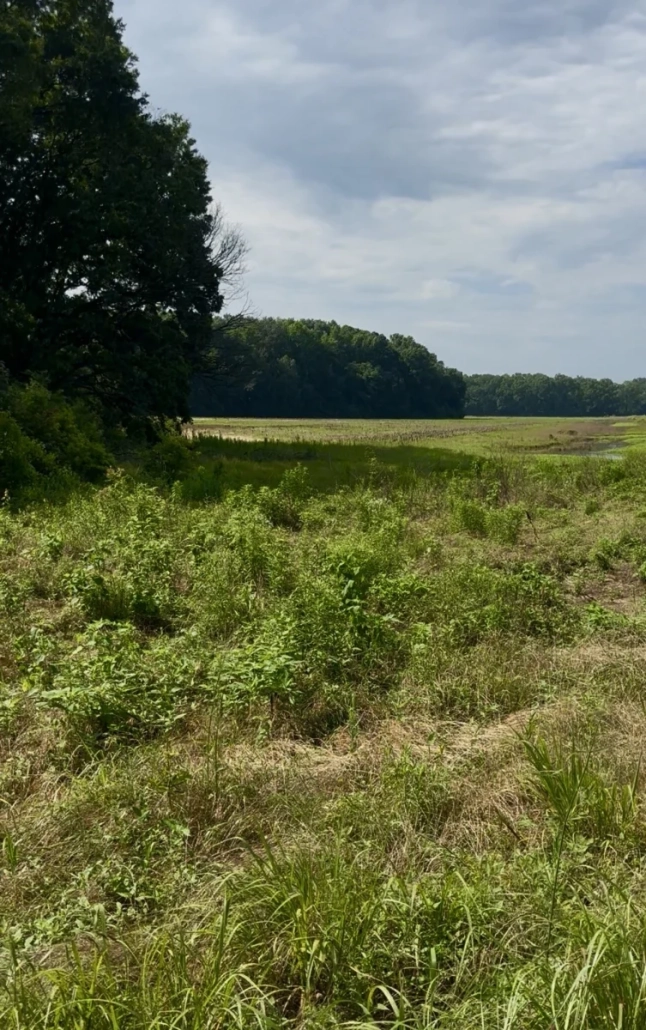
The views below are to the SSE and the SW. I plan to return to examine and compare end of summer vegetative growth to this early June visit.
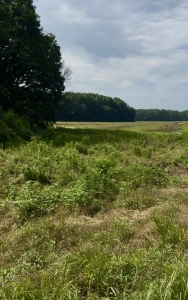
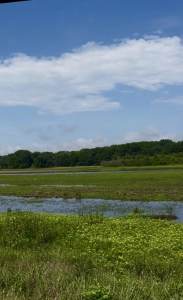
The impoundment is drying after an extended dormant season of intentional engineered flooding.
Summer Wildflower Profusion
Here are my observed early summer flower highlights at the marge of the impoundment.
Carolina desert chickory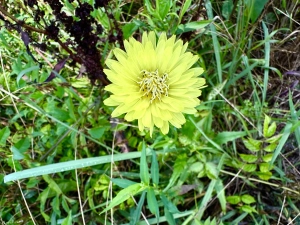
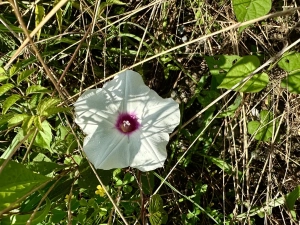
Wild potato vine
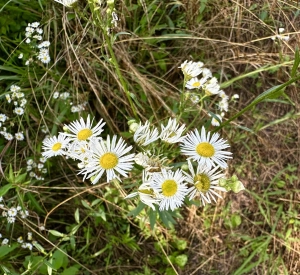
Annual fleabane
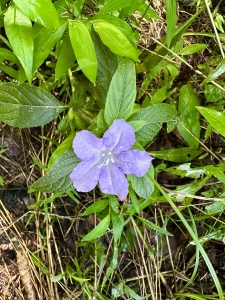
Carolina ruellia
A quick, low investment visit into Nature pays high dividents in peace of mind, satisfaction, exercise, and learning and discovery. John Muir nailed it:
In every walk with nature one receives far more than he seeks.
Closing
I accept the challenge of distilling these Brief-Form Posts into a single distinct reflection, this one cut, modified, and pasted from above:
I am fortunate to live just a dozen miles due north of Alabama’s 35,000-acre Wheeler National Wildlife Refuge, where I decided to wander for several hours on June 9, 2026. A quick, low investment visit into Nature pays high dividents in peace of mind, satisfaction, exercise, and learning and discovery. John Muir nailed it:
In every walk with nature one receives far more than he seeks.
Nature’s special treats await our discovery, our understanding, and our interpretation!
Subscribe to my free weekly photo essays (like this one) at: http://eepurl.com/cKLJdL