Posts

Brief-Form Post #64: Mid-June Visit to a WNWR Bottomland Forest and a Drying Buckeye Impoundment!

NOTE: Some of my GBH photo essays were not routinely distributed from mid-February through mid-June. I will resend those one by one, beginning the first week of July. Here is my Post from April 15 (https://stevejonesgbh.com/2026/04/15/brief-form-post-56-quick-circuit-of-the-dallas-fanning-nature-preserve/)


I am pleased to add the 64th of my GBH Brief-Form Posts (Less than five minutes to read!) to my website. I get wordy with my routine Posts. I don’t want my enthusiasm for thoroughness and detail to discourage readers. So, I will occasionally publish these brief Posts.


I am fortunate to live just a dozen miles due north of Alabama’s 35,000-acre Wheeler National Wildlife Refuge, where I decided to wander for several hours on June 9, 2026. I searched in a familiar bottomland hardwood forest for wild edible mushrooms: early chanterelles, oysters, boletes, chicken of the woods, and black-staining polypores. Finding only non-edibles, I made acquaintance with a road-crossing river cooter, photographed new Singing River Trail signage, and explored the sights and sounds of the Refuge’s Buckeye Impoundment, an important wildlife management feature.


Bottomland Forest


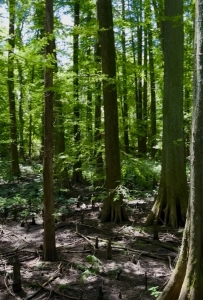
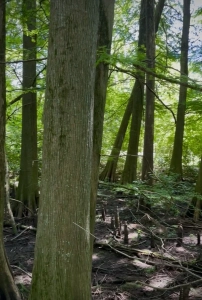
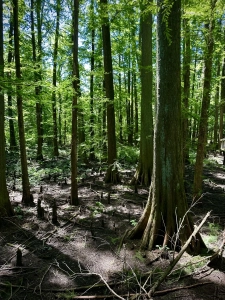
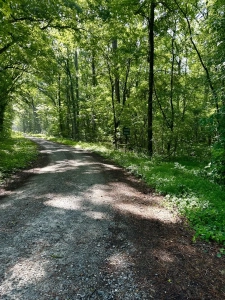
Search my website Blog link (https://stevejonesgbh.com/blog/) for Wheeler National Wildlife Refuge; choose from more than 50 prior posts on aspects of this nationally significant refugium. Were the refuge a single mile wide, it would extend 55 miles. Here is the interior road (HGH Road) that runs east-west about a mile north of the Tennessee River (Lake Wheeler), just into Limestone County, adjoining Madison County to the east. I often bushwalk (bushwhack) through this rich bottomland, which if not for the TVA/COE purchasing land to buffer the 1936 Wheeler Dam inudation property, would now probably be in private agricultural production.
 

Mushroom Venture


I ventured for 90 minutes in the bottomland finding abundant mushrooms of various inedible species.

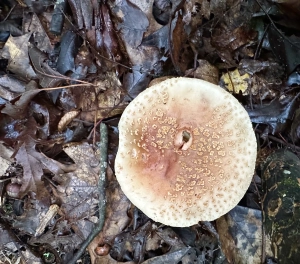
Amanita were scattered in the deep and damp understory shade. This one served as a luncheon buffet for underside invertebrates.
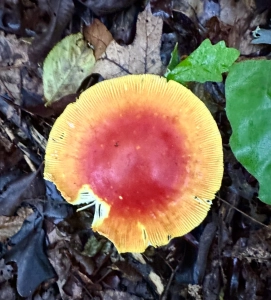
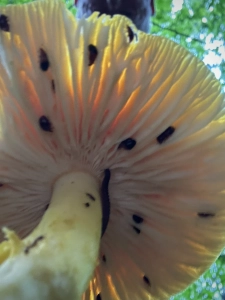
 

Amanita color hue and sharpness vary with age.
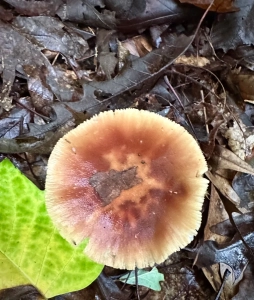
 

Yet another Amanita species.
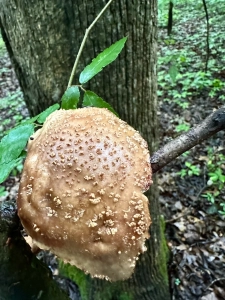
 

Unlike the gilled Amanitas, all Boletes have spongy pores under their caps. This is known as bitter Bolete, a common name that suggests it may not be inedible, but it assuredly is not suitable for consumption.
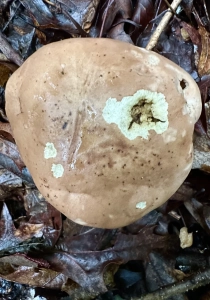
 

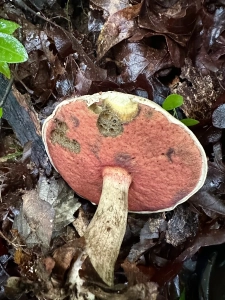
This Caloboletus firmus, considered too bitter to consume, bears perfect leaf impression artwork.
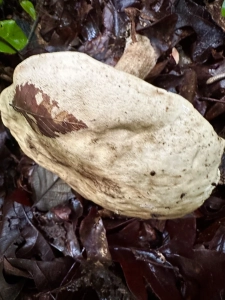
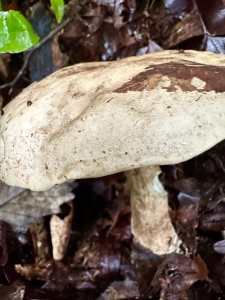
 

Its pink underside shows the characteristic spongy Bolete pore surface.


A Mushroom Consumer


I stopped for a friendly river cooter gravel road crossing chat. The shell-shocked retile refused to share edible mushroom location secrets with me!
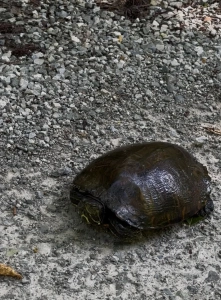
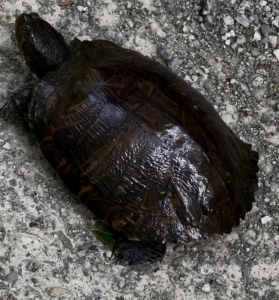
 

I recorded this 43-second video of my turtle friend.


Singing River Trail Thoroughfare


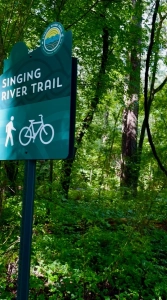
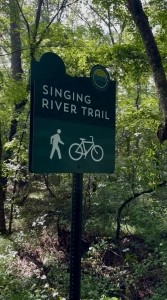
The Singing River Trail will be a 200+ mile greenway system once completed. The Refuge recently posted signage delineating the SRT route. I recorded this 60-second video introducing the route. My narrative incorrectly identifies the road as Jolly B. It is HGH Road, which ties in to Jolly B a mile to the east.


The sign below is at the northern entrance to the Refuge on Jolly B Road.
 

Buckeye Impoundment


Buckeye Impoundment lies just beyond the point where HGH Road turns north (where I recorded the SRT video). Here is my Great Blue Heron Post from my 2024 overflight of WNWR and the image below of Buckeye Impoundment: https://stevejonesgbh.com/2024/12/05/buckeye-impoundment-in-early-october-on-the-wheeler-national-wildlife-refuge-part-one/
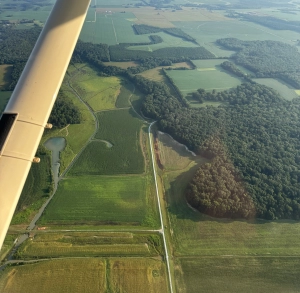
 

I entered the aerial photo image above on June 9, 2026 where the straight N/S road candy-canes into Buckeye Impoundment from the bottomland forest to the east.

I recorded this 60-second Buckeye Impoundment video.


The views below are to the SSE and the SW. I plan to return to examine and compare end of summer vegetative growth to this early June visit.
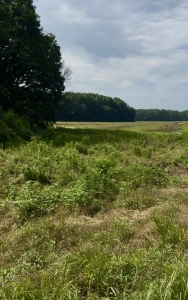
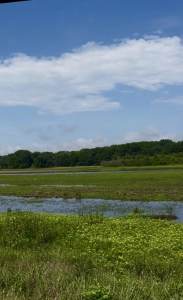
 

The impoundment is drying after an extended dormant season of intentional engineered flooding.


Summer Wildflower Profusion


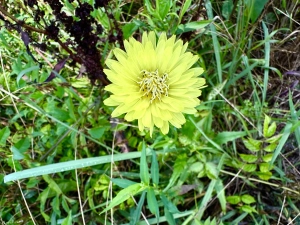
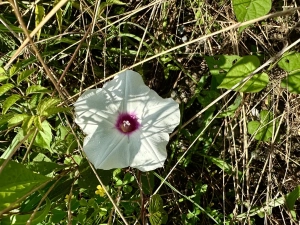
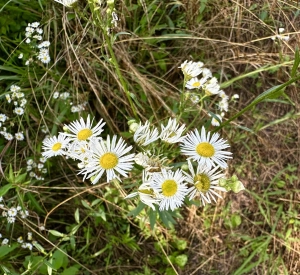
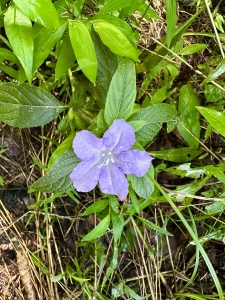
Here are my observed early summer flower highlights at the marge of the impoundment.

Carolina desert chickory
 

Wild potato vine
 

Annual fleabane
 

Carolina ruellia
 

A quick, low investment visit into Nature pays high dividents in peace of mind, satisfaction, exercise, and learning and discovery. John Muir nailed it:

In every walk with nature one receives far more than he seeks.


Closing


I accept the challenge of distilling these Brief-Form Posts into a single distinct reflection, this one cut, modified, and pasted from above:

I am fortunate to live just a dozen miles due north of Alabama’s 35,000-acre Wheeler National Wildlife Refuge, where I decided to wander for several hours on June 9, 2026. A quick, low investment visit into Nature pays high dividents in peace of mind, satisfaction, exercise, and learning and discovery. John Muir nailed it:

In every walk with nature one receives far more than he seeks.


Nature’s special treats await our discovery, our understanding, and our interpretation!


Subscribe to my free weekly photo essays (like this one) at: http://eepurl.com/cKLJdL


Brief-Form Post #63: Mid-Summer Osher Lifelong Learning Institute Nature Walk at the Wheeler National Wildlife Refuge!

NOTE: Some of my GBH photo essays were not routinely distributed from mid-February through mid-June. I will resend those one by one, beginning the first week of July. Here is my Post from April 9 (https://stevejonesgbh.com/2026/04/09/mid-december-delights-and-mysteries-on-the-wnwr-hiking-and-bicycling-trail/)

_________________________________________________________________________________________


I am pleased to add the 63rd of my GBH Brief-Form Posts (Less than five minutes to read!) to my website. I get wordy with my routine Posts. I don’t want my enthusiasm for thoroughness and detail to discourage readers. So, I will occasionally publish these brief Posts.


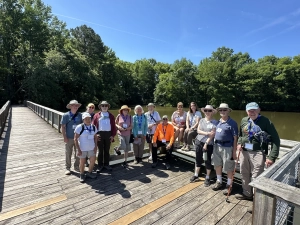
Fellow retired forester Chris Stuhlinger and I co-led an OLLI (Osher Lifelong Learning Institute, University of Alabama in Huntsville) Nature walk on June 13, 2026, at the Wheeler National Wildlife Refuge in Decatur, Alabama. We planned to saunter through the rich bottomland forest along the Flint Creek Trail, slowly exploring the beauty, magic, awe, and inspiration of Nature hidden in plain sight. Three of us appropriately dallied, immersed in wonder, wandering within the forest, truly focusing on the intended discovery and learning. The other dozen or so participants yielded to resident bottomland blood-sucking mosquitoes. As a result, the three of us were persuaded to abandon the trek and head to the nearby Refuge Visitors Center instead. I’ll take you there with me.


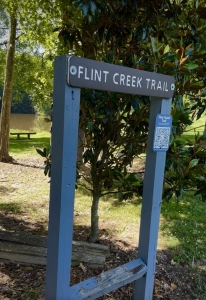
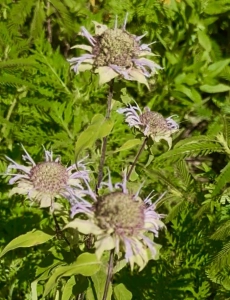
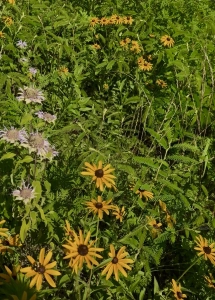
I had arrived at the trailhead early enough to examine the parking area Refuge buffer of sowed wildflower mix. Bergamots were among the plants already flowering.


I recorded this 53-second video of the beds dominated at the moment by bergamots and black-eyed Susans.


Black-eyed Susans are among my favorite summer natives.


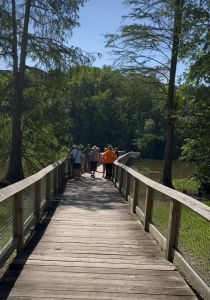
We began our trek within sight of the beds, by crossing the boardwalk, which carried us across a sunny, breezy, mosquito-free (a relevant point as I will soon reveal) passage into the forest.


I recorded this 59-second video as we approached the trail via the boardwalk.


Pond cypress, a water-tolerant deciduous conifer, stood in the Flint Creek inlet at the boardwalk trailhead.

Flint CrFlint Cr


My Musings on What Warrants Doing as Time Wanes


We entered the forest where wonders awaited some of us… and two-winged, six-legged terrorists inflicted intolerable annoyance on the others. Summer passage through certain northern Alabama ecotypes exacts a toll. The circumstances of this day lead me to pledge (to self) that I will heretofore exercise greater caution in agreeing to which particular OLLI (or any other) missions I shall choose/decide to accept. 

None of us knows how many woodland excursions lie ahead. I do know that the window eventually closes. The clock continues ticking. I love my deliberate, succinct retirement mission:

Employ writing and speaking to educate, inspire, and enable readers, and listeners to understand, appreciate, and enjoy Nature… and accept and practice Earth Stewardship.

Mightn’t I have been better advised to persue a Nature jaunt of my own design, intent, passion, purpose, and ken, rather than one where the participants are easily dissuaded from the effort? As I draft this text, I will enter my fourth quarter of a century in two days. Chances are slim (to none) that a fifth awaits me (Well, maybe it’s with partaking a fifth of Old Forester that my chance improves!).

Without belaboring my disappointment, allow me to point out that at least eight of our 14 participants wore short-sleeve shirts/blouses, despite our advance suggestion to avoid attracting unwanted insect attention and voracious feeding.


An Abbreviated Woodland Exploration


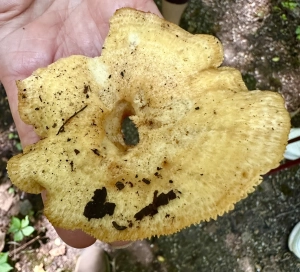
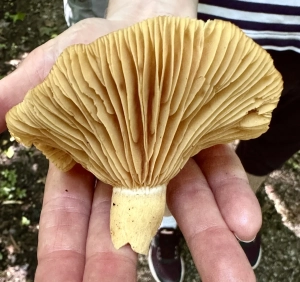
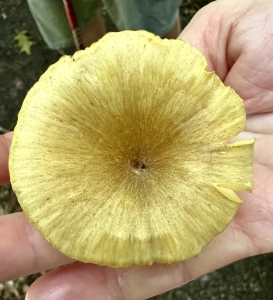
The bottomland forest presented abundant mushrooms for those of us not flushed ahead by the pesky skeeters. Rather than escort you with deep narrative, allow me to introduce our welcoming fungi. Lactarius psammicola gave us palm-size shrooms.

Flint Cr


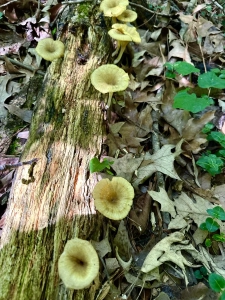
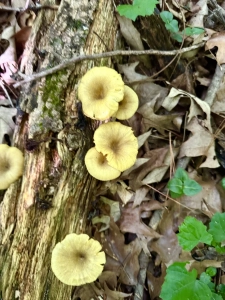
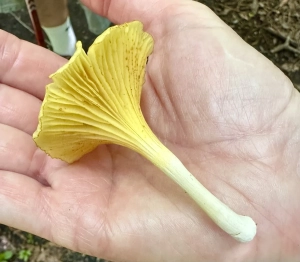
Golden-gilled gerronema showed their characteristic biege funnels.

Flint Cr


Although very attractive, the species is not considered edible.

Flint Cr


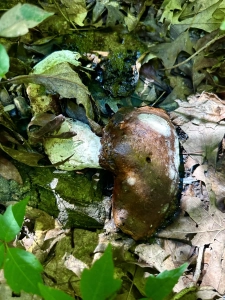
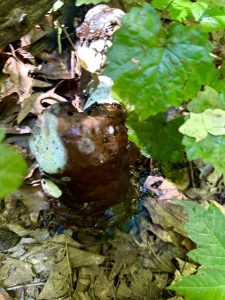
Bolete mushrooms are a group of fungi with spongy pores under their caps instead of gills, including some edible species. I’ve reached a point in my foraging where I’m gaining enough knowledge and confidence to begin selecting certain boletes. This individual is in an advanced state of decay, rotting with a bolete mould.

Flint CrFlint Cr


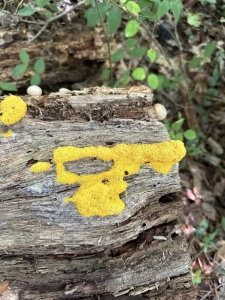
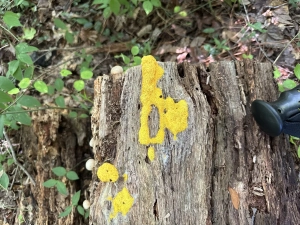
Nearby we spotted dog vomit slime mold, a fungus that has a moniker that, even if it were edible, would discouraged human consumers.

Flint CrFlint Cr


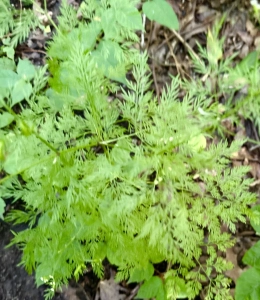
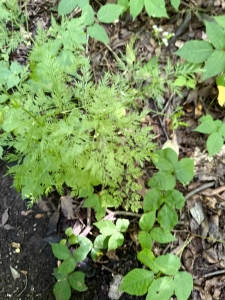
I spotted an unfamiliar understory plant, whitenymph. By this point of progress, the mosquito-spurred group had raced way ahead of us.

Flint Cr


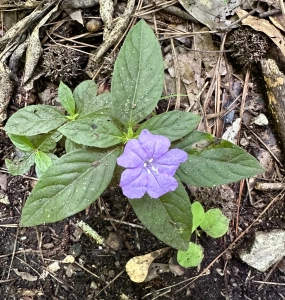
I felt compelled to photograph Carolina ruellia, a lovely little ground-hugging early summer wildflower.

Flint Cr


Quick Trip across the Highway to the Visitors Center Cypress Pond


The larger group hailed us before we had traversed half the distance they covered. We agreed to return to our vehicles, and then leave to the visitors center about a mile away, across the highway, where we anticipated far fewer human-blood-consuming insects. Some of the original group did not transfer to the visitors center.

I’ll touch briefly on our mosquito-abatement alternative. I always enjoy the bald cypress pond and boardwalk near the visitors center.

Cypress Pond


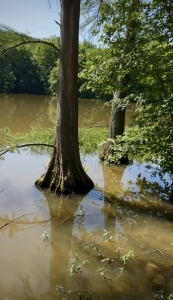
Stems are packed tightly and reach high. Cypress knees perform their function, whether securing incremental anchorage or assisting in gaseous exchange.

Cypress Pond


I recorded this 60-second video within the cypress pond, adding a little Righteous Brothers accompaniment.


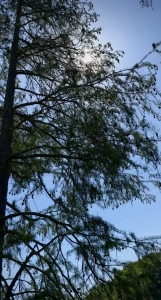
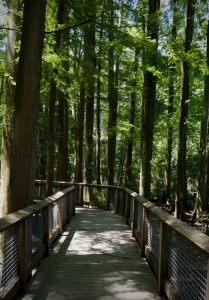
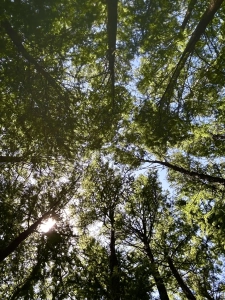
I always glance heavenward from the boardwalk. The dense trunk-stocking suggests crowded, intersecting and overlapping crowns. Instead, cypress expresses crown shyness… faithfully, maintaining space-margins and no-touch zones separating one crown from another! Is it my own certifiable introvert personality that explains my admiration of sylvan crown shyness?

Cypress


Perhaps I overreacted to our change in plans; perhaps not. However, in no small part owing to my seminal life benchmark (75 years!), my angst and pique were real… and persist. I shall be recalibrating priorities. From a time-of-life-dawn, the brim-full hour glass left plenty of room for judgement error. Today, with a setting sun ahead, the sand grains rush unceasingly. The relative cost of each one amplifies. My maternal grandmother, a country girl from Appalachian-region West Virginia, said as much: “The older I get, the faster time goes!”


Closing


I accept the challenge of distilling these Brief-Form Posts into a single distinct reflection, this one cut, modified, and pasted from above:

None of us knows how many woodland excursions lie ahead. I do know that the window eventually closes. The clock continues ticking. I love my deliberate, succinct retirement mission:

Employ writing and speaking to educate, inspire, and enable readers and listeners to understand, appreciate, and enjoy Nature… and accept and practice Earth Stewardship.

Mightn’t I have been better advised to pursue a Nature jaunt of my own design, intent, passion, purpose, and ken?


Nature’s special treats await our discovery, our understanding, and our interpretation!


Subscribe to my free weekly photo essays (like this one) at: http://eepurl.com/cKLJdL
 

Flint Cr