End-of-Season Spring Gap Saunter along the C&O Canal National Historic Park!
I drove for 15 minutes on Monday morning, October 12, 2026, from my sister-in-law’s home on the south side of Cumberland, Maryland, to the Spring Gap parking area at the Chesapeake and Ohio National Historic Park. Two and a half inches of rain fell the day before. The Potomac River flowed at bankfull. Water-soaked autumn leaves on the towpath signaled my passing without a single crunch. The morning gave me hope for a fine day and a bright fall season as I enjoyed a five-mile saunter along a section of the towpath I’d explored dozens of times since Dad first brought me here 70 years ago. This morning’s venture was both a homecoming and a reunion, stoked with vivid family memories.
A boat ramp slanted into the turbid, rain-swollen Potomac River.
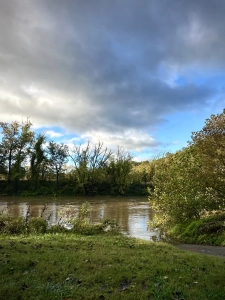
I recorded this 63-second video as I walked from the river to the magnificent cottonwood trees bordering the canal towpath and the parking area.
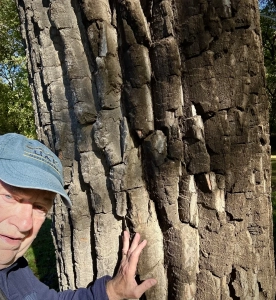
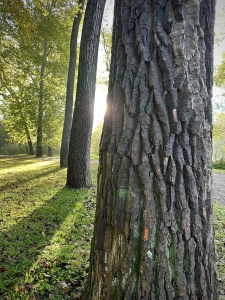
Massive cottonwood trees sheltered the parking area. The species thrives on fertile floodplains. I admit to operating, even at leisure, with intensity… a fast pace. A former marathon runner, I have two life settings… full speed and off. I seek action, movement, and accomplishment. As I reflect on these photos and recall the magic of this grove along the river, I regret not spending just thirty minutes sitting, leaning against one of these giants, luxuriating in the silence, contemplating Nature’s glory and embracing my peace of mind. Grab the moment, I implore myself… before I can’t. Life is rushing past. Each fleeting minute passes but once. Waste it today; regret it tomorrow.
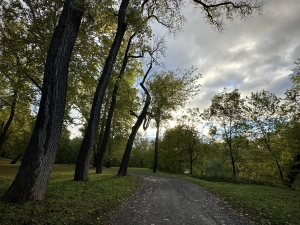
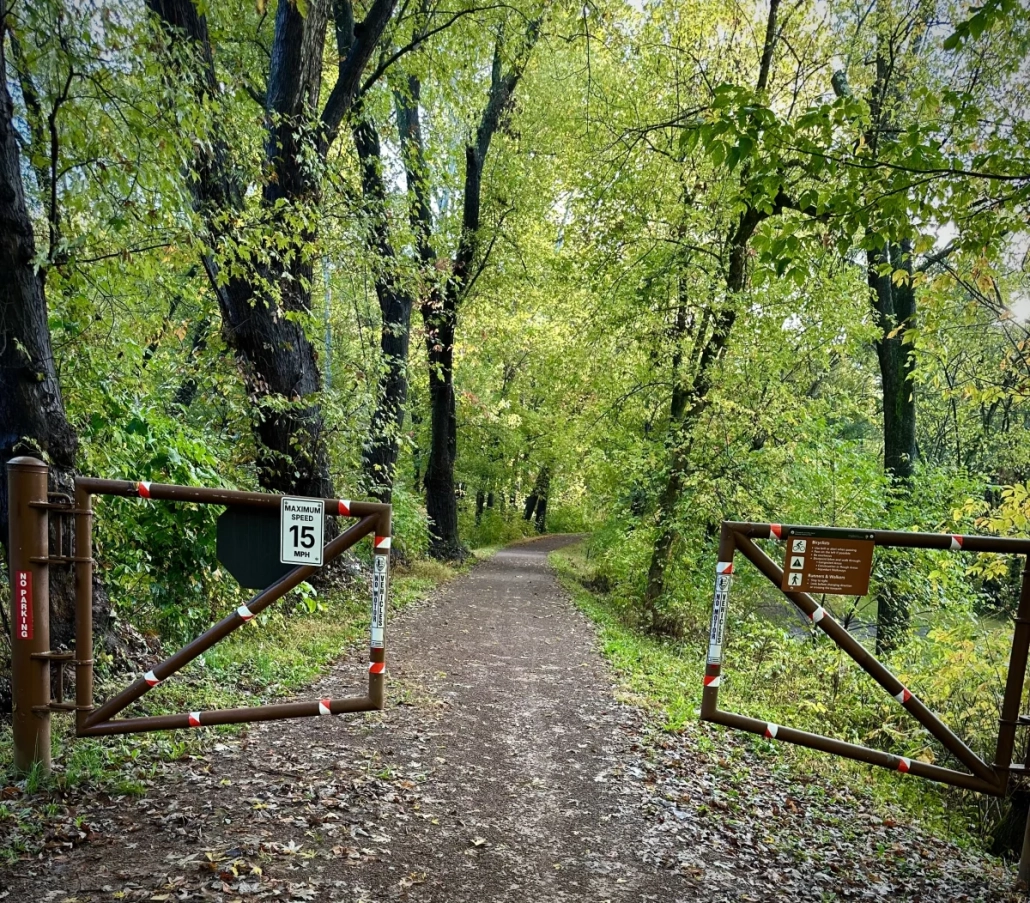
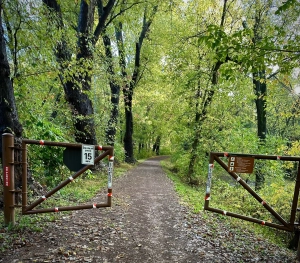
The towpath led east through a National Park Service gate, encouraging pedestrians and bikers while prohibiting cars.
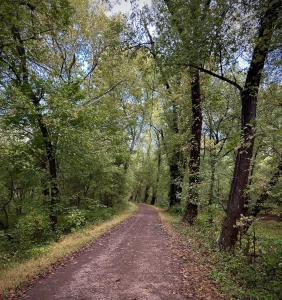
Although admittedly a juvenile habit, every autumn I commit to catching at least one deciduous leaf before it reaches the ground. I had already snagged my first a week earlier on an Alabama outing. I collected another dozen on this fine October morning.
I recorded this 59-second video on the towpath downstream of Spring Gap.
By the end of the first quarter of the 20th century, the canal no longer competed effectively with railroads carrying commerce between the coastal region and the interior. A major Potomac River basin flood on March 28 and 29, 1924 ended canal operations. The canal enterprise could not justify investing capital to repair and reopen.

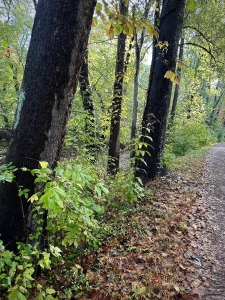
Because mules powered the boats from the towpath, no trees bordered the canal from its opening in 1850. I can only assume that after March 1924, vegetation, including tree seedlings, sprouted along the towpath. The black cherry and oak trees below on the left are approximately 100 years old. The same is true for the large honey locust to the right. Note the compoundly multi-forked thorns at the mid-stem.
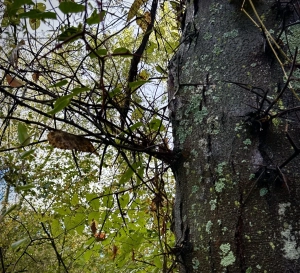
A black cherry and sycamore, both more than three feet DBH, stand on the river side of the canal.
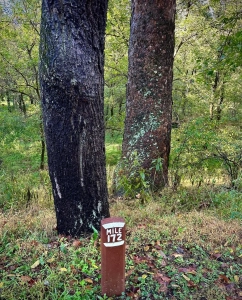
No trees grew along the bank when the canal operated.
I recorded this 60-second video at milepost 172 (from Georgetown).
Autumn Signals
Hackberry and slippery elm leaves flurried along my way.
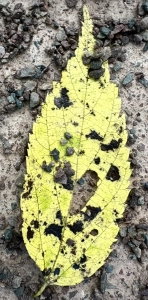
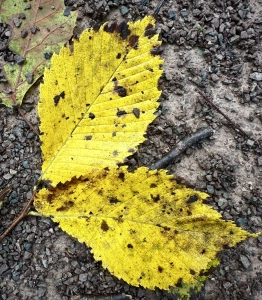
I recorded my brisk walk along the canal at milepost 174.
Poison ivy vines held their autumn color on these sycamore trees along the canal bank.
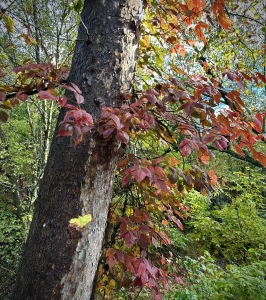
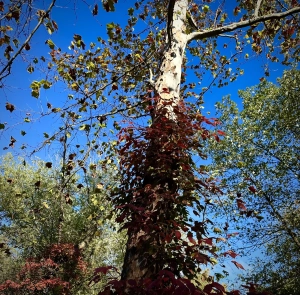
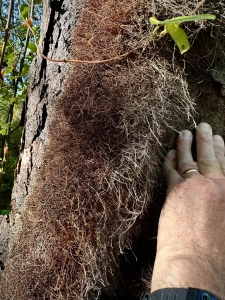
I paused to admire and photograph a massive, hairy poison ivy vine. I can’t recall seeing another this large.
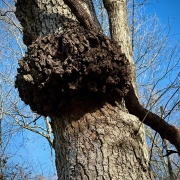
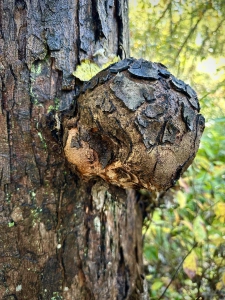
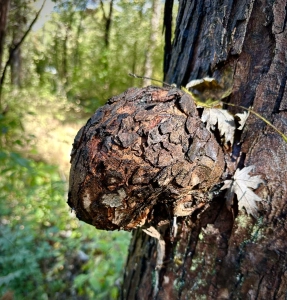
A head-sized hickory burl clung head-high along the towpath.
Japanese knotweed, a nasty invasive, reminded me that Earth’s vast Seven Seas no longer protect native terrestrial ecosystems from alien insects, diseases, pests, pestilence, and other unwanted invaders. Fortunately, I saw only several stems.
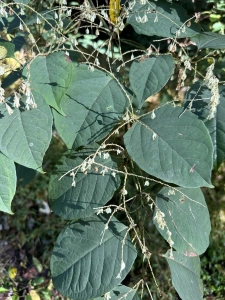
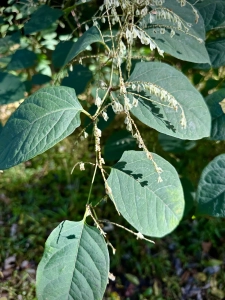
Northern spicebush is native to eastern North America from southern Canada well into Alabama. Its waxy, glossy green leaves attract attention in the wild and make it a favored landscape ornamental.
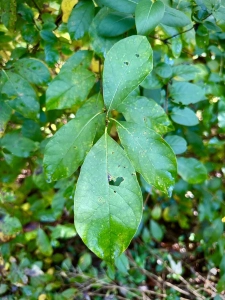
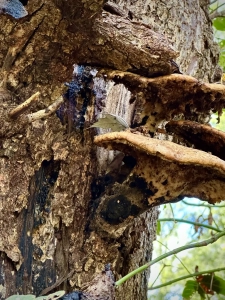
Box elder, usually an understory and mid-story tree/shrub, is common along riparian sites typical of the C&O Canal National Historic Park. The individual below on the left is exceptionally large. The tree is riddled with decay, fungi, physical wounds, and abnormalities.
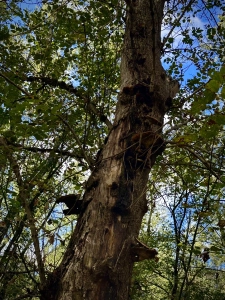
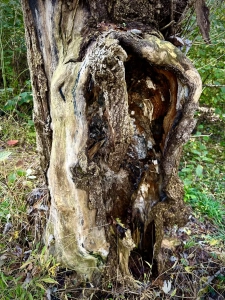
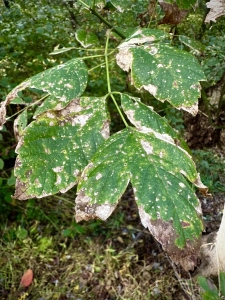
That’s an agrobacterial crown gall on the left. The leaves on the right are healthy. The mottled green expresses the advancing season.
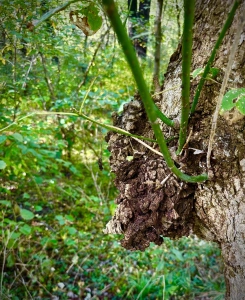
Dryad’s Saddle mushrooms sprout from the trunk from ground level into the live crown. The tree’s condition is terminal, but who among us will not ultimately greet a final dawning?
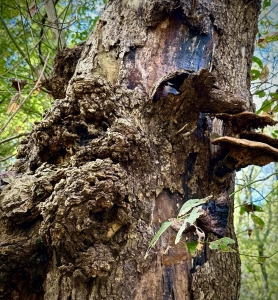
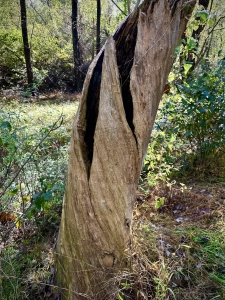
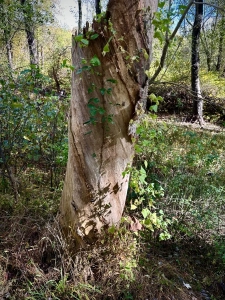
I am not certain that these two nearby dead snags are box elders. Humor me and accept for a moment that they are. Their bell has tolled. The one on the left no longer had enough living cambial wood in its rind to sustain life. The specimen on the right lost its top in a strong wind. Death is a big part of forest life, whether in the remote wildness of a deep mountain vale or the long-inhabited 184.5-mile linear C&O Canal corridor.
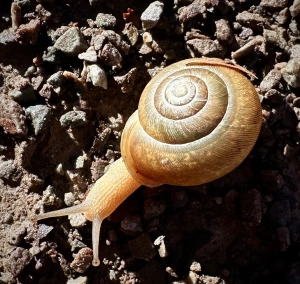
A brown-lipped snail did not match my brisk pace. Life is persistent, varied, and remarkably well adapted along this vital, preserved, conserved, and managed corridor.
The C&O Canal National Historic Park is celebrating its 55th year. I was 20 when officials cut the ribbon in Georgetown.
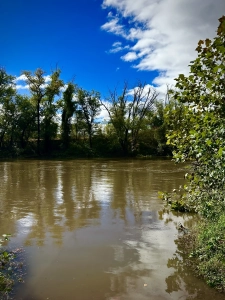
The photograph captures the beauty, magic, wonder, awe, inspiration, and spirit of the place that, in so many ways, is part of the fabric of my life.
Thoughts and Reflections
I offer these observations:
- Grab the moment; I implore myself… before I can’t. (Steve Jones)
- Life is rushing past. Each fleeting minute passes but once. Waste it today; regret it tomorrow. (Steve Jones)
Inhale and absorb Nature’s elixir. May Nature inspire, inform, and reward you!
Note: All blog post images created & photographed by Stephen B. Jones unless otherwise noted. Please circulate images with photo credit: “©2026 Steve Jones, Great Blue Heron LLC. All Rights Reserved.”
I am available for Nature-Inspired Speaking, Writing, and Consulting — contact me at steve.jones.0524@gmail.com
Subscribe to my free weekly photo essays (like this one) at: http://eepurl.com/cKLJdL
Reminder of my Personal and Professional Purpose, Passion, and Cause
If only more of us viewed our precious environment through the filters I employ. If only my mission and vision could be multiplied untold orders of magnitude:
Mission: Employ writing and speaking to educate, inspire, and enable readers and listeners to understand, appreciate, and enjoy Nature… and accept and practice Earth Stewardship.
Vision:
- People of all ages will pay greater attention to and engage more regularly with Nature… and will accept and practice informed and responsible Earth Stewardship.
- They will see their relationship to our natural world with new eyes… and will understand more clearly their Earth home.
Tagline/Motto: Steve (Great Blue Heron) encourages and seeks a better tomorrow through Nature-Inspired Living!
Steve’s Four Books
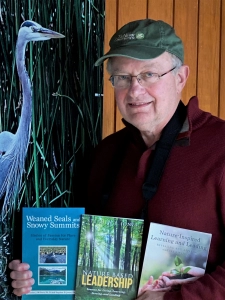
I wrote my books Nature-Based Leadership (2016), Nature-Inspired Learning and Leading (2017), Weaned Seals and Snowy Summits: Stories of Passion for Place and Everyday Nature (2019; co-authored with Dr. Jennifer Wilhoit), and Dutton Land & Cattle: A Land Legacy Story (2025) to encourage all citizens to recognize and appreciate that every lesson for living, learning, serving, and leading is either written indelibly in or is powerfully inspired by Nature. All four of my books compile personal experiences expressing my deep passion for Nature. They offer observations and reflections on my relationship with the natural world… and the broader implications for society. Order any from your local indie bookstore, or find them on IndieBound or other online sources such as Amazon and LifeRich.
I began writing books and Posts for several reasons:
- I love hiking and exploring Nature
- I see images I want to (and do) capture with my trusty iPhone camera
- I enjoy explaining those images — an educator at heart
- I don’t play golf!
- I do love writing — it’s the hobby I never needed when my career consumed me
- Judy suggested my writing is in large measure my legacy to our two kids, our five grandkids, and all the unborn generations beyond
- And finally, perhaps my books and Blogs could reach beyond family and touch a few other lives… sow some seeds for the future