Gray Cemetery: Nature Across Two Centuries of Life, Living, and Dying!
Suburban housing and light commercial establishments surround Gray Cemetery in Madison, Alabama. Urged by friend Gilbert White to visit the 200-year-old cemetery, I (and my 17-year-old grandson, Jack) met him there on September 6, 2025, as a thunderstorm bore down on us. We returned for a leisurely, sunny Sunday afternoon with Gilbert the next day. Abandoned 100 years ago, the cemetery (courtesy of volunteers working feverishly over the past four years) is reappearing from the jungle of natural vegetation regrowth. My central observation is that Nature is adept at disappearing (i.e., hiding, obscuring, and concealing) the dedicated work of man.
The new look will attract saunterers — mature forest, an open understory, and the deep and meaningful history tales told by the ~500 permanent residents whose remains are interred here.
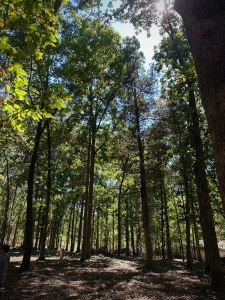
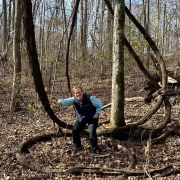
This incredible cemetery is a gem recovered from a jungle of natural vegetation and vibrant second-growth forest that strangled the cemetery for a full century. The new scene is park-like, the trees towering above the newly revealed historical site.
Diverse Tree Species
A diverse tree overstory complements the rich human history. I admit to total fascination with the forest that emerged from the grassy knoll that served as an early Madison, Alabama burial oasis. I won’t burden you with the messy dendrology of the species I discovered, admired, and celebrated.
White oak.


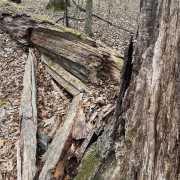
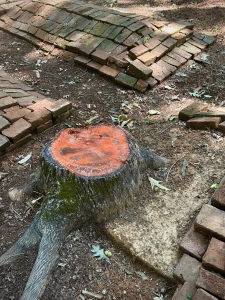
A white oak stump resulted when workers removed the tree decapitated by an F-1 tornado passing nearby earlier in the summer. I accepted the carnage as a gift, permitting me to do a ring count. The tree aged at 103 years, confirming that the tree regenerated at the time of cemetery abandonment and neglect.
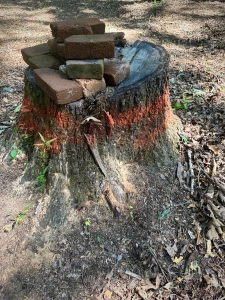
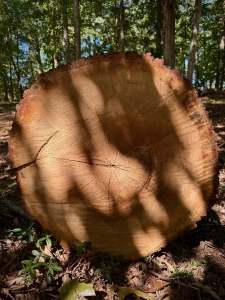
The annual rings of oak are easy to count.

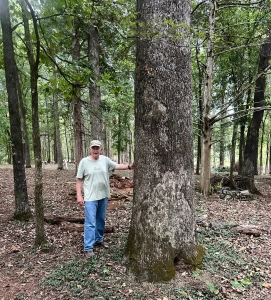
I assume that this 44-inch diameter white oak is older, and probably shaded a segment of the cemetery for decades prior to service and maintenance ceased.
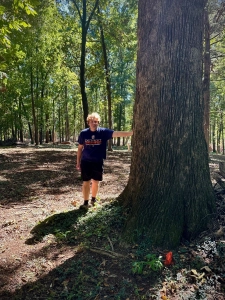

See this spectacular white oak on my 27-second video:
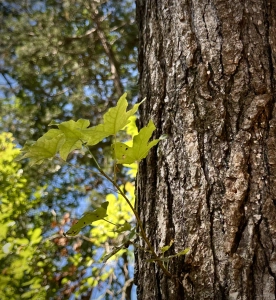
Sweetgum (left) is one of our common Alabama forest denizens. The species aggressively colonizes abandoned crop, pasture, grasslands, and cemeteries. Sugar maple (right).
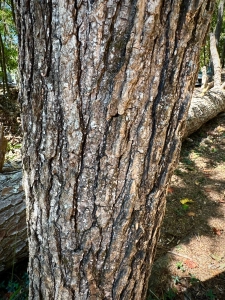
Likewise, water oak is ubiquitous in our area.
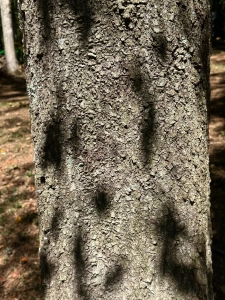
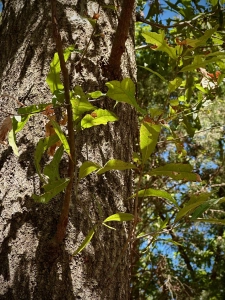
As are species of hickory.
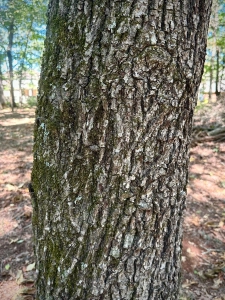
Black cherry, not a valuable timber species in northern Alabama, does regenerate valiantly and works its way into the intermediate canopy.
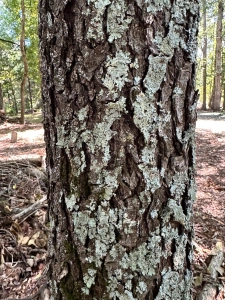
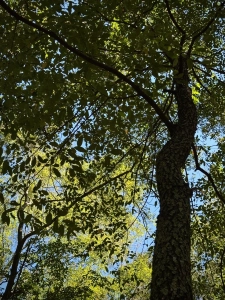
Eastern redcedar is a prolific pioneer species. This one is notably large and vibrant. What a magnificent crown, with laddered branching that reaches high above.
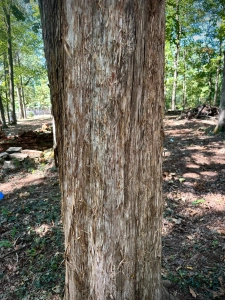
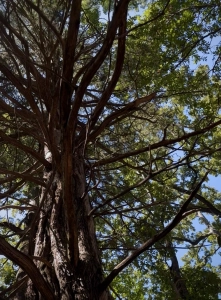
I recorded a 57-second video of the handsome Eastern redcedar tree.
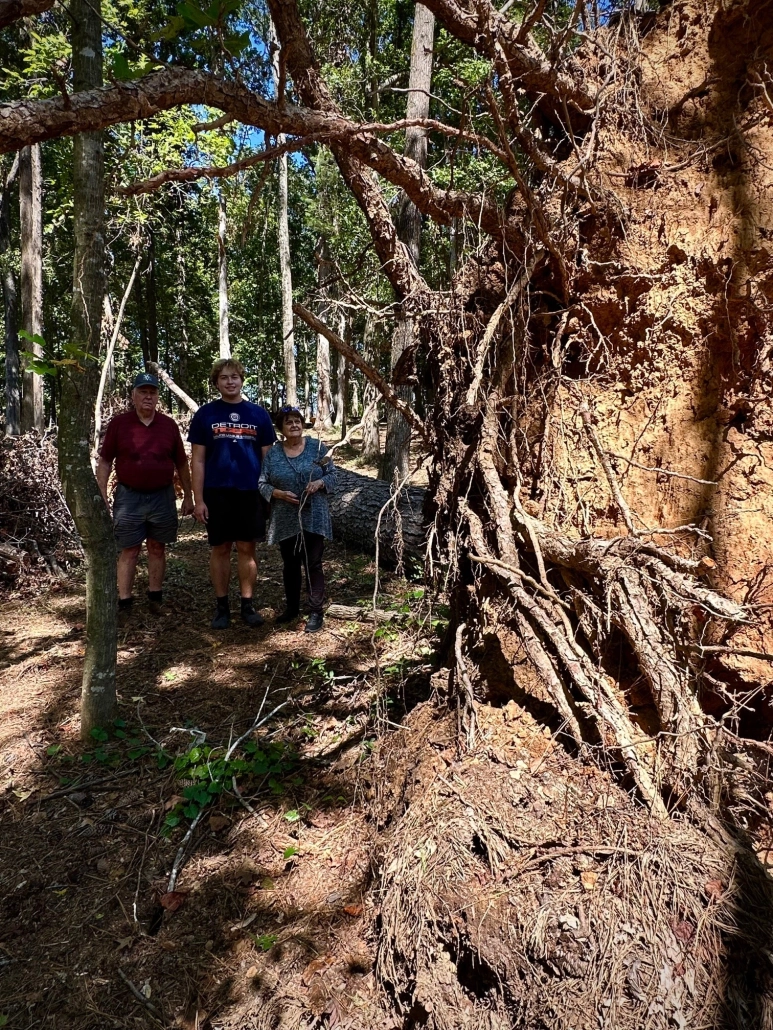
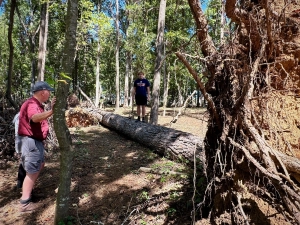
I mentioned the low intensity tornado that side-swiped the old cemetery. It toppled a large loblolly pine.
The fallen pine, like most of the trees standing within the cemetery, probably dates back to abandonment.
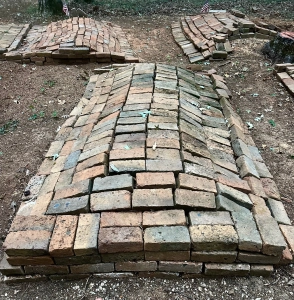
Cemetery Remnants
I had not previously seen such brick tombs.
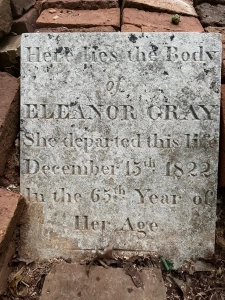
Here is the oldest interment at Gray Cemetery. I am sure that Mrs. Gray’s story is rich with life and living, and that many loved and loving descendents mourned her passing.
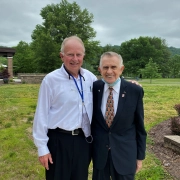
Local celebrated local historian John Rankin shared some time with us. He knows many of the stories that enrich our cemetery explorations and reflections.
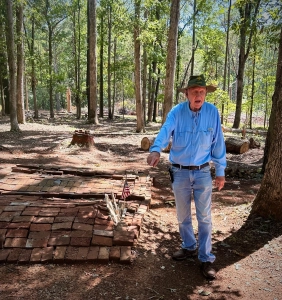
I recorded this 60-second video showing the four types of tombs.
This is a box tomb.

An Irish stone tomb.
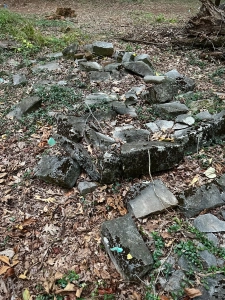
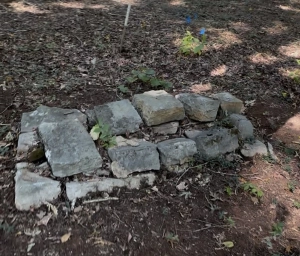
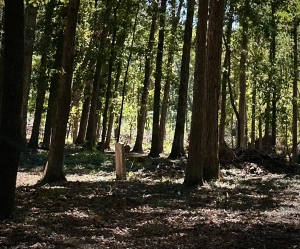
And another example of a standard vertical tombstone.
Cemetery Critters
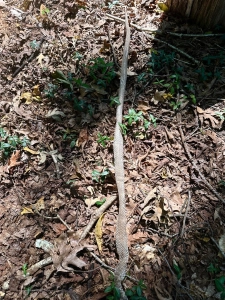
Among the departed humans, I found evidence of a current living resident — the shed skin of a grey ratsnake.

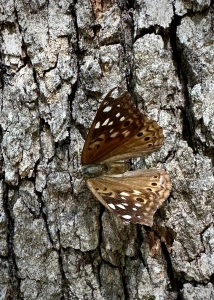
And a hackberry emperor butterfly.
Throughout our vibrant ecosystems, including the human realm, life and death are intertwined.
Thoughts and Reflections
I offer these observations:
- Nature is adept at disappearing (i.e., hiding, obscuring, and concealing) the dedicated works of man. (Steve Jones)
- Throughout our vibrant ecosystems, including the human realm, life and death are intertwined. (Steve Jones)
- This incredible cemetery is a gem recovered from a jungle of natural vegetation and vibrant second-growth forest that strangled the cemetery for a full century. (Steve Jones)
Inhale and absorb Nature’s elixir. May Nature Inspire, Inform, and Reward you!
Note: All blog post images created & photographed by Stephen B. Jones unless otherwise noted. Please circulate images with photo credit: “©2025 Steve Jones, Great Blue Heron LLC. All Rights Reserved.”
I am available for Nature-Inspired Speaking, Writing, and Consulting — contact me at steve.jones.0524@gmail.com
Subscribe to my free weekly photo essays (like this one) at: http://eepurl.com/cKLJdL
Reminder of my Personal and Professional Purpose, Passion, and Cause
If only more of us viewed our precious environment through the filters I employ. If only my mission and vision could be multiplied untold orders of magnitude:
Mission: Employ writing and speaking to educate, inspire, and enable readers and listeners to understand, appreciate, and enjoy Nature… and accept and practice Earth Stewardship.
Vision:
- People of all ages will pay greater attention to and engage more regularly with Nature… and will accept and practice informed and responsible Earth Stewardship.
- They will see their relationship to our natural world with new eyes… and will understand more clearly their Earth home.
Tagline/Motto: Steve (Great Blue Heron) encourages and seeks a better tomorrow through Nature-Inspired Living!
Steve’s Four Books
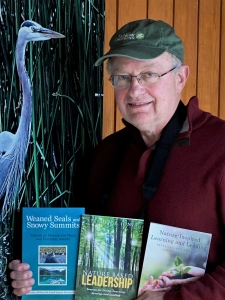
I wrote my books Nature Based Leadership (2016), Nature-Inspired Learning and Leading (2017), Weaned Seals and Snowy Summits: Stories of Passion for Place and Everyday Nature (2019; co-authored with Dr. Jennifer Wilhoit), and Dutton Land & Cattle: A Land Legacy Story (2023) to encourage all citizens to recognize and appreciate that every lesson for living, learning, serving, and leading is either written indelibly in or is powerfully inspired by Nature. All four of my books present compilations of personal experiences expressing my deep passion for Nature. All four books offer observations and reflections on my relationship with the natural world… and the broader implications for society. Order any from your local indie bookstore, or find them on IndieBound or other online sources such as Amazon and LifeRich.
I began writing books and Posts for several reasons:
- I love hiking and exploring Nature
- I see images I want to (and do) capture with my trusty iPhone camera
- I enjoy explaining those images — an educator at heart
- I don’t play golf!
- I do love writing — it’s the hobby I never needed when my career consumed me
- Judy suggested my writing is in large measure my legacy to our two kids, our five grandkids, and all the unborn generations beyond
- And finally, perhaps my books and Blogs could reach beyond family and touch a few other lives… sow some seeds for the future