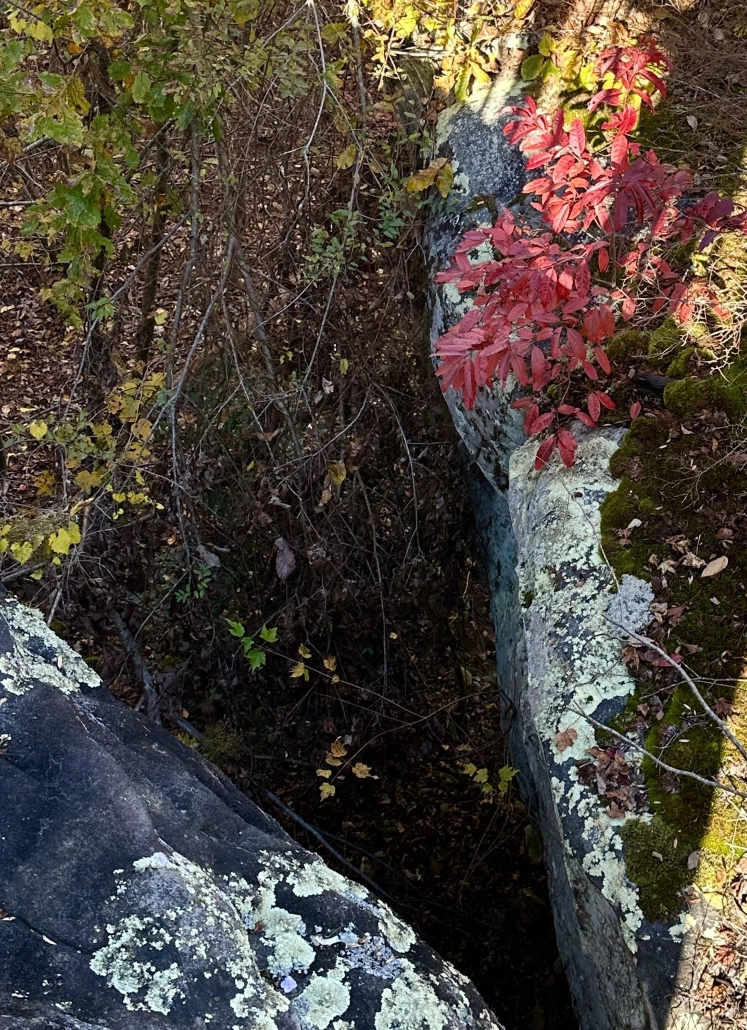
Brief-Form Post #54: Second Autumn Afternoon Near the Lodge and Cabins at AL’s DeSoto State Park!
I attended an Alabama State Parks Foundation Board morning meeting on Thursday, November 6, 2026, at the DeSoto State Park Lodge. I had hiked extensively at the park the previous afternoon. Following the board session, I hiked the Chalet Trail from the Lodge and circuited the nearby cabins area. I am seldom disappointed by the magic a short saunter reveals, if only one looks deeply enough to discover what lies hidden in plain sight.
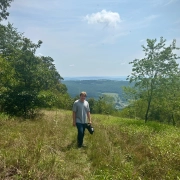
Come along with me to see the beauty, magic, wonder, and awe I spotted. The lodge deck overlooking the canyon of the West Fork of the Little River proved a good place to begin my trek. A brilliantly red sourwood tree stood at eye level, peering through the now-leafless yellow poplar (left). A smaller sourwood shrub topped a sandstone ledge near the deck (right). As a run-of-the-mill guy who knows only the basic rainbow colors, I referred to sourwood’s fall cape simply as red. Online leafyplace.com relied on more color-proficient descriptors: vibrant shades of crimson red to burgundy and purple.
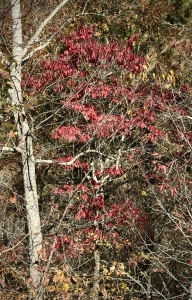
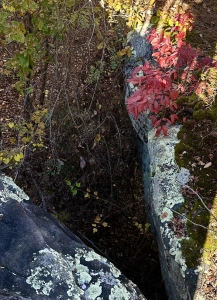
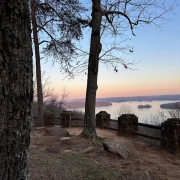
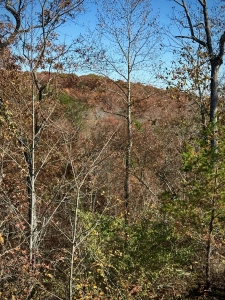
The canyon reached ~250′ from stream to rimrock. Summer foliage hides the opposite ridge, now visible with leaf-drop.
I recorded this 58-second video from the Lodge deck.
Intent on uncovering more of the forest’s secrets, I walked from the Lodge to the Chalet Trailhead.
Afternoon along the Chalet Trail
A hike doesn’t need to be long and daunting to offer rewards. A perfect afternoon for leisurely sauntering is ideal for recovering mentally from a Board meeting, and for preparing physically for the required two-hour drive home.
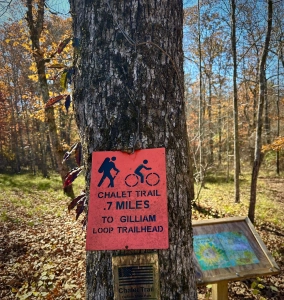
I recorded this 59-second video within the forest along the trail.
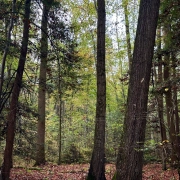
Periodic prescribed fire has eliminated understory trees and shrubs, creating an open-grown grassy impression. Some refer to the appearance as park-like, a condition that many persons queried in surveys prefer.
I chose the Chalet Trail to focus on the benefits and consequences of prescribed fire as a parkland management tool. Note that the sign is sanctioned by: Alabama Prescribed Fire Council; National Wild Turkey Federation; The Nature Conservancy; and The Longleaf Alliance.
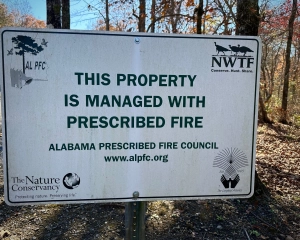
The understory is open, with no brambles or thickets impeding walking and, ostensibly, hiding snakes, critters, and other scary woodland denizens. I speak in jest of scary woodland denizens, yet I, too, prefer parklike stands in an area heavily trafficked around picnic tables, campgrounds, and cabins.
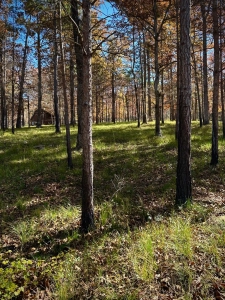
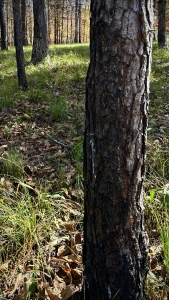
I recorded a 60-second video of the stand managed by fire and evidencing charred trunks.
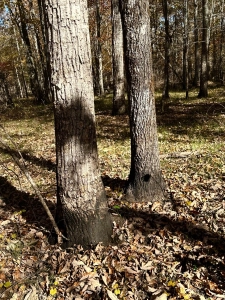
I observe in nearly every Great Blue Heron photo essay that death is a big part of life in our forests. Whether a wildfire or controlled burn, dead and down woody debris is part of the ground-level fuel. Occasionally even a intentionally administered prescription fire will burn intensely enough to damage cambium at the base, opening a court of fungal infection. The kickory tree at left bears a catface, a hollow resulting from heart decay. The rot extends upward, eliminating any commercial timber value and weakening structural soundness. However, in this park cabin area management regime, timber value is of little consequence. Instead, squirrels, snakes, birds, and other critters value tree cavities! All the better for park wildlife enthusiasts.
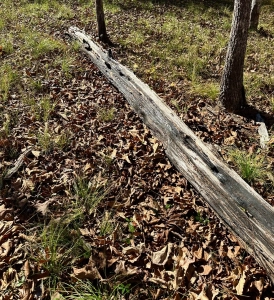
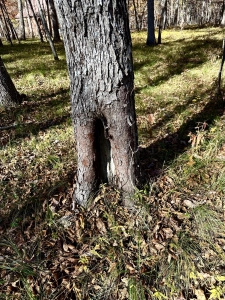
Fall colors, open canopy, an orchard stocking level, and a welcoming understory tell me that controlled fire is an effective management tool.
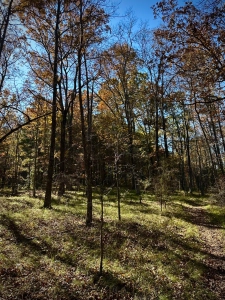
Charred trunks and nearly bare forest floor evidence employed fire success.
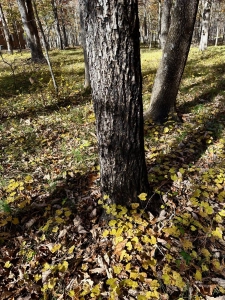
Across my 12 years practicing forestry in the southeastern US for a Fortune-500 paper and allied forest products manufacturer, I control-burned tens of thousands of acres of company-owned forest land. Whether site preparation or established stand burning, the tool is essential to meeting our seeming insatiable demand for pulp, lumber, poles, chips, and miscellaneous other probucts. For the record our South Alabama crews once ignited and safely managed a rough-reduction, aerial ignition day when we covered 4,300 acres, a banner accomplishment!
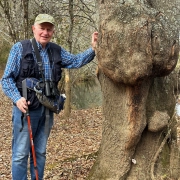
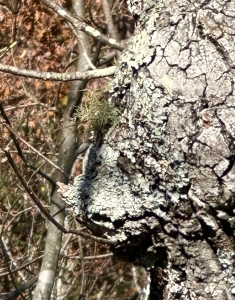
Many surprises in Nature lie hidden in plain sight, including this groundhog head. A burl on a water oak trunk trailside. The critter sports a moustached mouth, abbreviated proboscis, two eyes (its right one with a lichened, overhanging brow), and a plated forebrow. It’s okay to employ a little imagination when searching our forests for obscure mammal residents.
Albert Einstein observed:
Imagination is more important than knowledge. Knowledge is limited. Imagination encircles the world.
It is the supreme art of the teacher to awaken joy in creative expression and knowledge.
Closing
I accept the challenge of distilling these Brief-Form Posts into a single distinct reflection.
Aldo Leopold, a preeminent mid-Twentieth Century ecologist, is my conservation hero, and his writing, A Sand County Almanac, is a lyrical conservation classic. Leopold encouraged informed and responsible land management, employing an arsenal of effective, bold practices informed by experience, wisdom, and hard work. He professed:
Prudence never kindled a fire in the human mind; I have no hope for conservation born of fear.