Posts

Brief-Form Post #68: Special Features above the Center Farmhouse at Graham Farm and Nature Center

[Some of my GBH photo essays were not routinely distributed from mid-February through mid-June. I will resend those one by one, beginning the first week of July. Here is my Post from June 10 (https://stevejonesgbh.com/2026/06/10/curiosities-oddities-mysteries-and-seasonal-features-on-the-n-al-land-trusts-oak-park-trail/)]

I am pleased to add the 68th of my GBH Brief-Form Posts (Less than five minutes to read!) to my website. I get wordy with my routine Posts. I don’t want my enthusiasm for thoroughness and detail to discourage readers. So, I will occasionally publish these brief Posts.


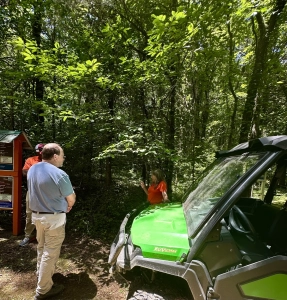
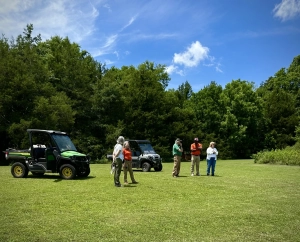
Fellow retired forester Chris Stuhlinger and I returned to the Alabama Cooperative Extension System’s Graham Farm and Nature Center on July 30, 2026, to scope and lay out a Tree and Shrub Identification Route. I previously reported that venture (https://stevejonesgbh.com/2026/09/29/scoping-a-tree-identification-trail-on-the-waterfall-loop-at-graham-farm-and-nature-center/). Join me virtually as we ascend to the proposed Tree, Shrub, and Vine Identification Trailhead. I collected additional photographs, a video, reflections, and observations distinct from the I.D. trail.

I appreciate the location and interpretive signage across the Center property. The I.D. lies 200 feet above the quaint cottage being prepared for overnight guest accommodation.
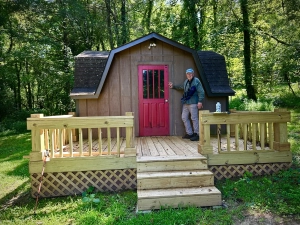
 

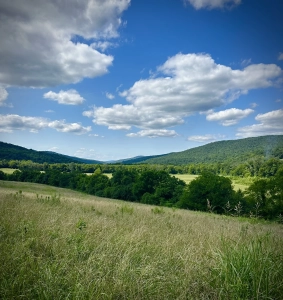
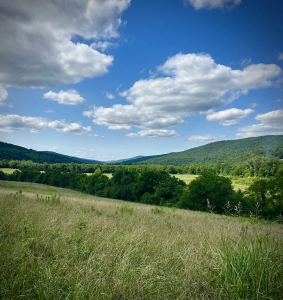
Nita’s View looks over the Larkin Creek and Paint Rock River Valleys from the cottage porch.
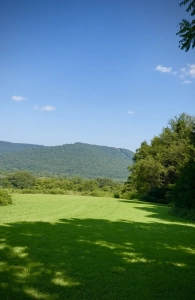
 

The Center property is indeed a special place!


Enamored with Tree Seed Production


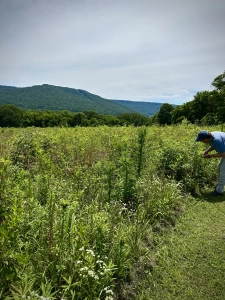
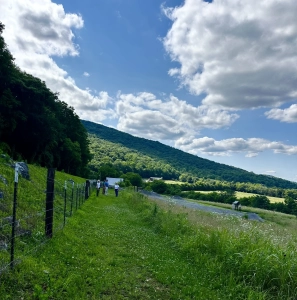
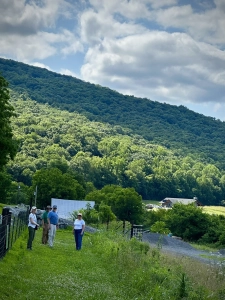
The mowed grass trail ascends to the cottage from the farmhouse, residence of the family who transferred the farmland and adjoining mountain forest to ACES. It is now used as an historic GF&NC feature, along the edge of a naturally regenerated forest.

My undergraduate silviculture text, The Practice of Silviculture (1962, David Martyn Smith), describes the critical forestry sub-science:

Silviculture has been variously defined as: the art of producing and tending a forest; the application of the knowledge of silvics in the treatment of a forest; the theory and practice of controlling forest establishment, composition, and growth.

I thrill at contemplating tree seed production and forest regeneration, which after all is critical to the practice of silviculture. I include this quote from Robert Louis Stevenson (1850-1894) in my salutation, closing every email I send:

Don’t judge each day by the harvest you reap but by the seeds that you plant.

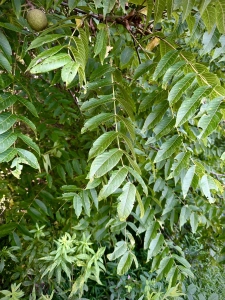
This young black walnut tree extended its branches to us as we passed. Walnut is among our nation’s most valued hardwood species, its beautiful wood treasured for the high-quality furniture and paneling. Every eastern USA-trained forester feels heart rate surging when encountering a well-formed walnut tree or, in this case, a healthy young walnut tree already producing fruit, a walnut nearly at eye-level.
 

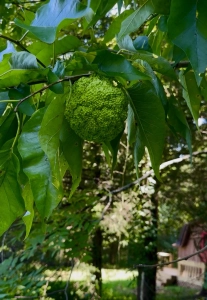
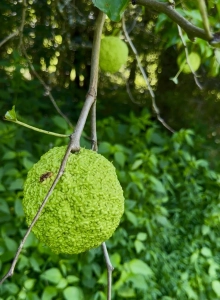
An osage orange tree stood nearby, its crown filled with softball-size hedge apples.
 

I recorded this 58-second video of osage orange fruit near the Nita’s View cabin.


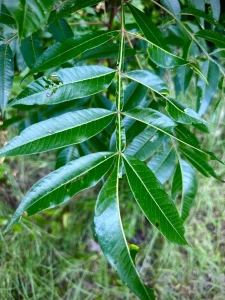
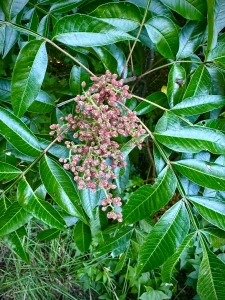
Shining sumac also grows at the edge of the emerging woods adjacent to the mowed grass. Also known as winged sumac, dwarf sumac, and flameleaf sumac, the tree’s foliage is true to its name. The petioles are prominently winged. Could the green be any deeper?! The leaves shinier? The young seedheads more promising? Their current light burgundy hints at the impending stark red of autumn.
 

Carolina buckthorn, another shrub species common in naturally regenerating forests, sported similar glossy green leaves and red berries.
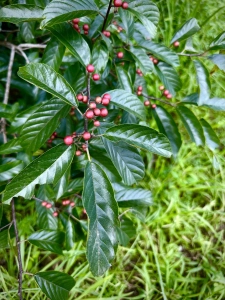
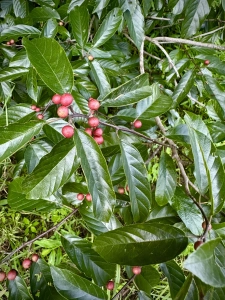
 

All living organisms, from the perspective of evolutionary biology, share a common, primary purpose of existence: survival and reproduction. Each species’ genes strive, through the machinery of bodies, to copy themselves into the future. It’s basic, fundamental, and primal, whether a primitive bacterium or a yellow poplar tree… or a Graham Farm and Nature Center black walnut, osage orange, shining sumac, or Carolina buckthorn.

A Wildlife Sidebar


I love Nature’s mysteries. Along the same wood-edge trail, I spotted two very distinct bare-soil depressions. I puzzled momentarily, and then an old synapse fired. Driving along the valley road within two miles of GF&NC, I spotted a few adult turkeys leading several poults at field edge. I recognized the depressions as an American turkey dust bath.
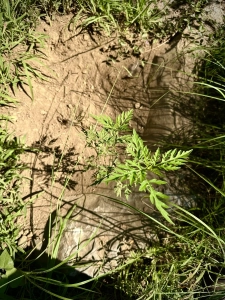
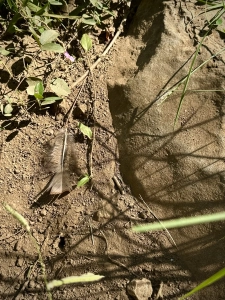
 

From online Wild Turkey Lab:

This Turkey Tuesday is about an interesting behavior wild turkeys use, that sometimes gets spiced up with the inclusion of common insects. As spring turns to summer, dust bathing is something that all wild turkeys do – adults and poults alike. These baths are a form of self-maintenance, as they help maintain the condition of feathers, particularly as birds are growing new feathers. Dusting often happens in the same places each day, with the bird laying down where they press their wings and tails onto the ground. Once on the ground, the bird just lays on its breast and flaps its wings, which throws dirt all over the body – sometimes they will also use their head to sling dirt onto the back and wings. And if you’ve ever been blessed enough to watch turkeys dust bath, some of them really get into it! Interestingly, turkeys will also dust in ant mounds – intentionally, termed anting. By doing so, the bird provokes the ants to bite feathers and release compounds that are toxicants – a natural form of pest control. In fact, there’s evidence that some birds preen the ants into their feathers, which crushes them and wipes the compounds on their feathers. This behavior is believed to be a way for turkeys to help mitigate issues with feather mites and lice, but there may be other explanations as well. The take home is wild turkeys have behaviors such as dust bathing and anting that serve purposes ranging from self-maintenance to comfort, and likely some purposes that are entirely unknown – regardless, who doesn’t love wallowing around in the dirt?


Closing


I accept the challenge of distilling these Brief-Form Posts into a single distinct reflection. I include this quote from Robert Louis Stevenson (1850-1894) in my salutation closing every email I send:

Don’t judge each day by the harvest you reap but by the seeds that you plant.


Nature’s special treats await our discovery, our understanding, and our interpretation!


Subscribe to my free weekly photo essays (like this one) at: http://eepurl.com/cKLJdL
 

Scoping a Tree Identification Trail on the Waterfall Loop at Graham Farm and Nature Center!

[Some of my GBH photo essays were not routinely distributed from mid-February through mid-June. I will resend those one by one, beginning the first week of July. Here is my Post from June 3, 2026 (https://stevejonesgbh.com/2026/06/03/brief-form-post-61-mid-february-olli-eagle-safari-at-lake-guntersville-state-park/)]


Fellow retired forester Chris Stuhlinger and I returned to the Alabama Cooperative Extension System’s Graham Farm and Nature Center on July 30, 2026, to scope and lay out a Tree and Shrub Identification Route on the Waterfall Loop Trail. Come along as we traverse the route, note special features, snap photographs, record two brief videos, and locate and catalog 33 species of trees, shrubs, and even a large vine. As is my custom in these Great Blue Heron weekly photo essays, take what you might from my observations and reflections… my musings, which 250 years ago in Ben Franklin’s time, would have been termed Natural Philosophy.

The Center, its setting, and its cause, where Conservation, Preservation, and Education Come Together, are special.


The trailhead lies on the lower Maxwell Mountain slope above the cabin at Nita’s View.


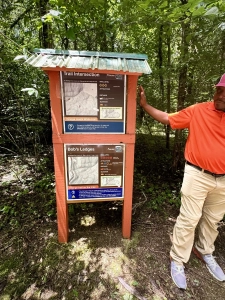
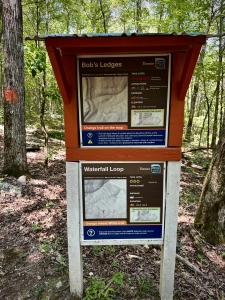
We departed on Bob’s Ledges Trail, then proceeded the full 1.31 miles on the Waterfall Loop Trail, returning us to the trailhead.


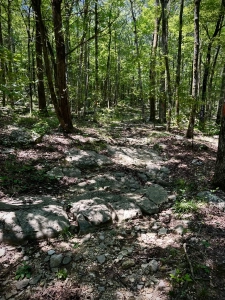
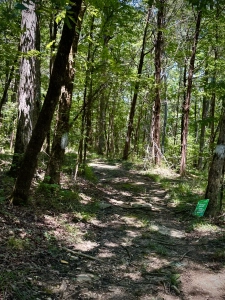
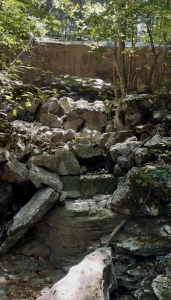
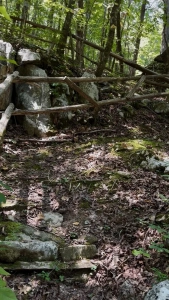
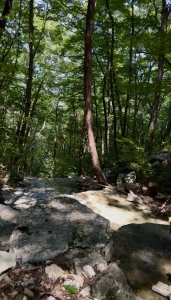
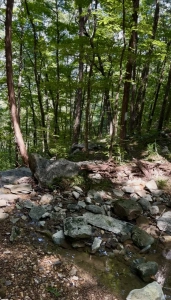
Bob’s Ledges Trail rose on a bouldered surface (below left). Waterfall Loop (see white blazes) returned us to the trailhead (below right).


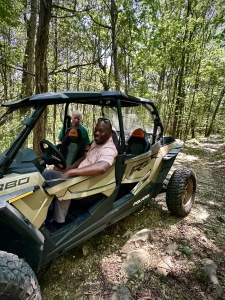
Center Director, Themika (Mike) Sims, transported us on the all-terrain vehicle to Bob’s intersection with Waterfall Loop. We will walk that section with our autumn return visit to finalize the tree and shrub identification route. I feel certain that an additional species or two will enter the tally. I believe that Mike’s sly smile was attributable to his foreknowledge of how rough (terrifying; death-defying!) the ATV ascent to Waterfall Loop was about to be for Chris and me!


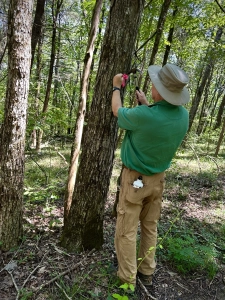
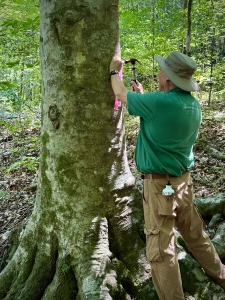
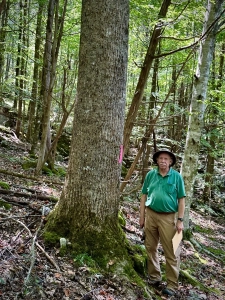
I won’t burden you with photographs of Chris tagging each specimen with a nail and red/pink flagging. Our division of labor was simple: he carried the hammer; I gave him a nail and a strip of flagging at each tree. As he so often does when identifying tree species, he nailed it! Here he is hammering the nail on the trailside face of a shagbark hickory.


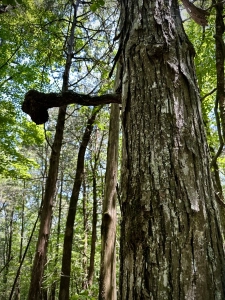
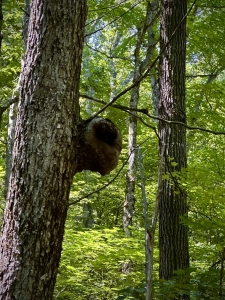
Nearby, another shagbark hickory sported what my younger Alabama grandson would have termed a Native American war club, a branch stub sustained with living cambium by the tree. Ah, a topic for another photo essay. I casually spotted another half dozen or so such shagbark phenomena on our circuit. Five hundred years ago, Leonardo da Vinci observed:

There is no result in nature without a cause.


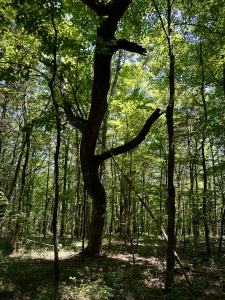
Every tree, stand, and forest has a story to tell. This massive sugar maple, leaning at 30 degrees toward the trail and the camera, seems a generation more senior than its sylvan neighbors. I’ll introduce other examples of individual elders we encountered within what otherwise appears to be an even-aged stand. This sugar maple has a sinister aspect, its crooked trunk’s threatening arms outstretched, reaching for the hapless, inattentive trekker ambling along Waterfall Loop. Might GF&NC staff want to consider caution (Beware: the trees are reaching out to grab you!) signs interspersed with the tree i.d. plaques!?


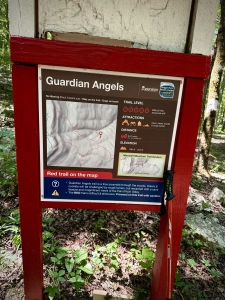
We passed the Guardian Angels trailhead a few hundred feet after Mike dropped us on Waterfall Loop. The map places us at an elevation of 1,060′. Guardian Angels would have elevated us to 1,520′ in 0.67 miles, where it rejoins Bob’s Ledges Trail.


The sign sobered me. I am eager to establish a long-term affair with GF&NC. My personal profile features the following: 2022 — left shoulder replacement; 2023 — minor stroke and transient ischemic attack; July 2023 — triple bypass surgery; January 2024 — right knee total replacement;  August 2024 — left knee total replacement; 2025 — bilateral inguinal hernia surgery; April 2026 — left shoulder reconstruction reversal/revision. So, what sobered me? Waterfall Loop is rated Level 3, Moderate Difficulty, which I handled. Guardian Angels earns a Level Five:

A difficult hike with steep elevation changes; hikers should know their limitations and proceed on the trail with caution!

A former marathoner, a dedicated athlete in younger years, I am not ready to yield easily to what my Alaska friends would refuse to call a mountain. Yet I shall test my limits. I’m getting better at learning when to go… and when to stay. Friends and loved ones care… and don’t trust my knowing when to cry Uncle (i.e., to admit defeat or plead for mercy, especially in an informal physical contest of some kind)!

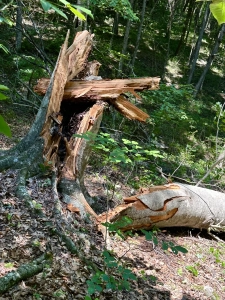
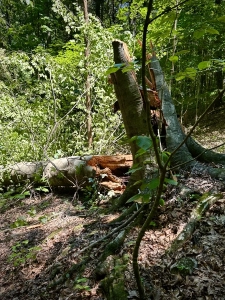
A large shattered American beech represents another affirmation of senior citizens, a second age class, in a younger forest. This tree had reached a physical strength threshold, hollow with a solid wood rind less than one-third of its diameter. Wind toppled it; gravity is undefeated!


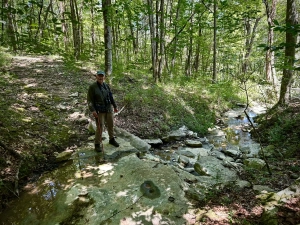
The beech stood just a hundred feet from this dry wash. A trickle passes across the limestone slab. I want to return when I can challenge my boot waterproofing.


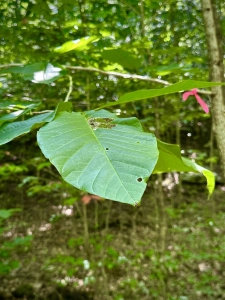
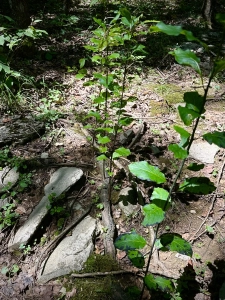
We flagged a stem of this cucumbertree sapling. We subsequently located a mature representative of the species. In addition to distinctive leaf and bud characteristics, trunk and canopy form, bark, and preferred slope, soil conditions, and aspect are important identification criteria. We seek mature specimens for tree identification purposes.


For American beech, we need little more than its unique bark, yet numerous other distinguishing features assist identification.


‘Twas a perfect time of year to locate persimmon trees. Shed fruit littered the trail under a mature, mid-story persimmon tree. I photographed a line of persimmon sprouting from a mother-tree root crossing the trail.


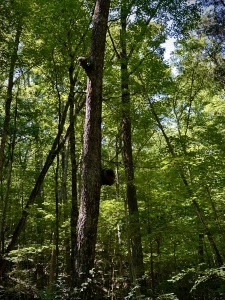
A hickory eye socket protruded from a main-trunk branch stub, like the war club. The tree, I suppose, has its reasons for keeping the stub alive. In this case, as perhaps in the other, the tree is attempting to callous over the stub to prevent disease infection. Higher on the trunk (right), another war club faces the camera.


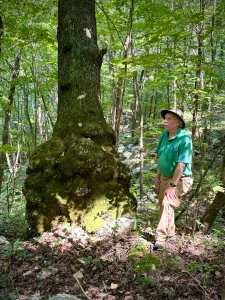
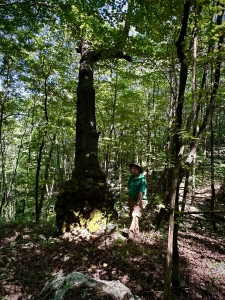
We encountered another sylvan senior citizen within a younger stand. This ancient white oak evidences severe basal decay and infection. The deformed, swollen base suggests a hollowed hulk. In my years as an industrial forester, I would have designated the tree as a commercial cull. However, wildlife species treasure its mast (acorns), covet its den shelter, and relish its spreading canopy and deep shade.


I recorded this 58-second video at the gnarled white oak. It sits at the base of the cascade descent, where Eastern redcedar guardrails aid hikers.


A massive limestone block carries the waterfall in wet weather. The quaint cedar rails helped me descend.


The view downhill attests to Maxwell Mountain’s rugged profile.


We finally found a mature yellow poplar, the only one we spotted along the entire trail.


A Unique Trail Maintenance Treatment


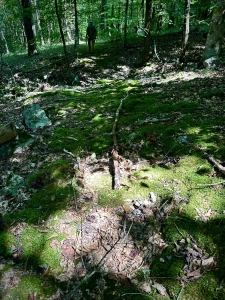
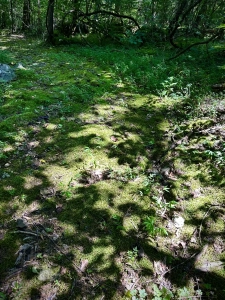
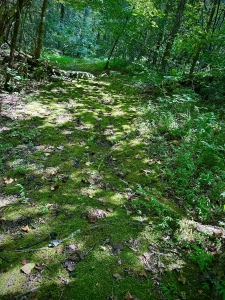
GF&NC crews blow fallen leaves from all trail surfaces 2-3 times annually. Because leaf-fall can smother any vegetation attempting to grow on the trail, the blown surface in places encourages a mossy (American tree moss), carpet-like trail surface. I had not seen this practice elsewhere.


I wonder, once GF&NC trails see more traffic, will the moss carpet persist?


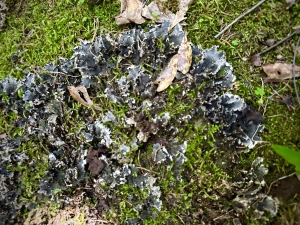
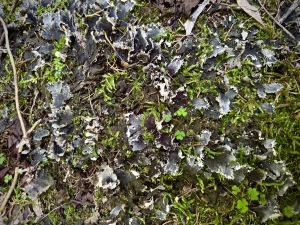
Intermixed with the moss, we encountered dense patches of dog pelt lichen, one I don’t recall previously seeing.


Chris and I marked 33 species. Here is our working list of tree, shrub, and vine species:


Tree Species (Common Names Only) Found Along the White Trail at Graham Farm

Tree of heaven; American beautyberry; American beech; American holly; Basswood; Blackgum; Black walnut; Boxelder; Carolina buckthorn; Chinkapin oak; Cucumbertree; Eastern redcedar; Flowering dogwood; Hackberry; Honeylocust; Mockernut hickory; Muscadine vine; Northern red oak; Osage-orange; Pawpaw; Persimmon; Red buckeye; Redbud; Shagbark hickory; Shining sumac (Green trail); Slippery elm; Spicebush; Sugar maple; Sweetgum (Green trail); Water oak; White ash; Yellow buckeye; Yellow-poplar


We consider our initial foray successful. We’ll return as summer temperatures yield to autumn, to refine the list, add species we may have missed, select better examples, record GPS coordinates for final selections, and confirm identification for all individuals. I view this, again, as a long-term relationship with Graham Farm and Nature Center. Like all human relationships, I see my affair with the Center property akin to what Aldo Leopold viewed as a necessary facet of his Land Ethic:

That land is a community is the basic concept of ecology, but that land is to be loved and respected is an extension of ethics.

So far, so good!


Thoughts and Reflections


I offer these observations:

  • That land is a community is the basic concept of ecology, but that land is to be loved and respected is an extension of ethics. (Aldo Leopold)

  • There is no result in nature without a cause. (Leonardo da Vinci)

  • What I see, feel, discover, and ponder ignites my passion, fuels my wanderings (and wonderings), and leads me to add a little new wood each year, even if at a reduced pace. (Steve Jones)


Inhale and absorb Nature’s elixir. May Nature inspire, inform, and reward you!

Note: Unless otherwise noted, all blog post images are created & photographed by Stephen B. Jones.

Please circulate images with photo credit: “©2026 Steve Jones, Great Blue Heron. All Rights Reserved.”


I am available for Nature-Inspired Speaking, Writing, and Consulting — contact me at steve.jones.0524@gmail.com


Subscribe to my free weekly photo essays (like this one) at: http://eepurl.com/cKLJdL
 

A reminder of my Personal and Professional Purpose, Passion, and Cause

If only more of us viewed our precious environment through the filters I employ. If only my mission and vision could be multiplied by untold orders of magnitude:

Mission: Employ writing and speaking to educate, inspire, and enable readers and listeners to understand, appreciate, and enjoy Nature… and accept and practice Earth Stewardship.

Vision:

  • People of all ages will pay greater attention to and engage more regularly with Nature… and will accept and practice informed and responsible Earth Stewardship.
  • They will see their relationship to our natural world with new eyes… and understand their Earth home more clearly.

Tagline/Motto: Steve (Great Blue Heron) encourages and seeks a better tomorrow through Nature-Inspired Living!


Steve’s Four Books


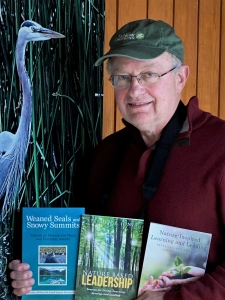
I wrote my books Nature-Based Leadership (2016), Nature-Inspired Learning and Leading (2017), Weaned Seals and Snowy Summits: Stories of Passion for Place and Everyday Nature (2019; co-authored with Dr. Jennifer Wilhoit), and Dutton Land & Cattle: A Land Legacy Story (2025) to encourage all citizens to recognize and appreciate that every lesson for living, learning, serving, and leading is either written indelibly in or is powerfully inspired by Nature. All four of my books compile personal experiences expressing my deep passion for Nature. They offer observations and reflections on my relationship with the natural world… and the broader implications for society. Order any from your local indie bookstore, or find them on IndieBound or other online sources such as Amazon and LifeRich.

I began writing books and Posts for several reasons:

  • I love hiking and exploring Nature
  • I see images I want to (and do) capture with my trusty iPhone camera
  • I enjoy explaining those images — an educator at heart
  • I don’t play golf!
  • I do love writing — it’s the hobby I never needed when my career consumed me
  • Judy suggested my writing is in large measure my legacy to our two kids, our five grandkids, and all the unborn generations beyond
  • And finally, perhaps my books and Blogs could reach beyond family and touch a few other lives… sow some seeds for the future


First Time Visit to Graham Farm and Nature Preserve

[Some of my GBH photo essays were not routinely distributed from mid-February through mid-June. I will resend those one by one, beginning the first week of July. Here is my Post from March 24 (https://stevejonesgbh.com/2026/03/24/mid-december-above-ground-exploration-at-cathedral-caverns-state-park/)]

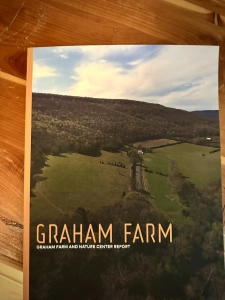
I toured the Alabama Cooperative Extension System (ACES) Jackson County Graham Farm and Nature Center on June 24, 2026, with friends Chris Stuhlinger, Bill and Becky Heslip, and Roxanne Pennington. I served as ACES Director from 1996 to 2001, leading the unification of Auburn University and A&M University’s distinct extension programs under a Federal Court Order that settled a long-standing legal dispute involving both institutions and the state of Alabama. I had looked forward to seeing the 491-acre outdoor education, conservation, and preservation enterprise borne of a dedicated joint endeavor. Come along with me for my initial observations, reflections, photographic images, and brief videos.


Doorway to a Special Place: Wisps of Memories and Vapors of Possibilities


I had driven past the Center on prior trips through the valley to visit a waterfall owned by friends about two miles beyond. I saw the GF&NC signage, but knew only enough to whet my curiosity and prompt me to arrange a tour and orientation, which led to scheduling this visit. I felt a deep connection, sentimental I suppose in part, from my intimate role in forging and leading the inter-university, involuntary (Federal Court-ordered) cooperative venture that stood during the era of my tenure in the national spotlight. My purpose is not to focus on what we then termed The Unification. The ACES directorship was the toughest role of my university administrative career. I’ll mention only that Auburn University President Bill Muse said, “We asked Steve to do the impossible, and he damned near did it!”

Driving onto the property, the Paint Rock Valley and surrounding Cumberland Plateau terrain beguiled and bewitched me. I reflected on my third book, Weaned Seals and Snowy Summits: Stories of Passion for Place and Everyday Nature, co-authored with Dr. Jennifer Wilhoit (published in 2019). My book Introduction included:

Awakening to nature does not require a trip to the Grand Canyon or a trek across the Gobi. Nature is in our backyard, a trip to a nearby city park, or a state park just down the road. Anyone can develop a relationship with nature wherever you are, a point I reiterate in each and every nature-inspired life and living address I deliver. My relationship with nature is spiritual. I view my engagement as a calling, and a noble cause to sow seeds so that others might do their own part to change some small corner of this Earth for the better.

I awakened to the Nature of this special place when I entered the Graham Farm and Nature Center. The sense and spirit beckoned me, pulled me into its magic. It was real and palpable, strengthening with each moment during our six hours on the property, seeing and inhaling its essence, meeting and getting to know staff, and sharing ideas and dreams. Wisps of memories and vapors of possibilities infused my vision of a potential volunteer niche role for me, an admittedly self-satisfying venture for yet another chapter of my retirement. I recently crossed my 75th birthday threshold, entering my 4th quarter of a century of life on Earth. A senior former forestry faculty colleague remarked in response to my fourth quarter of a century comment, “Remember that in football, in the 4th quarter, every play counts!”


I share a relevant excerpt from Notes from the Field: Paint Rock and the New Nation (July 4, 2026) by Bill Finch, Founding Director, Paint Rock Forest Research Center, located in the same valley and ecosystem as GF&NC:

Paint Rock appears to have escaped the worst of 19th and 20th century deforestation and plowing. But the modern forest is a dim reflection of what it was in the 18th century. Mountainsides then as now likely supported the most diverse assembly of deciduous trees and shrubs in the United States, in some places so tall and dense they blocked the sun for much of the year. But the slopes may have been less uniformly covered in trees. Fragments of sun-loving, summer blooming sunflowers, tall green gentians, lilies, moon-flowered silphiums, and warm season grasses still dot the slopes, the remnants of what must have been extensive nearly treeless glades. Plants that are now rare in that forest, like smoketrees and the federally threatened Morefield’s clematis vine, are struggling to find the light they once knew.

I have no doubt that this Paint Rock Valley is a Special Place. I recorded this 60-second video as a brief introduction to Graham Farm and Nature Center.


I will not burden you with tireless narrative based only upon a preliminary superficial reconnaissance. I’m hooked enough to return to get to know her better, and share what I learn, both the obvious and the mystery.

The Center


As Chancellor, the University of Alaska Fairbanks, America’s Arctic University, I fell in love with America’s Last Frontier. Alaska is not just a vast place…it’s a spirit, an abiding spirit. Robert Service, a Brit who spent several years in the Yukon during the turn of the prior century goldrush days, expressed the Far North essence more clearly than any I’ve read. Excerpting from his The Spell of the Yukon:

There’s a land — oh, it beckons and beckons,

And I want to go back — and I will.

It’s the great, big, broad land ‘way up yonder,

It’s the forests where silence has lease;

It’s the beauty that thrills me with wonder,

It’s the stillness that fills me with peace.


Granted, Alaska is unmatched. It’s also not within an hour and 15 minute drive of my house! I welcome a Nature affair with a special place of beauty, magic, wonder, awe, and inspiration… where I want to go back — and I can… and I will. Graham Farm and Nature Center fits the bill!

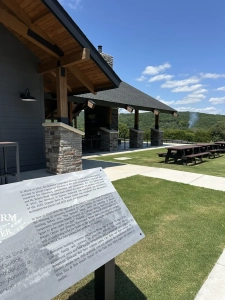
Allow me to rely upon selected photos and brief videos to present a GF&NC overview. I pledge to develop focused photo essays from future visits. The pavilion and operational hub occupy a commanding knoll at the valley core of the 491-acre property.


An old photograph of the pre-ACES Graham farm is among exhibits that reach back into the farm and valley’s rich history.


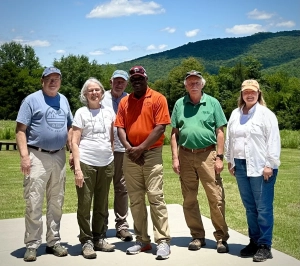
Our June 24, 2026 contingent consisted of Bill and Becky Heslip, me in the rear echelon, Center Director Themika L. “Mike” Sims, Chris Stuhlinger, Roxanne Pennington, and Administrative Support Specialist II Donna Sands behind the camera.


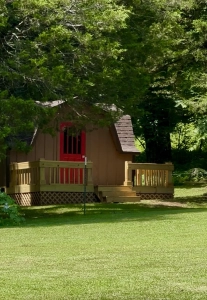
Although we didn’t have an opportunity to visit this charming woods-edge cottage, we understood that it will see future use as an overnight accommodation.


We visited the trailhead of a mountain forest trail. When summer’s heat abates I will return to explore this and many other trails.


The valley does indeed beckon.


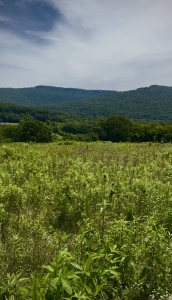
Even the open land near the creeks promises discoveries in ecotype transition from field to meadow to brush to forest to wetland to stream channel.


Meadowland transitioning to brush then to forest will afford learning and discovery to Center visitors for the ages.


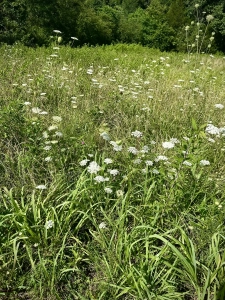
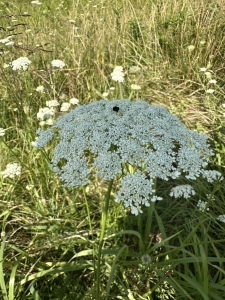
Wild carrot presented its lacy blossoms in the lower meadows.


I’m eager to follow and admire the Center’s changing seasonal faces. Multiply the one-hour-of-one-afternoon a hundred fold to anticipate the Nature-magic that lies ahead.


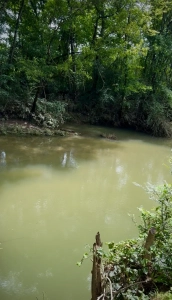
Larkin Creek enters Paint Rock River at this juncture on the property. I look forward to seeing the flow when it is not turbid from recent flooding, and also when the streams are at overflow. This landscape feature lies 1,000 vertical feet below the property’s highest. Spring at the union arrives more than a week in advance of the peak; autumn a week later. The place and its seasons are complex, varied, and exhilarating.


I recorded this 60-second video of the Larkin Creek juncture with Paint Rock River.


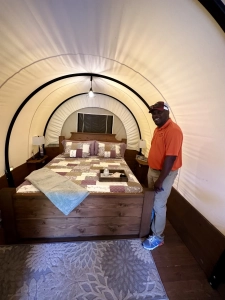
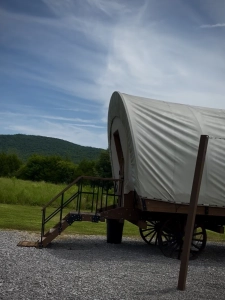
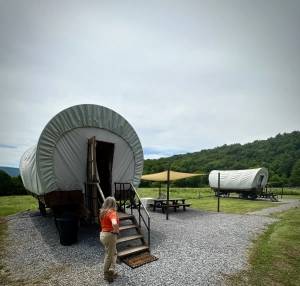
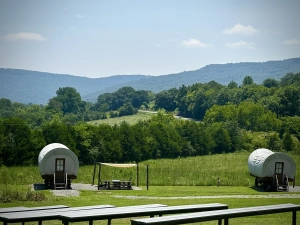
Perhaps I will find reason to stay overnight in the Connestoga Wagon Pampering Accommodations!


Here is my 60-second video of the overnight pampering wagons.


Chris and I are returning to GF&NC on July 30 to scout a tree and shrub identification trail, providing fodder for a subsequent Great Blue Heron GF&NC photo essay.

Thoughts and Reflections


I offer these observations:

  • I view my engagement (with Graham Farm and Nature Center) as a calling, and a noble cause to sow seeds so that others might do their own part to change some small corner of this Earth for the better. (Steve Jones)

  • The sense and spirit of this special place beckoned me, pulled me into its magic! (Steve Jones)
  • Remember that in football, in the 4th quarter, every play counts! (Dr. Russell Briggs)

  • Awakening to Nature does not require a trip to the Grand Canyon or a trek across the Gobi. (Steve Jones)


Inhale and absorb Nature’s elixir. May Nature Inspire, Inform, and Reward you!

Note: Unless otherwise noted, all blog post images are created & photographed by Stephen B. Jones.

Please circulate images with photo credit: “©2026 Steve Jones, Great Blue Heron. All Rights Reserved.”


I am available for Nature-Inspired Speaking, Writing, and Consulting — contact me at steve.jones.0524@gmail.com


Subscribe to my free weekly photo essays (like this one) at: http://eepurl.com/cKLJdL
 

A reminder of my Personal and Professional Purpose, Passion, and Cause

If only more of us viewed our precious environment through the filters I employ. If only my mission and vision could be multiplied by untold orders of magnitude:

Mission: Employ writing and speaking to educate, inspire, and enable readers and listeners to understand, appreciate, and enjoy Nature… and accept and practice Earth Stewardship.

Vision:

  • People of all ages will pay greater attention to and engage more regularly with Nature… and will accept and practice informed and responsible Earth Stewardship.
  • They will see their relationship to our natural world with new eyes… and understand their Earth home more clearly.

Tagline/Motto: Steve (Great Blue Heron) encourages and seeks a better tomorrow through Nature-Inspired Living!


Steve’s Four Books


I wrote my books Nature Based Leadership (2016), Nature-Inspired Learning and Leading (2017), Weaned Seals and Snowy Summits: Stories of Passion for Place and Everyday Nature (2019; co-authored with Dr. Jennifer Wilhoit), and Dutton Land & Cattle: A Land Legacy Story (2025) to encourage all citizens to recognize and appreciate that every lesson for living, learning, serving, and leading is either written indelibly in or is powerfully inspired by Nature. All four of my books present compilations of personal experiences expressing my deep passion for Nature. All four books offer observations and reflections on my relationship with the natural world… and the broader implications for society. Order any from your local indie bookstore, or find them on IndieBound or other online sources such as Amazon and LifeRich.

I began writing books and Posts for several reasons:

  • I love hiking and exploring Nature
  • I see images I want to (and do) capture with my trusty iPhone camera
  • I enjoy explaining those images — an educator at heart
  • I don’t play golf!
  • I do love writing — it’s the hobby I never needed when my career consumed me
  • Judy suggested my writing is in large measure my legacy to our two kids, our five grandkids, and all the unborn generations beyond
  • And finally, perhaps my books and Blogs could reach beyond family and touch a few other lives… sow some seeds for the future