Posts

Brief-Form Post #55: Auburn University’s College of Forestry, Wildlife, and Environment Crooked Oaks Nature Resort

I am pleased to add the 55th of my GBH Brief-Form Posts (Less than five minutes to read!) to my website. I don’t want my enthusiasm for thoroughness and detail to discourage readers. So, I will occasionally publish these brief Posts.

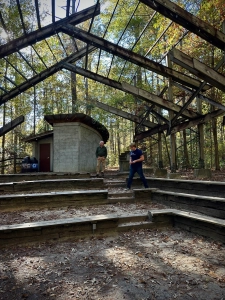
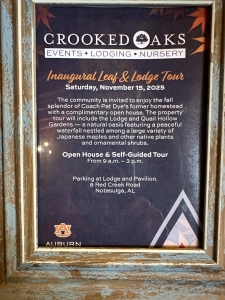
Arriving in Auburn on the evening of November 13, 2026, fellow retired forester (and Auburn University forestry graduate) Chris Stuhlinger, my grandson Jack (18), and I visited the College of Forestry, Wildlife, and Environment’s (CFWE) Crooked Oaks Lodge and Quail Hollow Gardens, the former estate of the university’s revered 1980s football coach, Pat Dye. The 415-acre preserve lies about 15 miles WSW of the university near Notasulga.
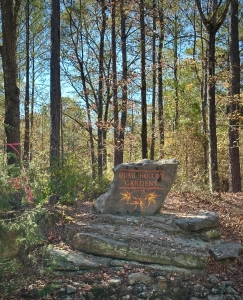
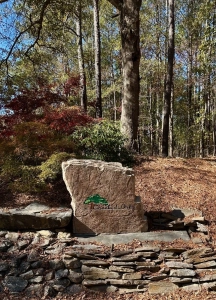
 

We did not know in advance that our visit coincided with the Crooked Oaks Open House. We modified our Saturday plans to include stopping by to see this exquisite addition to the CFWE, and assess its potential for integrating the property into the College’s education, research, and extension mission. Two old foresters with Auburn ties welcomed the chance to stroll the central trails, ponds, and infrastructure. Chris is a graduate and supporter of the College. I held a tenured full professor appointmentat in the College (then a School) from 1996-2001, when I served as Director, Alabama Cooperative Extension System.
 

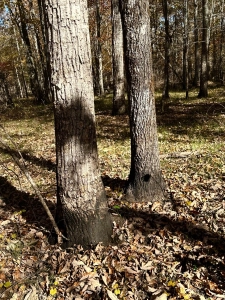
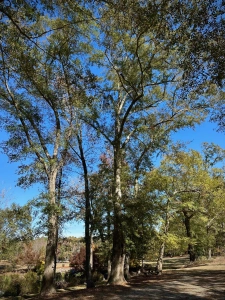
My intent with this Brief-Form Post is to offer a glimpse of Crooked Oaks, a delightful slice of the Old South charm of a traditional hunting and entertainment property, Lodge, and Gardens. I offer a few photographs. Two crooked oaks stand along the pathway from the Lodge to the former Dye residence.
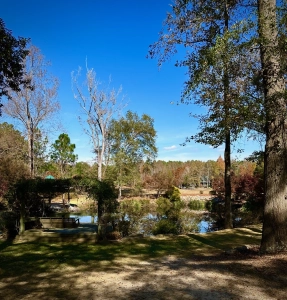
 

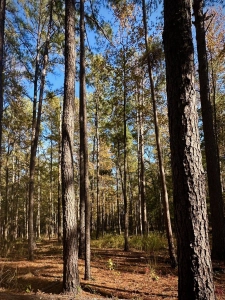
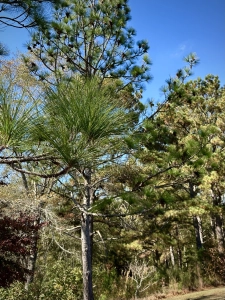
A 35-foot longleaf pine tree stands along the pathway beyond the foreground longleaf pine branch and needles to the my left as I snapped the photo. Loblolly pine dominates the evergreen component of the property.
 

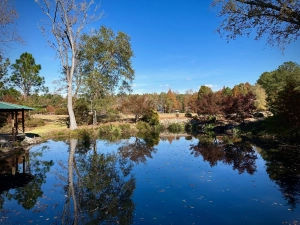
I (and the pond) reflected on the brilliant azure sky…not a cloud across the firmament, matching the open house with open sky.
 

I recorded this 58-second video to capture the essence of Crooked Oaks in a manner not attainable with still photos and my feeble written prose.


The former Dye residence overlooks the pond, amid the peace, quiet, tranquility, and comfort of Nature, far removed in time, distance, and dimension from the competive autumn Saturday maelstrom in Jordan-Hare Stadium and Pat Dye Field. I know that Nature is soothing, calming, and regenerative. Coach Dye expressed love for his farm in rural Notasulga. No wonder he sought refuge among the crooked oaks, and the Japanese maples he cultivated there.
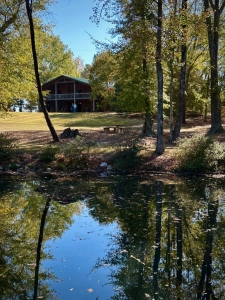
 

Like his Hall of Fame footall career, he established an Earth Stewardship legacy at Crooked Oaks Hunting Preserve and Quail Hollow Gardens Japanese Maple Farm & Nursery.
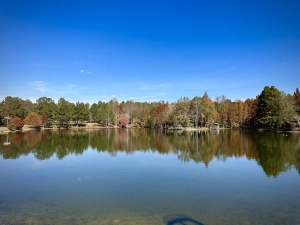
 

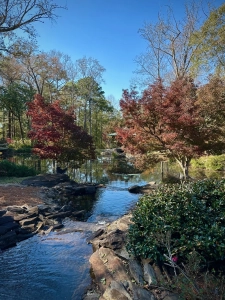
I imagine that the people coach Dye shaped and inspired and the lifeblood of the university he loved, flow metaphorically with the gentle stream tracing through the landscaped garden bordered by several of his cherished autumn-red Japanese maples.
 

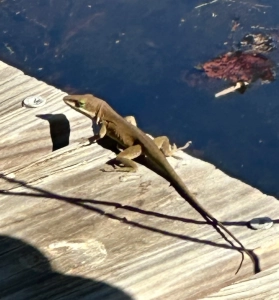
An Alabama native green anole proudly expressed ownership of a pondside deck. The lizard reluctantly allowed me to snap a photo, but seemed perturbed and impatient for me to continue walking.
 

I arrived at Auburn University as ACES Director in 1996. Dye coached his final footbal season in 1992. He resided on the farm for another 19 years after I left for the next step of my career in 2001. During my ACES tenure I knew only that Dye had been a football and athletics institution at AU. Dealing with establishing a Court-Ordered unified state extension system (combining the separate programs at AU and Alabama A&M), I had no time to learn more about Coach Dye, his Nature interests, or the property. Now retired in Alabama since 2018, I am intrigued. I want to know more about Crooked Oaks and the man who created it. I want to return, walk the 400+ acres, and peer into the Stewardship drive that fueled Dye’s passion for the land, the College, and the distant future.


Closing


I accept the challenge of distilling these Brief-Form Posts into a single distinct reflection, a task far more elusive than assembling a dozen pithy statements. I can only speculate on Coach Dye’s motives for creating the Crooked Oaks legacy and placing it in perpetuity with CFWE.

I step backward 80 years to Louis Bromfield’s non-fiction Pleasant Valley (1945), his tale of passion for rehabilitating the old worn out Ohio farm, Malabar, he purchased in 1938. Perhaps my favorite conservation statements among all the great observations by the Who’s Who of conservation greats is Bromfield’s:

The adventure at Malabar is by no means finished… The land came to us out of eternity and when the youngest of us associated with it dies, it will still be here. The best we can hope to do is to leave the mark of our fleeting existence upon it, to die knowing that we have changed a small corner of this earth for the better by wisdom, knowledge and hard work.

That is all any of us who care pasionately about earth stewardship can do. I dedicate my writing, teaching, speaking, and leading Nature tours to changing a small corner of this earth for the better by wisdom, knowledge and hard work.
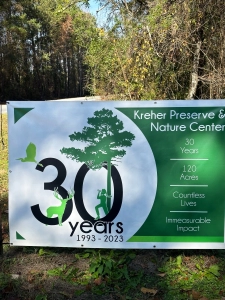
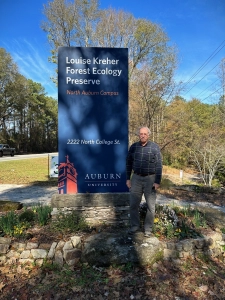


Re-Visiting Auburn University’s Louise Kreher Forest Ecology Preserve and Nature Center

Arriving in Auburn on the evening of November 13, 2026, fellow retired forester (and Auburn University forestry graduate) Chris Stuhlinger, my grandson Jack (18), and I visited Auburn University’s College of Forestry, Wildlife, and Environment’s (CFWE) Kreher Forest Ecology Preserve and Nature Center. I invite you to join us as we tour this fabulous education and interpretation facility.

I snapped these photos when Chris and I visited Kreher in November 2023. See my photo essay chronicling that visit: https://stevejonesgbh.com/2024/03/06/iron-bowl-visit-to-auburns-kreher-preserve-and-nature-center/

KreherKreher


I have a special attraction to Kreher. During my 1996-2001 term as Director, Alabama Cooperative Extension System, I held a tenured Full Professor position in the CFWE unit before it became a College. Among other interests at Auburn, Jack is considering a program in CFWE. Chris continues to support the College; on Friday, he delivered a guest lecture on Urban Forestry. Jack and I observed.

Moreover, Kreher follows a mission (Promote a sense of stewardship towards nature through quality environmental education…) that aligns beautifully with my Retirement Mission:

Employ writing and speaking to educate, inspire, and enable readers and listeners to understand, appreciate, and enjoy Nature… and accept and practice Earth Stewardship.

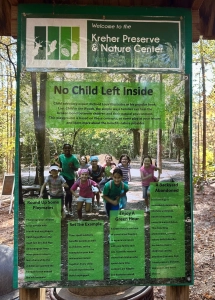
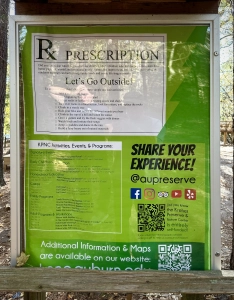
These interpretive signs signal Kreher’s commitment to author Richard Louv’s tenets from Last Child in the Woods: Saving Our Children from Nature-Deficit Disorder and other of his books:

We cannot protect something we do not love, we cannot love what we do not know, and we cannot know what we do not see. Or hear. Or sense.

Time in nature is not leisure time; it’s an essential investment in our chidlren’s health (and also, by the way, in our own).


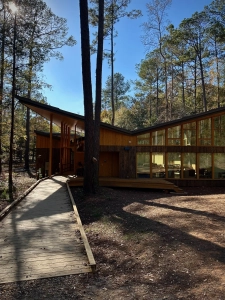
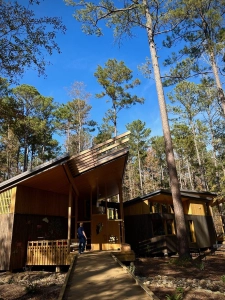
Auburn’s CFWE celebrated the Environmental Education Building grand opening on December 7 and 8, 2024 (https://kpnc.auburn.edu/eeb/). The new building is an education and interpretation wonder located near the entrance of the 130 acre preserve.


Relevant websites extoll the building and associated elements extensively. Chris and Jack wandered within the unique outdoor classroom.


My objective with this photo essay is to disclose the beauty, magic, wonder, awe, and inspiration revealed in our 90-minute traverse along two miles of preserve trails. We had only limited time to explore before heading back to North Alabama. Importantly, we wanted to get a sense of the place, knowing that we would someday return for a deeper dive when staff could tour us through the new building and guide us along educational trails.

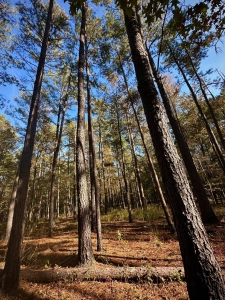
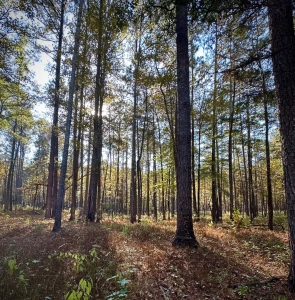
Perhaps stating the obvious, I am not a photographer. Yes, I take photographs of things, objects, and scenes I love and understand. My equipment is an iPhone, which is, in, fact, a remarkable tool. I’m learning how to do more with it. Loblolly pine trees in the former farmland reach at least 100 feet. The photo at left struggles with their height, presenting them with an exagerated lean to a vertical vanishing point. Aha, I thought, I can edit to eliminate the distortion (right). Not so fast! I believe I prefer the unedited photo — that’s how it looks in real life. But, what do I know? Yet, maybe I do know best. I’m 53 years beyond earning a forestry degree…more than half a century of gazing into the firmament through tree crowns.


I realize that I created the original distortion by aiming the camera at 45 degrees, intending to emphasize the exceptional tree height. I’m learning, albeit slowly. The eye-level photo at right makes the trees look squatty rather than towering.

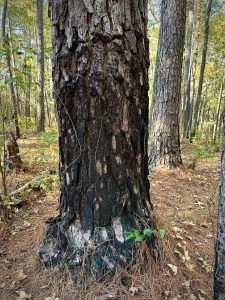
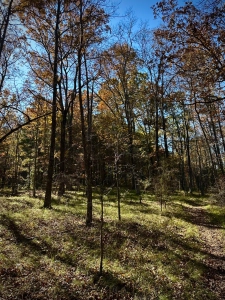
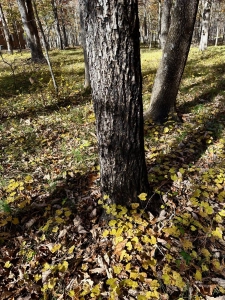
Managers employ prescribed fire routinely to reduce fuels, manage understory vegetation, and maintain a parklike appearance, ideal for an education landscape populated with wandering young learners (of all ages!). Charred trunks are common. I am a longtime proponent of prescribed fire. I love the look, and the effect!


Tree Form Oddities and Curiosities


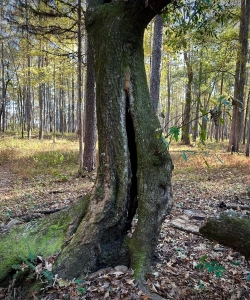
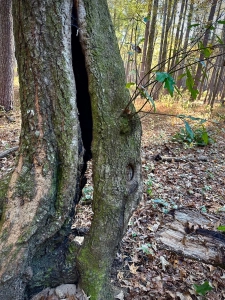
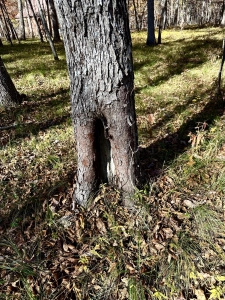
Not all the property’s trees reached for the heavens. I believe this old water oak stood at the edge of an open field that is now occupied by the vigorous young pine forest. Its tortured form suggests age, physical abuse, and exposure to the vagaries of storms without the protection of a closed forest. The bole is hollow and split. Healthy, protected, and vigorous oaks don’t present views from on side to the other!


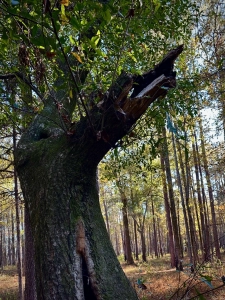
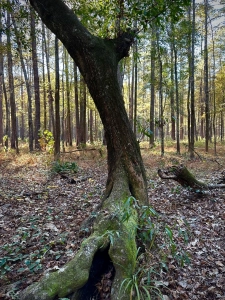
Wind severed two-thirds of its top decades ago. See the open wound at the top where its vertical trunk once extended. The huge right-lateral branch likewise left the tree from a powerful gust. The tortured canopy remains sustained life, even at the cost of surviving without vigor…simply hanging on to life. The photo at right suggests further mutilation and humiliation (Do trees suffer humiliation?). Long ago, a wind blasted the tree away from the camera, lay it flat. I survived that blow, appearing to craw away, sending a shoot to vertical, only for a future gale to curse its crown.


Despite the frantic and persisten efforts of the water oak, the old field pine stand flourished and continues to thrive.


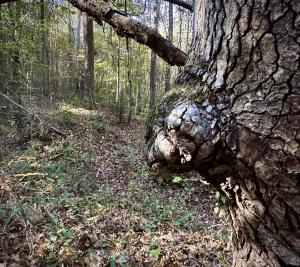
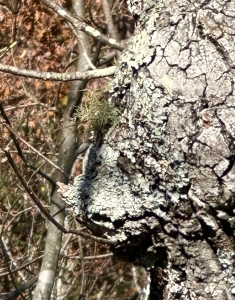
Another oak, much older than the old- pines, bears a curious burl. My imagination transformed the bulbous creature to a sad hedgehog peering around the trunk. See its tight mouth, broad nose, morose squinting eyes, and furrowed brow.


Albert Einstein, the 20th century’s foremost theoretical physicist, appreciated the fine art of curiosty:

Imagination is more important than knowledge. Knowledge is limited. Imagination encircles the world.

The true wonders of Nature lie hidden in plain sight. I wonder what Einstein would have see if he had wandered along the Kreher trails with us?

A society’s competitive advantage will come not from how well its schools teach the multiplication and periodic tables, but from how well they stimulate imagination and creativity.

I love forest visits with my grandkids. I try to kindle their imagination and creativity.


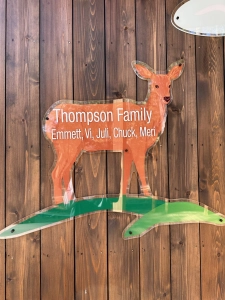
A building plaque recognizes dear friends, Emmett and Vi Thompson. Emmett is a former CFWE Dean.


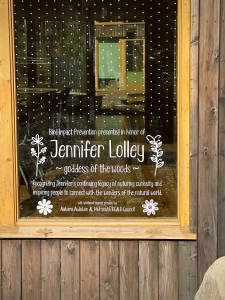
A Bird Impact Prevention Window honors longtime Center Director Jennifer Lolley and recognizes her continuing legacy of nurturing curiosity and inspiring people to connect with the wonders of the natural world.


Thoughts and Reflections


I offer these observations:

  • I love forest visits with my grandkids. I try to kindle their imagination and creativity. (Steve Jones)
  • We cannot protect something we do not love, we cannot love what we do not know, and we cannot know what we do not see. Or hear. Or sense. (Richard Louv)
  • A society’s competitive advantage will come not from how well its schools teach the multiplication and periodic tables, but from how well they stimulate imagination and creativity. (Albert Einstein)

Inhale and absorb Nature’s elixir. May Nature Inspire, Inform, and Reward you!


Note: All blog post images created & photographed by Stephen B. Jones unless otherwise noted. Please circulate images with photo credit: “©2025 Steve Jones, Great Blue Heron LLC. All Rights Reserved.”

I am available for Nature-Inspired Speaking, Writing, and Consulting — contact me at steve.jones.0524@gmail.com

Subscribe to my free weekly photo essays (like this one) at: http://eepurl.com/cKLJdL


Reminder of my Personal and Professional Purpose, Passion, and Cause


If only more of us viewed our precious environment through the filters I employ. If only my mission and vision could be multiplied untold orders of magnitude:

Mission: Employ writing and speaking to educate, inspire, and enable readers and listeners to understand, appreciate, and enjoy Nature… and accept and practice Earth Stewardship.

Vision:

  • People of all ages will pay greater attention to and engage more regularly with Nature… and will accept and practice informed and responsible Earth Stewardship.
  • They will see their relationship to our natural world with new eyes… and will understand more clearly their Earth home.

Tagline/Motto: Steve (Great Blue Heron) encourages and seeks a better tomorrow through Nature-Inspired Living!


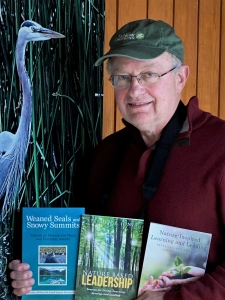
Steve’s Four Books


I wrote my books Nature Based Leadership (2016), Nature-Inspired Learning and Leading (2017), Weaned Seals and Snowy Summits: Stories of Passion for Place and Everyday Nature (2019; co-authored with Dr. Jennifer Wilhoit), and Dutton Land & Cattle: A Land Legacy Story (2023) to encourage all citizens to recognize and appreciate that every lesson for living, learning, serving, and leading is either written indelibly in or is powerfully inspired by Nature. All four of my books present compilations of personal experiences expressing my deep passion for Nature. All four books offer observations and reflections on my relationship with the natural world… and the broader implications for society. Order any from your local indie bookstore, or find them on IndieBound or other online sources such as Amazon and LifeRich.

I began writing books and Posts for several reasons:

  • I love hiking and exploring Nature
  • I see images I want to (and do) capture with my trusty iPhone camera
  • I enjoy explaining those images — an educator at heart
  • I don’t play golf!
  • I do love writing — it’s the hobby I never needed when my career consumed me
  • Judy suggested my writing is in large measure my legacy to our two kids, our five grandkids, and all the unborn generations beyond
  • And finally, perhaps my books and Blogs could reach beyond family and touch a few other lives… sow some seeds for the future


Brief-Form Post #54: Second Autumn Afternoon Near the Lodge and Cabins at AL’s DeSoto State Park!

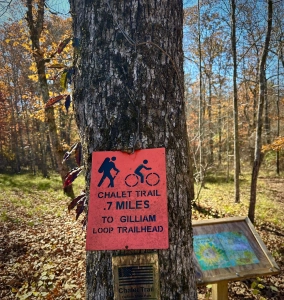
I attended an Alabama State Parks Foundation Board morning meeting on Thursday, November 6, 2026, at the DeSoto State Park Lodge. I had hiked extensively at the park the previous afternoon. Following the board session, I hiked the Chalet Trail from the Lodge and circuited the nearby cabins area. I am seldom disappointed by the magic a short saunter reveals, if only one looks deeply enough to discover what lies hidden in plain sight.

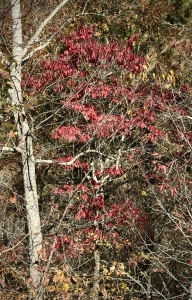
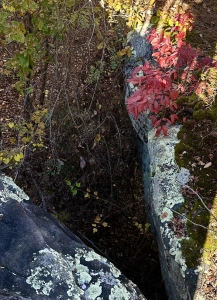
Come along with me to see the beauty, magic, wonder, and awe I spotted. The lodge deck overlooking the canyon of the West Fork of the Little River proved a good place to begin my trek. A brilliantly red sourwood tree stood at eye level, peering through the now-leafless yellow poplar (left). A smaller sourwood shrub topped a sandstone ledge near the deck (right). As a run-of-the-mill guy who knows only the basic rainbow colors, I referred to sourwood’s fall cape simply as red. Online leafyplace.com relied on more color-proficient descriptors: vibrant shades of crimson red to burgundy and purple.

DeSoto


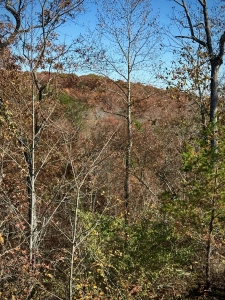
The canyon reached ~250′ from stream to rimrock. Summer foliage hides the opposite ridge, now visible with leaf-drop.


I recorded this 58-second video from the Lodge deck.


Intent on uncovering more of the forest’s secrets, I walked from the Lodge to the Chalet Trailhead.


Afternoon along the Chalet Trail


A hike doesn’t need to be long and daunting to offer rewards. A perfect afternoon for leisurely sauntering is ideal for recovering mentally from a Board meeting, and for preparing physically for the required two-hour drive home.


I recorded this 59-second video within the forest along the trail.


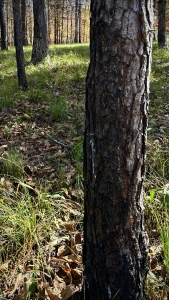
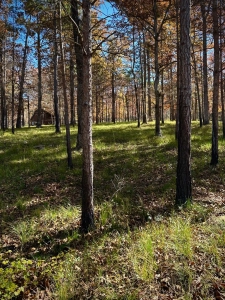
Periodic prescribed fire has eliminated understory trees and shrubs, creating an open-grown grassy impression. Some refer to the appearance as park-like, a condition that many persons queried in surveys prefer.

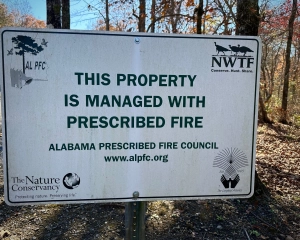
I chose the Chalet Trail to focus on the benefits and consequences of prescribed fire as a parkland management tool. Note that the sign is sanctioned by: Alabama Prescribed Fire Council; National Wild Turkey Federation; The Nature Conservancy; and The Longleaf Alliance.

DeSoto


The understory is open, with no brambles or thickets impeding walking and, ostensibly, hiding snakes, critters, and other scary woodland denizens. I speak in jest of scary woodland denizens, yet I, too, prefer parklike stands in an area heavily trafficked around picnic tables, campgrounds, and cabins.

Chewacla


I recorded a 60-second video of the stand managed by fire and evidencing charred trunks.


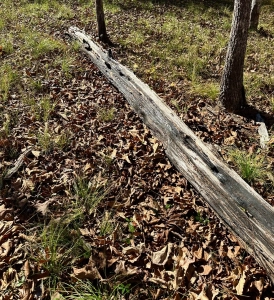
I observe in nearly every Great Blue Heron photo essay that death is a big part of life in our forests. Whether a wildfire or controlled burn, dead and down woody debris is part of the ground-level fuel. Occasionally even a intentionally administered prescription fire will burn intensely enough to damage cambium at the base, opening a court of fungal infection. The kickory tree at left bears a catface, a hollow resulting from heart decay. The rot extends upward, eliminating any commercial timber value and weakening structural soundness. However, in this park cabin area management regime, timber value is of little consequence. Instead, squirrels, snakes, birds, and other critters value tree cavities! All the better for park wildlife enthusiasts.

DeSoto


Fall colors, open canopy, an orchard stocking level, and a welcoming understory tell me that controlled fire is an effective management tool.

DeSoto


Charred trunks and nearly bare forest floor evidence employed fire success.


Across my 12 years practicing forestry in the southeastern US for a Fortune-500 paper and allied forest products manufacturer, I control-burned tens of thousands of acres of company-owned forest land. Whether site preparation or established stand burning, the tool is essential to meeting our seeming insatiable demand for pulp, lumber, poles, chips, and miscellaneous other probucts. For the record our South Alabama crews once ignited and safely managed a rough-reduction, aerial ignition day when we covered 4,300 acres, a banner accomplishment!

Many surprises in Nature lie hidden in plain sight, including this groundhog head. A burl on a water oak trunk trailside. The critter sports a moustached mouth, abbreviated proboscis, two eyes (its right one with a lichened, overhanging brow), and a plated forebrow. It’s okay to employ a little imagination when searching our forests for obscure mammal residents.

DeSoto


Albert Einstein observed:

Imagination is more important than knowledge. Knowledge is limited. Imagination encircles the world.

It is the supreme art of the teacher to awaken joy in creative expression and knowledge.


Closing


I accept the challenge of distilling these Brief-Form Posts into a single distinct reflection.

Aldo Leopold, a preeminent mid-Twentieth Century ecologist, is my conservation hero, and his writing, A Sand County Almanac, is a lyrical conservation classic. Leopold encouraged informed and responsible land management, employing an arsenal of effective, bold practices informed by experience, wisdom, and hard work. He professed:
Prudence never kindled a fire in the human mind; I have no hope for conservation born of fear.