Posts

The Northern Hardwood Forest at Pennsylvania’s Wolf Creek Narrows Natural Area

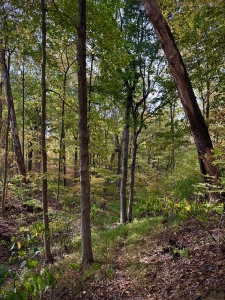
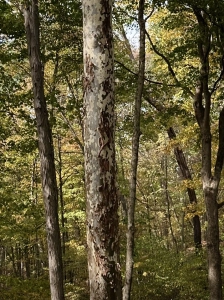
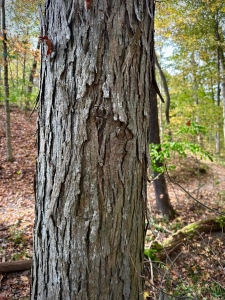
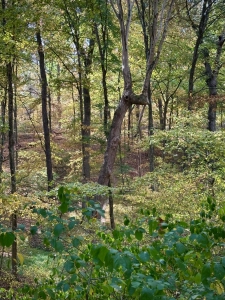
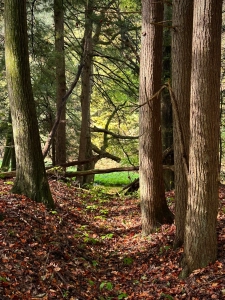
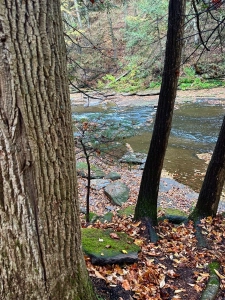
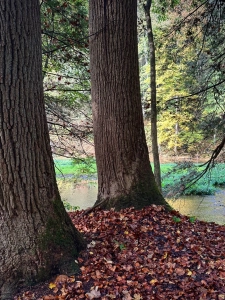
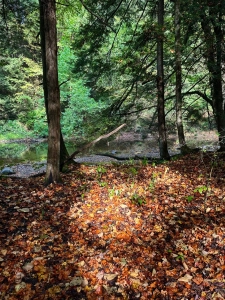
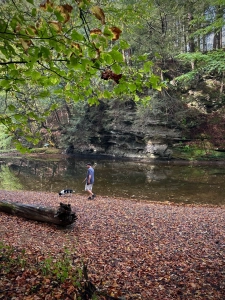
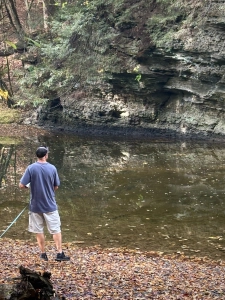
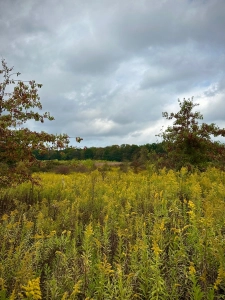
Wolf Creek Narrows Natural Area, owned and managed by the Western Pennsylvania Conservancy (WPC), is located in northwestern Butler County, Pennsylvania, just 30 minutes from where my son and his family reside north of Pittsburgh. Matt, his dog Oakley, and I circuited the 2.35-mile trail on the morning of September 22, the first day of autumn. I focus this photo essay on the exquisite old-growth northern hardwood forest.

My heart soared at the prospect of returning to an ecosystem shaped by a continental ice sheet just 13 millennia ago. The absolute freshness and newness stimulate wild conjecture and total admiration for Nature’s rapid recovery from thousands of feet of ice.

The Western PA Conservancy provided an online description:

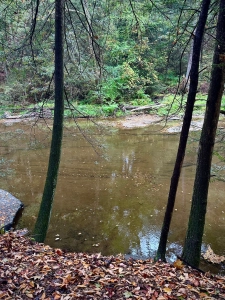
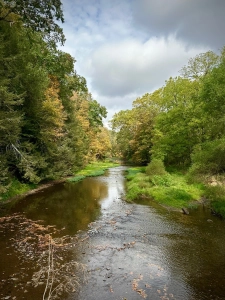
Wolf Creek Narrows Natural Area is particularly known for its spectacular display of spring wildflowers. An active floodplain, mature northern hardwood forest, and scenic cliffs make this property one of WPC’s most popular. It is believed that the steep, narrow gorge of Wolf Creek Narrows originally formed when the ceiling of an ice-age cave eroded and collapsed due to runoff from the melting glacier. The site now consists of a high-quality stream meandering through towering 50-foot cliffs. These natural processes, including annual flooding and ice scouring, as well as limited human activities, have resulted in diverse natural communities.

We have lots of karst topography and abundant caves in my present home range of northern Alabama, but nothing so exciting as ice-age caves and ice scouring!

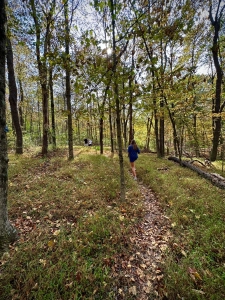
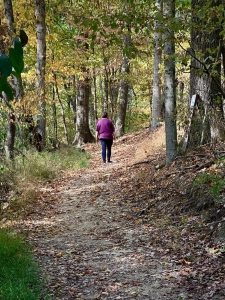
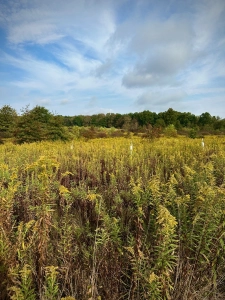
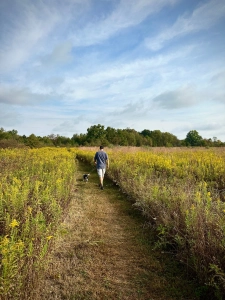
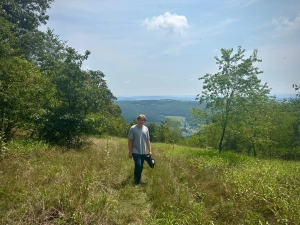
The meadow trail below led into the deep forest.


Okay, I’ve opened the portal to Wolf Creek Narrows. Now comes the tough part. How do I package 31 photos and two brief videos into a Post digestible within 15-minutes? Species resident to the Allegheny Hardwood forests of my 1984-85 NW PA and SW NY PhD field research welcomed me with warm and comforting embrace.


I’ve found that brief videos tell a richer tale than still photographs and written narrative. I recorded this 58-second video within the mixed forest. I hope that I’ve stimulated your interest in this special place.


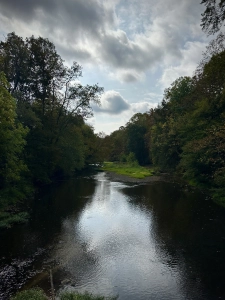
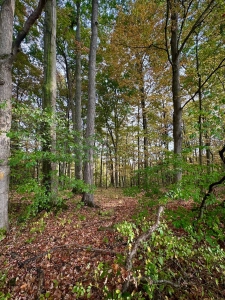
The Narrows and Wolf Creek lie beyond the forest edge.


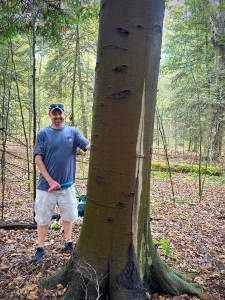
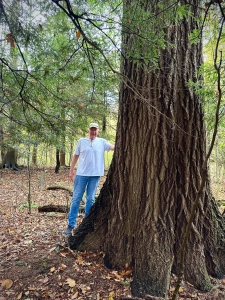
Matt stands six-feet tall, behind a 30-inch diameter American beech. The red oak beyond the beech (at left) is nearly 40-inches in diameter.


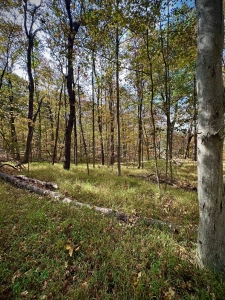
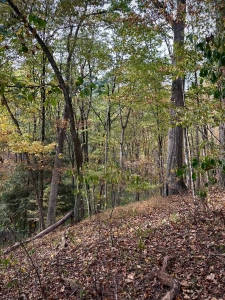
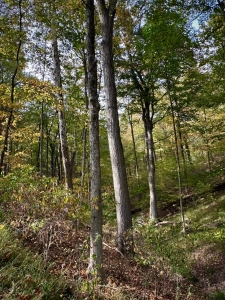
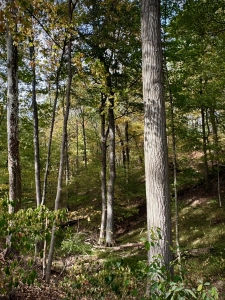
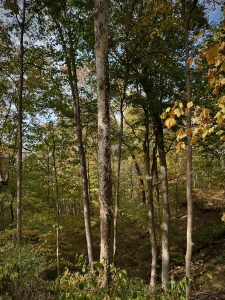
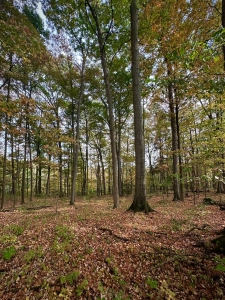
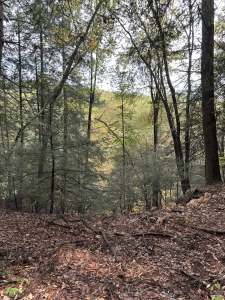
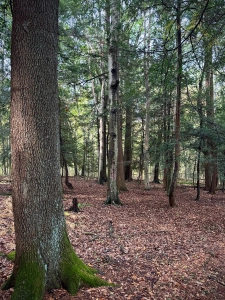
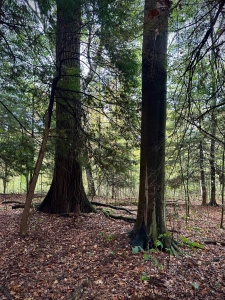
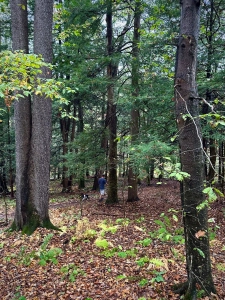
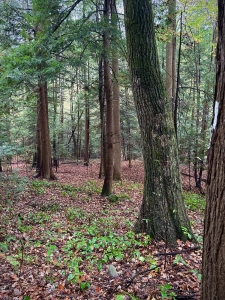
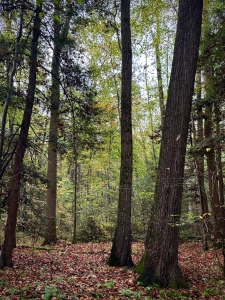
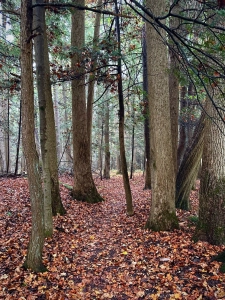
You don’t need my narrative to appreciate the beauty, magic, inspiration, and awe of this park-like northern hardwood wonderland.


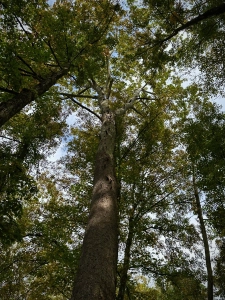
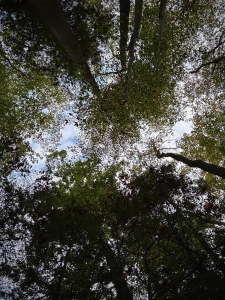
Take a look heavenward into this cathedral forest canopy.


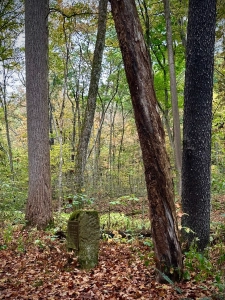
I love the deep shade and open understory far below.


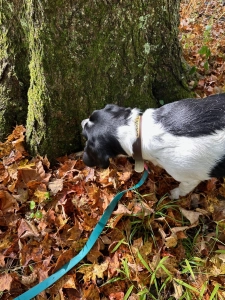
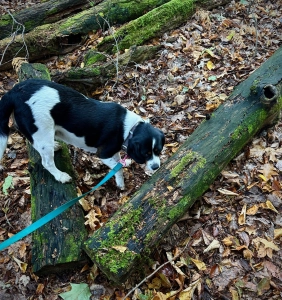
I frequently lead or co-lead organized woodland Nature excursions (saunters) in parks, preserves, refuges, and sanctuaries near my Madison, Alabama home. Like John Muir, I prefer sauntering in the woods…abhoring hurrying through the forest. I noticed that Oakley takes the same approach, sniffing and scenting her way within the woods, reading the signs, never missing an olfactory clue. My iPhone camera substitutes for scenting. So much of what I seek in Nature lies hidden in plain sight. I believe my own joy in discovery matches Oakley’s!


I can’t imagine Oakley concerned with steps, miles, time elapsed, or other metrics. For her, each sniff tells a tale. My objective is to learn from every Nature venture, intent upon constructing a meaningful tale in form of a photo essay like this one.

In fact, my retirement mission, practiced in these Posts, is to: Employ writing (and photography) to educate, inspire, and enable readers and viewers to understand, appreciate, and enjoy Nature… and accept and practice Earth Stewardship.

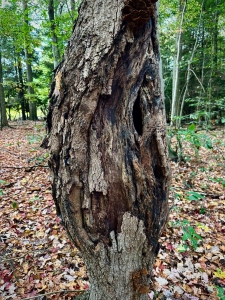
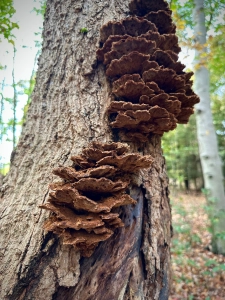
I keep my nose fine-tuned for sniffing tree form oddities and curiosities. A living, deeply decayed, cankered intermediate canopy sugar maple forced me to snap photographs of both the canker and the brown mushrooms above. How long ago did the fungus (or fungi) infect the sugar maple? How long will the tree survive? Death is a big part of life in the forest, whether west-central Pennsylvania or Alabama’s Tennessee River Valley.


Again, so much in Nature lies hidden in plain sight. Oakley discovered untold olfactory treasures. Most un-attuned hikers would not have seen, understood, and appreciated the visual treasures I encountered in our brief morning excursion. Allow me now to superficially catalog the more notable main canopy tree species.


Diverse Species Introductions


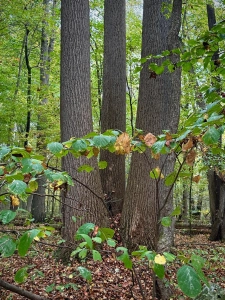
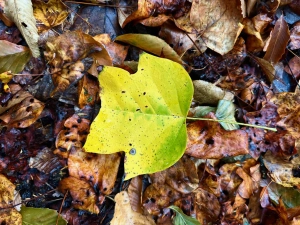
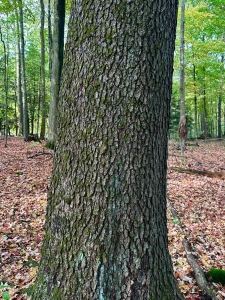
With little need for extensive narrative, I offer photos expressing the forest’s dominant upper canopy tree species. Yellow poplar reigns supreme at Wolf Creek Narrows, just as the species rules the high canopy at my favorite deep forest stand along the Wells Memorial Trail in Alabama’s Monte Sano State Park.


I recorded this 59-second video of the forest’s mixed species.


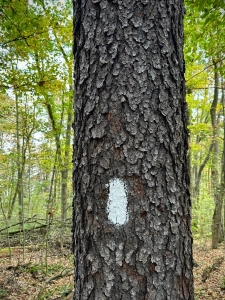
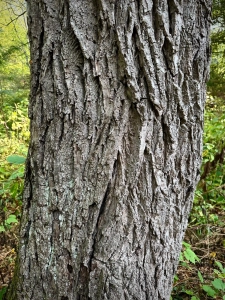
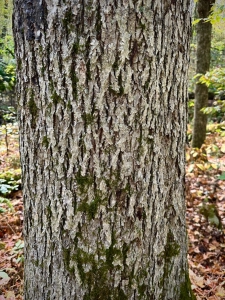
I conducted my doctoral field research in the Allegheny Hardwood forests within 80 miles of Wolf Creek…forests dominated by black cherry.  I revere the species for its beautiful high grade furniture wood, superior height growth, straight form, and handsome bark and foliage. The white-trail-marked black cherry (image below right) delivered a message meant for me. The species marked my professional development re-route. I worked 12 years after earning my Forestry BS for a southern paper and allied products manufacturing company that relied heavily on loblolly pine, a utility species here in the Southeast. Black cherry is anything but a utility species. It’s the filet mignon of furniture grade timber. Black cherry served as the North Star for my second career launch. The big white-blazed cherry signaled that the species remains a major emblem and totem for my path well into retirement. Among my fellow Union Camp foresters, I chose the path less traveled…one lined by black cherry trees (the other edged by loblolly pine) leading to a PhD and 35 years at nine universities.

Two roads diverged in a wood, and I—
I took the one less traveled by,
And that has made all the difference.

(Robert Frost)


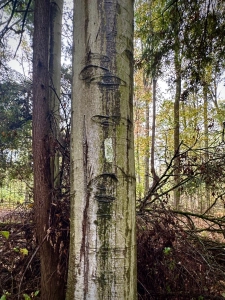
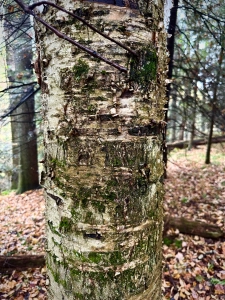
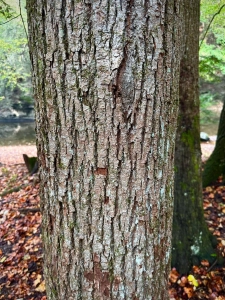
American beech and yellow birch reminded me of my love for northern hardwood forests.


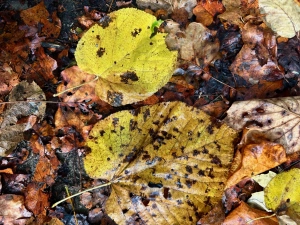
Basswood (tree and leaves) also ranges into northern Alabama, but the entire mixed species forest package at Wolf Creek represents a special orchestration that strokes my psyche and lifts my entire body, heart, mind, soul, and spirit. The assemblage reached me as Art Garfunkel belting his full-bodied Bridge Over Troubled Waters!


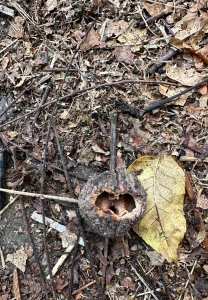
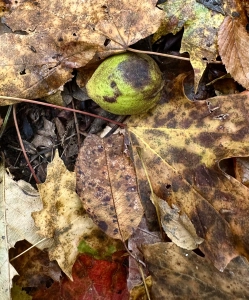
Black walnut tree and nut.


Bitternut hickory.


And nut.


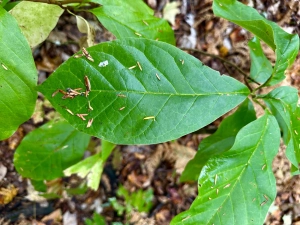
Cucumber tree and leaf.


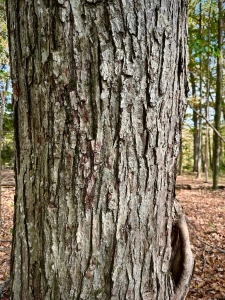
Red oak, deep memories, and an older gent feeling young-at-heart experiencing a symbolic step into his past…at home in a place he’d never been before.


Forests like this netted me decades ago, never completely allowing release. I think of Robert Service’s The Spell of the Yukon:

The freshness, the freedom, the farness–

O God! how I’m stuck on it all.

There’s a land–oh, it beckons and beckons,

And I want to go back–and I will.

It’s the great, big, broad land ‘way up yonder,

It’s the forest where silence has lease;

It’s the beauty that thrills me with wonder,

It’s the stillness that fills me with peace.

Some of me remains in the Far Northland of Alaska, where we lived 2004-08. Service nailed the place and my sentiment. In similar fashion, vestiges of these magnificent northern hardwood forests habituate my psyche. I want to go back–and I will, if only to the nearby Wells Memorial Trail, a suitable southern version of a rich upland forest.


Thoughts and Reflections


I offer these observations:

  • The rich northern hardwood forest is an orchestral composition, a natural Bridge Over Troubled Waters. (Steve Jones)
  • Black Cherry is a trail marker species, both a literal guide through the Wolf Creek Narrows forest…and a career/life path symbol and guidepost for me. (Steve Jones)
  • Mine is a story of passion for place and everyday Nature. (Steve Jones)

Inhale and absorb Nature’s elixir. May Nature Inspire, Inform, and Reward you!


Note: All blog post images created & photographed by Stephen B. Jones unless otherwise noted. Please circulate images with photo credit: “©2025 Steve Jones, Great Blue Heron LLC. All Rights Reserved.”

I am available for Nature-Inspired Speaking, Writing, and Consulting — contact me at steve.jones.0524@gmail.com

Subscribe to these free weekly Nature Blogs (photo essays) at: http://eepurl.com/cKLJdL


Reminder of my Personal and Professional Purpose, Passion, and Cause

If only more of us viewed our precious environment through the filters I employ. If only my mission and vision could be multiplied untold orders of magnitude:

Mission: Employ writing and speaking to educate, inspire, and enable readers and listeners to understand, appreciate, and enjoy Nature… and accept and practice Earth Stewardship.

Vision:

  • People of all ages will pay greater attention to and engage more regularly with Nature… and will accept and practice informed and responsible Earth Stewardship.
  • They will see their relationship to our natural world with new eyes… and will understand more clearly their Earth home.

Tagline/Motto: Steve (Great Blue Heron) encourages and seeks a better tomorrow through Nature-Inspired Living!


Steve’s Four Books


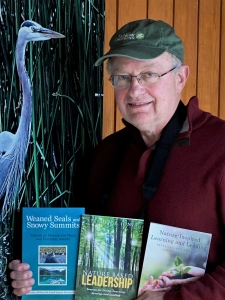
I wrote my books Nature Based Leadership (2016), Nature-Inspired Learning and Leading (2017), Weaned Seals and Snowy Summits: Stories of Passion for Place and Everyday Nature (2019; co-authored with Dr. Jennifer Wilhoit), and Dutton Land & Cattle: A Land Legacy Story (2023) to encourage all citizens to recognize and appreciate that every lesson for living, learning, serving, and leading is either written indelibly in or is powerfully inspired by Nature. All four of my books present compilations of personal experiences expressing my deep passion for Nature. All four books offer observations and reflections on my relationship with the natural world… and the broader implications for society. Order any from your local indie bookstore, or find them on IndieBound or other online sources such as Amazon and LifeRich.

I began writing books and Posts for several reasons:

  • I love hiking and exploring Nature
  • I see images I want to (and do) capture with my trusty iPhone camera
  • I enjoy explaining those images — an educator at heart
  • I don’t play golf!
  • I do love writing — it’s the hobby I never needed when my career consumed me
  • Judy suggested my writing is in large measure my legacy to our two kids, our five grandkids, and all the unborn generations beyond
  • And finally, perhaps my books and Blogs could reach beyond family and touch a few other lives… sow some seeds for the future


Brief Form Post 51: Summiting Evitts Mountain and Reaching the Mason-Dixon Line

I am pleased to add the 51st of my GBH Brief-Form Posts (Less than five minutes to read!) to my website. I get wordy with my routine Posts. I don’t want my enthusiasm for thoroughness and detail to discourage readers. So, I will publish these brief Posts regularly.


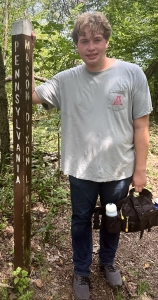
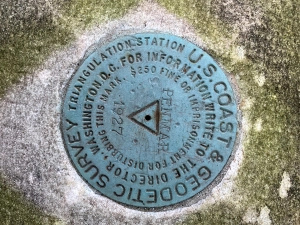
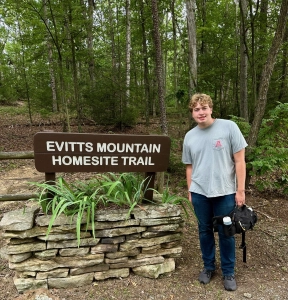
On July 29, 2025, grandson Jack and I hiked the six-mile Evitts Mountain Homesite Trail in western Maryland’s Rocky Gap State Park. See my related photo essay on natural features we explored in our trek from base to summit (https://stevejonesgbh.com/2025/10/08/hiking-the-homesite-trail-at-rocky-gap-state-park/). I focus this Brief-Form Post on the summit, the view, the Mason-Dixon line, and the survey benchmark at the summit boundary between Maryland and Pennsylvania.

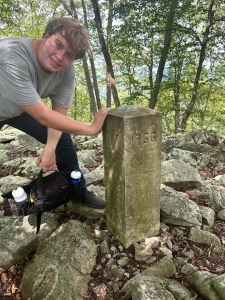
A high school senior, Jack is a history enthusiast. He understood the significance of standing at the survey monument 259 years after Charles Mason, a mathematician and astronomer, and Jeremiah Dixon, a surveyor, hacked and traipsed their meticulous progress across the frontier wilderness. Both men were members of the Royal Society, a British learned society formed to promote excellence in science. The survey set out to resolve the long-standing (since 1681) disputed boundaries of the overlapping land grants of the Penns, proprietors of Pennsylvania, and the Calverts proprietors of Maryland.


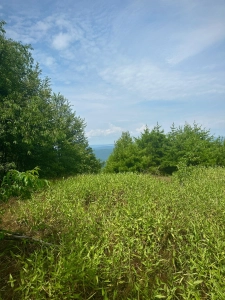
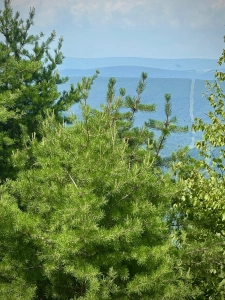
A string of power transmission towers parallels the line just to the north of the monument. Utility maintenance crews control ROW vegetation, opening a vist to the east (left) and west (right). Note on the westerly view that the power line extends across the ridges and beyond. The survey party powered (man and horse power) through raw untrammeled forest


In pre-Civil War days, the line separated slave states to the south and free-soil states to the north.

Here is my 60-second video atop Evitts Mountain


Evitt’s summit stands at ~2,200 feet, just 200 feet shy of Alabama’s highest point, Mount Cheaha. This ridge and valley landscape is my birth home terrain. I explored the Nature of this region from my earliest memories…hiking, camping, hunting, picnicing, and fishing. I hope that Jack feels some of the magic.


I know he appreciated our venture. I asked him to record and narrate a brief summit video.


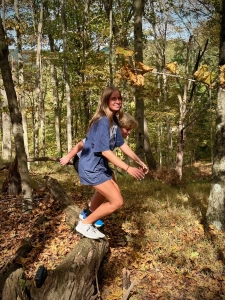
Jack is the young one to the left!


I recorded a 39-second video of the survey monument.


Having grown up in Cumberland, Maryland, just 5-7 miles from the Pennsylvania line, I rekindled a strong homing emotion at the monument. Memories flooded back to hikes and outings with Dad. I hope that Jack stores, within reach, recollections of his Mason-Dixon venture with Pap.

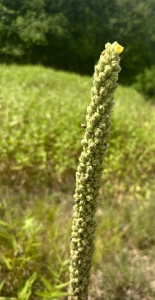
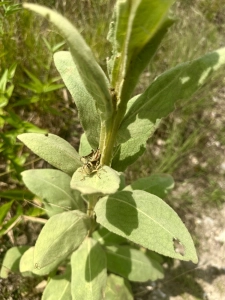
As a hopeless, lifetime Nature enthusiast, I must end this essay with two Nature observations. Great mullein stood in full flower and velvet-leafed splendor at the power line.


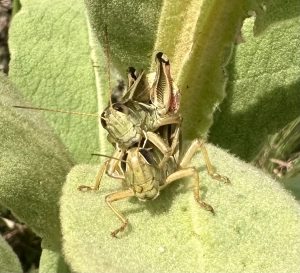
A pair of two-striped grasshoppers found reason to celebrate the midday glory atop Evitts Mountain, atop a great mullein leaf, and just plain atop!


Closing


I accept the challenge of distilling these Brief-Form Posts into a single distinct reflection, a task far more elusive than assembling a dozen pithy statements.

Granted, the Central Appalachians pale in comparison to even the Great Smokies or New Hampshire’s Presidential Range. Yet to a 74-year-old Nature enthusiast who in the 26 months preceding our hike, endured triple bypass surgery, two total knee replacements, bilateral inguinal hernia repair, and kidney stone blasting, I cherished trekking 1,100 feet to Evitts’ summit and relished our rest at he Mason-Dixon monument, serving as a healing and recovery benchmark.

We paused at the monument. I heard (not literally) the echoes of Mason and Dixon as they memorialized yet another ridgetop survey monument. I realized and included in Weaned Seals and Snowy Summits this simple reflection:

We do not stand apart from Nature, but are one with it!

Nature’s special treats await our discovery, our understanding, and our interpretation!


Subscribe to my free weekly photo essays (like this one) at: http://eepurl.com/cKLJdL


Hiking the Homesite Trail at Rocky Gap State Park


On July 29, 2025, my older Alabama grandson, Jack (17), and I hiked the Evitts Homestead Trail on Maryland’s Rocky Gap State Park. We ascended 1,100 feet from Lake Habeeb to Evitts’ 2,200-foot summit. I wanted to share the magic of the place with Jack and rekindle my aging memories. Still in high school, I had explored Rocky Gap Canyon and Evitts Mountain before authorities created the state park and built the dam. We discovered the beauty, magic, wonder, and awe of Nature hidden in plain sight along the trail.


Those youthful excursions are now two generations past. I was about 17; Jack’s age. He is my daughter’s son. Time marches on at 24 hours per day, just as it did 57 years ago, yet its relative pace accelerates. I heard my maternal grandmother say more than once, “The older I get, the faster time passes.” I thought she was old and confused; I now recognize her wisdom.


Ascending the Trail: Moss, Ferns, and Fungi


I recognize another truism: the older I get the more challenging trails become. I hiked this trail five years ago, prior to a series of surgeries: shoulder replacement; triple bypass; bilateral inguinal hernia repair; two total knee replacements; and kidney stone blasting. Add in a minor stroke. It’s no surprise that my recent hike proved tougher. I view summitting Evitts as a major recovery benchmark…and a family milestone. This time next year, Jack will have departed for college and a demanding and rewarding life journey. I pray that he carries the memory of his Evitts hike with Pap into a bright and promising future.

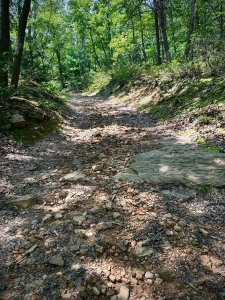
The trail is an old jeep path, rising at a steady rate. I noticed greater erosion and rutting since my 2020 ascent. Park crews are not controlling surface water flow. Instead, runoff is in control, seeking and finding a route with no concern for trail integrity. I saw no recent evidence of constructed water bars, broad-based dips, or other measures to usher overland flow from the trail. Without immediate attention, the trail will degrade beyond easy repair. Ongoing road maintenance cannot be ignored.


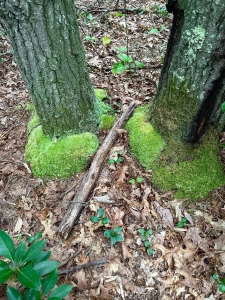
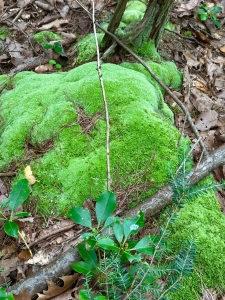
Okay, so much for critiquing park trails and their management. Across my decades of wandering eastern forests, moss is ubiquitous. Pincushion moss embraces tree bases and often covers rocks (right).


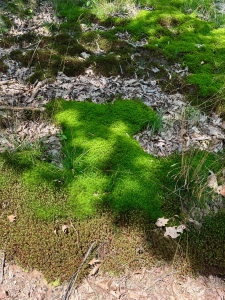
This patch of broom forkmoss welcomed the dappled sunshine penetrating the forest canopy. An online dictionary defines moss as a small flowerless green plant that lacks true roots, growing in damp habitats and reproducing by means of spores released from stalked capsules.


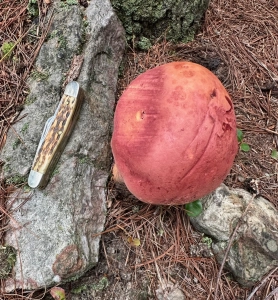
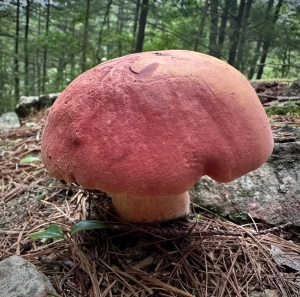
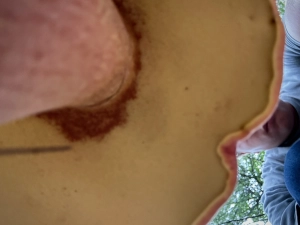
Ample rain during the early summer stimulated prodigous mushroom growth. Mushrooms are the reproductive (spore-producing) structures of common fungi in our eastern foressts. Fungi include tree disease organisms, decomposers, and mycorhizza. Two-colored bolete is a beautiful polypore mycorhizzal fungus, this one with a pink/red umbrella and a smooth cream/yellow undersurface. Although some boletes are choice edibles, I haven’t achieved a necessary level of confidence in distinguishing among the group members. This bolete is symbiotically engaged with oak species.


A distinctly polypore underside.


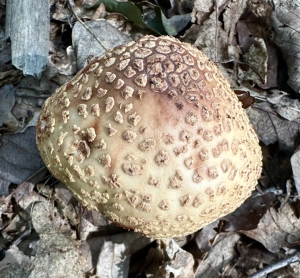
I like the moniker of yellow American blusher, another mycorhizzal fungus associated with oak. this one is gilled. Mushrooms of the Southeast offers an explanation of what prevents me from expanding my culinary foraging to species about which I am not 100 percent certain:

In North America Amanita rubescens has historically been considered edible and relatively distinctive; however, since it is related to some of the most toxic mushrooms, we cannot recommend eating it.

Life in our eastern upland hardwood forests is amazingly complex.


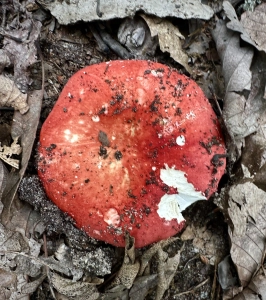
Yellowing rosy ruella, or brittlegills, is a gilled Russula mycorhizza fungus, common in hardwood forests. Considered edible but seldom occurs in numbers sufficient to collect.


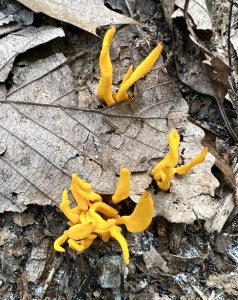
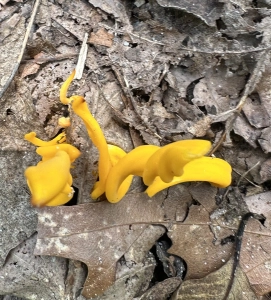
iNaturalist identified these tiny golden mushrooms as clubs and corals, genus Clavulinopsis. Mushrooms of the Southeast steered me to golden fairy club, C. laeticolor, but the book image differed somewhat from my photographs. One reference declared this fungus a mycorhizza; another said that it’s a forest litter decomposer.


I am a mushroom novice. My fascination with their unique kingdom of life grows with each woodland Nature excursion, where I learn how little I know.

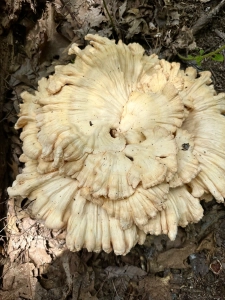
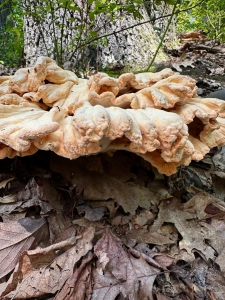
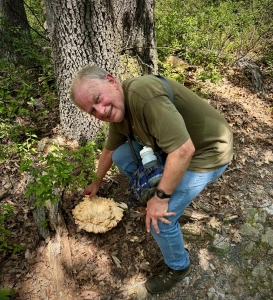
White-pored chicken-of-the-woods (or sulphur shelf) is a decay fungus at home on both living trees, primarily oak, or dead individuals of the same host group. The speices is a choice edible when young and tender, like this one growing at the trail edge.


Were I wandering closer to home other than on a state park, where the rule is to take only what you bring, I would have made several meals from this perfect specimen! I wondered how many more flourished within 100 feet of our six-mile circuit.


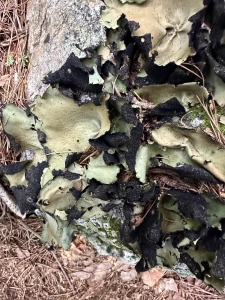
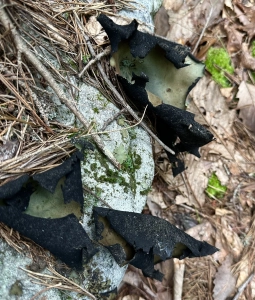
Umbilicaria mammulata, smooth rock tripe, is among the largest lichens in the world. The species forms large sheets (rarely, up to 2′ across), like aged curling leather sheets, on cliffs and boulders. This patch is on a sandstone boulder. The sheets are attached at only a single point (hence the genus Umbilicaria). They are reddish- or grayish-brown on top, and velvety black below.


From an online source regarding edibility:

An hour of boiling is said to convert this leather-like lichen into an edible source of protein, palatable by itself or when added to soup or stews. Soak for 2-3 hours first to remove acids that, while not dangerous, may send you running to the bathroom in a hurry. Even after all this soaking and boiling, you’d better be good and hungry—many say it still tastes like shoe leather.

I will not be adding this species to my foraging list!


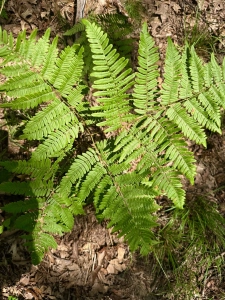
I recall moist forests in Maryland, Pennsylvania, New York, and New Hampshire, all former woodlands haunts where I’ve rambled, covered with common bracken fern. I noticed only this single specimen.


Our journey covered the distance with as much haste as I could muster. I would do it again on a mid-60s-degree October day, devoting hours to extensive study and exploration. Drafting this narrative reminds me to saunter future wanderings with greater attention to full discovery, seeking more than a surficial inventory of what lay hidden in plain sight.
 

Ascending the Trail: Turtles, Millipedes, Invasive Plants, and Sign-Eating Tree!


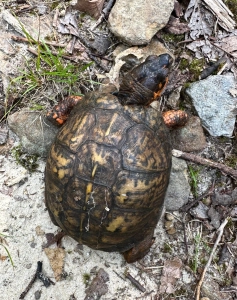
An eastern box turtle hurried across the trail. Yes, he moved quickly, not at an exagerated turtle’s pace.


I captured his rapid gate in this 21-second video.


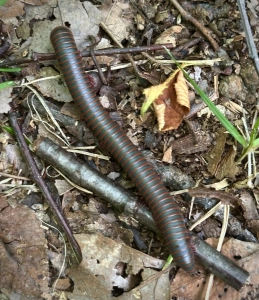
An American giant millipede compelled us to take a closer look.


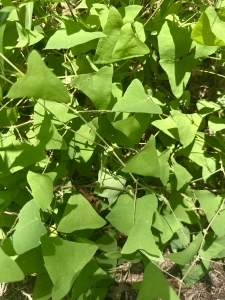
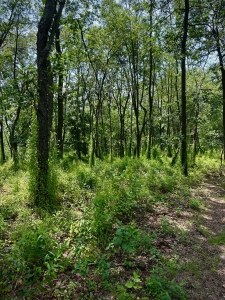
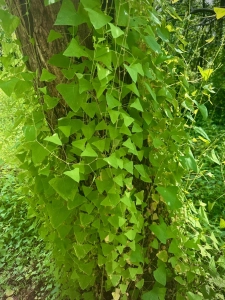
A dense growth of mile-a-mintute-vine infesting at least an acre of forest, stopped me cold.


A Penn State Cooperative Extension online resource tells the tale of this aggressive invasive:

Mile-a-minute (Persicaria perfoliata) is a trailing vine with barbed stems and triangular leaves. In contrast to other invasive vines, mile-a-minute is an herbaceous annual, meaning it dies each fall and new plants grow from germinating seeds in the spring. Originally from India and East Asia, this species was first reported in York County, Pennsylvania, in the 1930s in contaminated nursery soil. Mile-a-minute is listed as a “Class B” noxious weed by the State of Pennsylvania, a designation that restricts sale and acknowledges a widespread infestation that cannot feasibly be eradicated. The dense foliage of this invasive weed blankets and slowly suffocates native vegetation, making it extremely destructive and persistent despite being an annual plant.


I wondered whether park managers are aware of this infestation. When we returned to the Lake Habeeb dam I told a maintenance worker of our discovery. He seemed concerned. Enough to take action?

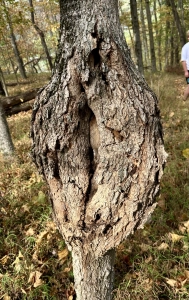
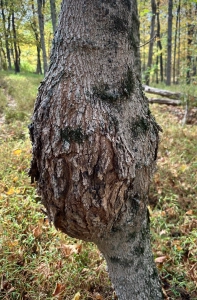
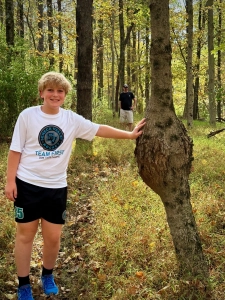
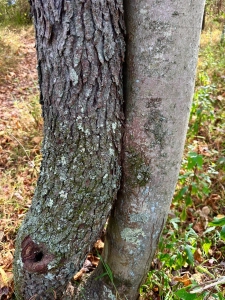
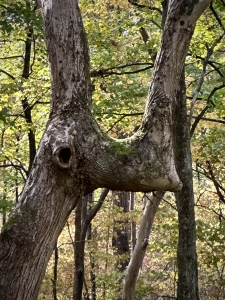
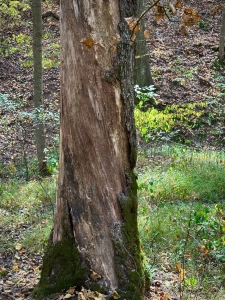
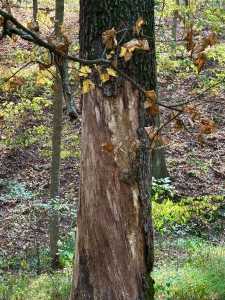
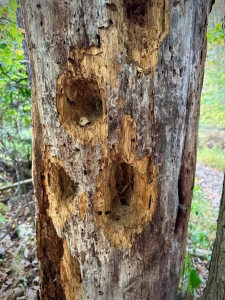
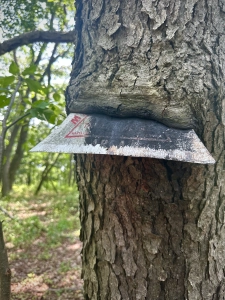
I always remain alert for tree form oddities and curiosities, including sign-consuming black cherry trees!


I love the Central Appalachian forests of my childhood and early professional days. Rocky Gap State Park drew memories, warm and fuzzy, from more than five decades ago. At age 74, I can say with confidence and satisfaction that those were the good old days…and that blessedly these, too, are the good old days. Life was…and is…good!


Thoughts and Reflections


I revisited my October 10/15/20 post from the prior Evitts Mountain ascent: https://stevejonesgbh.com/2020/10/15/a-tough-hike-and-deep-reward-at-rocky-gap-state-park-in-western-maryland/

I offered three lessons from my late September, 2020, solitary trek:

  • The extraordinary Nature of place is indelibly written in my head, heart, mind, body, and soul. I am a creature and product of place… place defined by Nature.
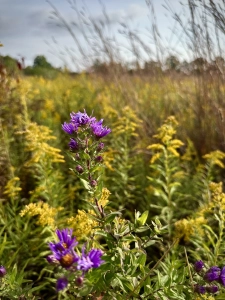
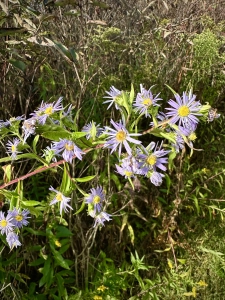
  • Countless days in Nature define my life across these 69 years — I look, see, and feel Nature’s beauty, magic, wonder, and awe… and find immeasurable lift.
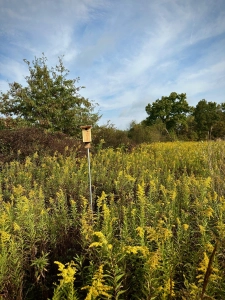
  • My connection to Nature is unmistakably SACRED!
Today, five years later, I would modify only minimally: My connection (across these 74 years) to Nature (and Family) is unmistakably SACRED!
Inhale and absorb Nature’s elixir. May Nature Inspire, Inform, and Reward you!
 

Note: All blog post images created & photographed by Stephen B. Jones unless otherwise noted. Please circulate images with photo credit: “©2025 Steve Jones, Great Blue Heron LLC. All Rights Reserved.”
I am available for Nature-Inspired Speaking, Writing, and Consulting — contact me at steve.jones.0524@gmail.com


Reminder of my Personal and Professional Purpose, Passion, and Cause


If only more of us viewed our precious environment through the filters I employ. If only my mission and vision could be multiplied untold orders of magnitude:

Mission: Employ writing and speaking to educate, inspire, and enable readers and listeners to understand, appreciate, and enjoy Nature… and accept and practice Earth Stewardship.

Vision:

  • People of all ages will pay greater attention to and engage more regularly with Nature… and will accept and practice informed and responsible Earth Stewardship.
  • They will see their relationship to our natural world with new eyes… and will understand more clearly their Earth home.

Tagline/Motto: Steve (Great Blue Heron) encourages and seeks a better tomorrow through Nature-Inspired Living!


Steve’s Four Books


I wrote my books Nature Based Leadership (2016), Nature-Inspired Learning and Leading (2017), Weaned Seals and Snowy Summits: Stories of Passion for Place and Everyday Nature (2019; co-authored with Dr. Jennifer Wilhoit), and Dutton Land & Cattle: A Land Legacy Story (2023) to encourage all citizens to recognize and appreciate that every lesson for living, learning, serving, and leading is either written indelibly in or is powerfully inspired by Nature. All four of my books present compilations of personal experiences expressing my deep passion for Nature. All four books offer observations and reflections on my relationship with the natural world… and the broader implications for society. Order any from your local indie bookstore, or find them on IndieBound or other online sources such as Amazon and LifeRich.

I began writing books and Posts for several reasons:

  • I love hiking and exploring Nature
  • I see images I want to (and do) capture with my trusty iPhone camera
  • I enjoy explaining those images — an educator at heart
  • I don’t play golf!
  • I do love writing — it’s the hobby I never needed when my career consumed me
  • Judy suggested my writing is in large measure my legacy to our two kids, our five grandkids, and all the unborn generations beyond
  • And finally, perhaps my books and Blogs could reach beyond family and touch a few other lives… sow some seeds for the future