Posts

First Time Visit to Graham Farm and Nature Preserve

[Some of my GBH photo essays were not routinely distributed from mid-February through mid-June. I will resend those one by one, beginning the first week of July. Here is my Post from March 24 (https://stevejonesgbh.com/2026/03/24/mid-december-above-ground-exploration-at-cathedral-caverns-state-park/)]

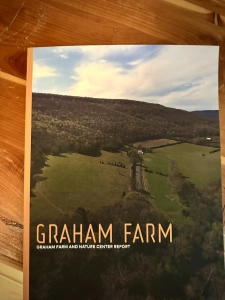
I toured the Alabama Cooperative Extension System (ACES) Jackson County Graham Farm and Nature Center on June 24, 2026, with friends Chris Stuhlinger, Bill and Becky Heslip, and Roxanne Pennington. I served as ACES Director from 1996 to 2001, leading the unification of Auburn University and A&M University’s distinct extension programs under a Federal Court Order that settled a long-standing legal dispute involving both institutions and the state of Alabama. I had looked forward to seeing the 491-acre outdoor education, conservation, and preservation enterprise borne of a dedicated joint endeavor. Come along with me for my initial observations, reflections, photographic images, and brief videos.


Doorway to a Special Place: Wisps of Memories and Vapors of Possibilities


I had driven past the Center on prior trips through the valley to visit a waterfall owned by friends about two miles beyond. I saw the GF&NC signage, but knew only enough to whet my curiosity and prompt me to arrange a tour and orientation, which led to scheduling this visit. I felt a deep connection, sentimental I suppose in part, from my intimate role in forging and leading the inter-university, involuntary (Federal Court-ordered) cooperative venture that stood during the era of my tenure in the national spotlight. My purpose is not to focus on what we then termed The Unification. The ACES directorship was the toughest role of my university administrative career. I’ll mention only that Auburn University President Bill Muse said, “We asked Steve to do the impossible, and he damned near did it!”

Driving onto the property, the Paint Rock Valley and surrounding Cumberland Plateau terrain beguiled and bewitched me. I reflected on my third book, Weaned Seals and Snowy Summits: Stories of Passion for Place and Everyday Nature, co-authored with Dr. Jennifer Wilhoit (published in 2019). My book Introduction included:

Awakening to nature does not require a trip to the Grand Canyon or a trek across the Gobi. Nature is in our backyard, a trip to a nearby city park, or a state park just down the road. Anyone can develop a relationship with nature wherever you are, a point I reiterate in each and every nature-inspired life and living address I deliver. My relationship with nature is spiritual. I view my engagement as a calling, and a noble cause to sow seeds so that others might do their own part to change some small corner of this Earth for the better.

I awakened to the Nature of this special place when I entered the Graham Farm and Nature Center. The sense and spirit beckoned me, pulled me into its magic. It was real and palpable, strengthening with each moment during our six hours on the property, seeing and inhaling its essence, meeting and getting to know staff, and sharing ideas and dreams. Wisps of memories and vapors of possibilities infused my vision of a potential volunteer niche role for me, an admittedly self-satisfying venture for yet another chapter of my retirement. I recently crossed my 75th birthday threshold, entering my 4th quarter of a century of life on Earth. A senior former forestry faculty colleague remarked in response to my fourth quarter of a century comment, “Remember that in football, in the 4th quarter, every play counts!”
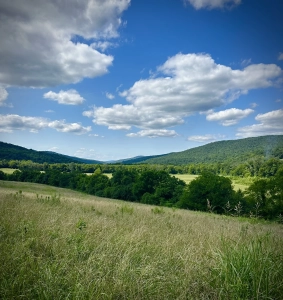
 

I share a relevant excerpt from Notes from the Field: Paint Rock and the New Nation (July 4, 2026) by Bill Finch, Founding Director, Paint Rock Forest Research Center, located in the same valley and ecosystem as GF&NC:

Paint Rock appears to have escaped the worst of 19th and 20th century deforestation and plowing. But the modern forest is a dim reflection of what it was in the 18th century. Mountainsides then as now likely supported the most diverse assembly of deciduous trees and shrubs in the United States, in some places so tall and dense they blocked the sun for much of the year. But the slopes may have been less uniformly covered in trees. Fragments of sun-loving, summer blooming sunflowers, tall green gentians, lilies, moon-flowered silphiums, and warm season grasses still dot the slopes, the remnants of what must have been extensive nearly treeless glades. Plants that are now rare in that forest, like smoketrees and the federally threatened Morefield’s clematis vine, are struggling to find the light they once knew.

I have no doubt that this Paint Rock Valley is a Special Place. I recorded this 60-second video as a brief introduction to Graham Farm and Nature Center.


I will not burden you with tireless narrative based only upon a preliminary superficial reconnaissance. I’m hooked enough to return to get to know her better, and share what I learn, both the obvious and the mystery.

The Center


As Chancellor, the University of Alaska Fairbanks, America’s Arctic University, I fell in love with America’s Last Frontier. Alaska is not just a vast place…it’s a spirit, an abiding spirit. Robert Service, a Brit who spent several years in the Yukon during the turn of the prior century goldrush days, expressed the Far North essence more clearly than any I’ve read. Excerpting from his The Spell of the Yukon:

There’s a land — oh, it beckons and beckons,

And I want to go back — and I will.

It’s the great, big, broad land ‘way up yonder,

It’s the forests where silence has lease;

It’s the beauty that thrills me with wonder,

It’s the stillness that fills me with peace.


Granted, Alaska is unmatched. It’s also not within an hour and 15 minute drive of my house! I welcome a Nature affair with a special place of beauty, magic, wonder, awe, and inspiration… where I want to go back — and I can… and I will. Graham Farm and Nature Center fits the bill!

Allow me to rely upon selected photos and brief videos to present a GF&NC overview. I pledge to develop focused photo essays from future visits. The pavilion and operational hub occupy a commanding knoll at the valley core of the 491-acre property.
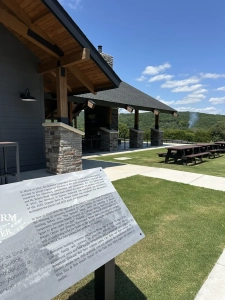
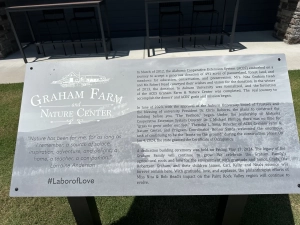


An old photograph of the pre-ACES Graham farm is among exhibits that reach back into the farm and valley’s rich history.
 

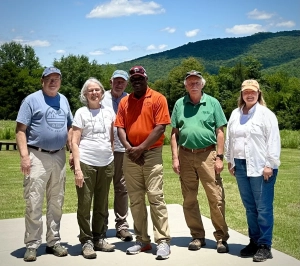
Our June 24, 2026 contingent consisted of Bill and Becky Heslip, me in the rear echelon, Center Director Themika L. “Mike” Sims, Chris Stuhlinger, Roxanne Pennington, and Administrative Support Specialist II Donna Sands behind the camera.
 

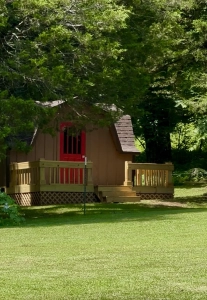
Although we didn’t have an opportunity to visit this charming woods-edge cottage, we understood that it will see future use as an overnight accommodation.
 

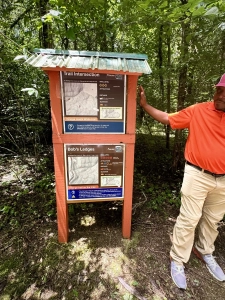
We visited the trailhead of a mountain forest trail. When summer’s heat abates I will return to explore this and many other trails.
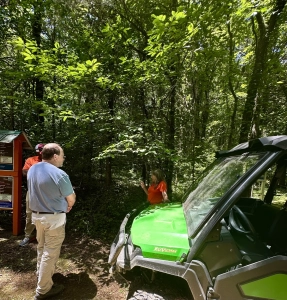
 

The valley does indeed beckon.
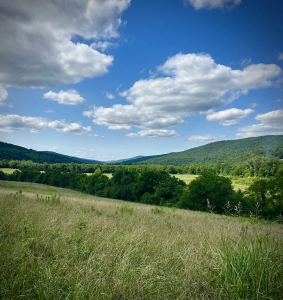
 

Even the open land near the creeks promises discoveries in ecotype transition from field to meadow to brush to forest to wetland to stream channel.
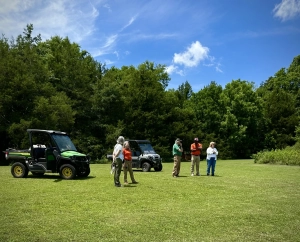
 

Meadowland transitioning to brush then to forest will afford learning and discovery to Center visitors for the ages.
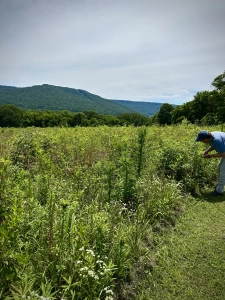
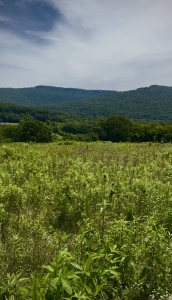


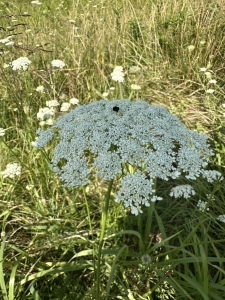
Wild carrot presented its lacy blossoms in the lower meadows.
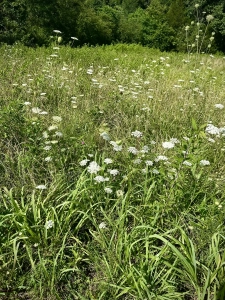
 

I’m eager to follow and admire the Center’s changing seasonal faces. Multiply the one-hour-of-one-afternoon a hundred fold to anticipate the Nature-magic that lies ahead.
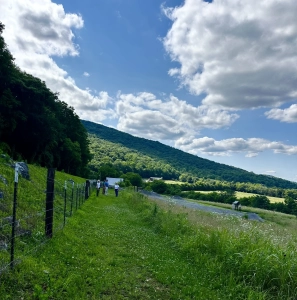
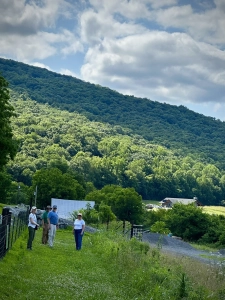


Larkin Creek enters Paint Rock River at this juncture on the property. I look forward to seeing the flow when it is not turbid from recent flooding, and also when the streams are at overflow. This landscape feature lies 1,000 vertical feet below the property’s highest. Spring at the union arrives more than a week in advance of the peak; autumn a week later. The place and its seasons are complex, varied, and exhilarating.
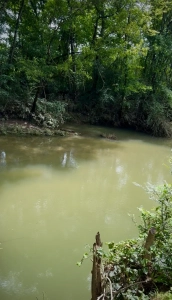
 

I recorded this 60-second video of the Larkin Creek juncture with Paint Rock River.


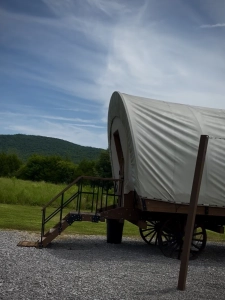
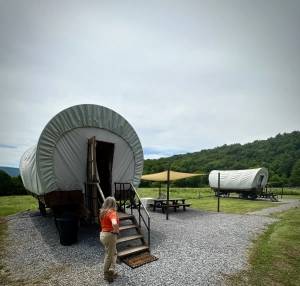
Perhaps I will find reason to stay overnight in the Connestoga Wagon Pampering Accommodations!
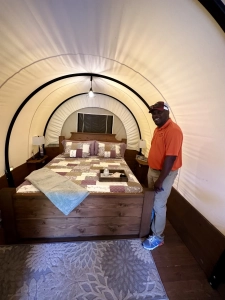
 

Here is my 60-second video of the overnight pampering wagons.


Chris and I are returning to GF&NC on July 30 to scout a tree and shrub identification trail, providing fodder for a subsequent Great Blue Heron GF&NC photo essay.

Thoughts and Reflections


I offer these observations:

  • I view my engagement (with Graham Farm and Nature Center) as a calling, and a noble cause to sow seeds so that others might do their own part to change some small corner of this Earth for the better. (Steve Jones)

  • The sense and spirit of this special place beckoned me, pulled me into its magic! (Steve Jones)
  • Remember that in football, in the 4th quarter, every play counts! (Dr. Russell Briggs)

  • Awakening to Nature does not require a trip to the Grand Canyon or a trek across the Gobi. (Steve Jones)


Inhale and absorb Nature’s elixir. May Nature Inspire, Inform, and Reward you!

Note: Unless otherwise noted, all blog post images are created & photographed by Stephen B. Jones.

Please circulate images with photo credit: “©2026 Steve Jones, Great Blue Heron. All Rights Reserved.”


I am available for Nature-Inspired Speaking, Writing, and Consulting — contact me at steve.jones.0524@gmail.com


Subscribe to my free weekly photo essays (like this one) at: http://eepurl.com/cKLJdL


A reminder of my Personal and Professional Purpose, Passion, and Cause

If only more of us viewed our precious environment through the filters I employ. If only my mission and vision could be multiplied by untold orders of magnitude:

Mission: Employ writing and speaking to educate, inspire, and enable readers and listeners to understand, appreciate, and enjoy Nature… and accept and practice Earth Stewardship.

Vision:

  • People of all ages will pay greater attention to and engage more regularly with Nature… and will accept and practice informed and responsible Earth Stewardship.
  • They will see their relationship to our natural world with new eyes… and understand their Earth home more clearly.

Tagline/Motto: Steve (Great Blue Heron) encourages and seeks a better tomorrow through Nature-Inspired Living!


Steve’s Four Books


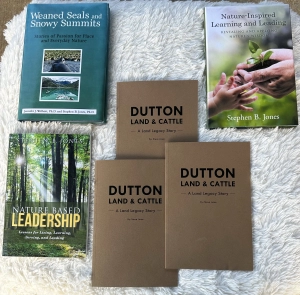
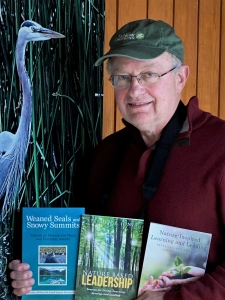
I wrote my books Nature Based Leadership (2016), Nature-Inspired Learning and Leading (2017), Weaned Seals and Snowy Summits: Stories of Passion for Place and Everyday Nature (2019; co-authored with Dr. Jennifer Wilhoit), and Dutton Land & Cattle: A Land Legacy Story (2025) to encourage all citizens to recognize and appreciate that every lesson for living, learning, serving, and leading is either written indelibly in or is powerfully inspired by Nature. All four of my books present compilations of personal experiences expressing my deep passion for Nature. All four books offer observations and reflections on my relationship with the natural world… and the broader implications for society. Order any from your local indie bookstore, or find them on IndieBound or other online sources such as Amazon and LifeRich.

I began writing books and Posts for several reasons:

  • I love hiking and exploring Nature
  • I see images I want to (and do) capture with my trusty iPhone camera
  • I enjoy explaining those images — an educator at heart
  • I don’t play golf!
  • I do love writing — it’s the hobby I never needed when my career consumed me
  • Judy suggested my writing is in large measure my legacy to our two kids, our five grandkids, and all the unborn generations beyond
  • And finally, perhaps my books and Blogs could reach beyond family and touch a few other lives… sow some seeds for the future


Iron Bowl Visit to Auburn’s Kreher Preserve and Nature Center!

A Knee Surgery Preface

As I publish this photo essay, I am six weeks and one day since my January 23, 2024 total left knee replacement surgery. I stockpiled observations, reflections, and photographs from my woodland wanderings (like this November Iron Bowl trek) during the period leading up to my extended surgery recovery. My goal is to re-enter gentle forest trails by mid-March. Since surgery, I have been a tireless devotee of physical therapy. Okay, allow me a little humble honesty. Scratch the tireless. I’ve ended many post-surgery days exhausted from PT! Bear with me as I return to some semblance of my younger woods-worthiness!

Kreher Preserve and Nature Center


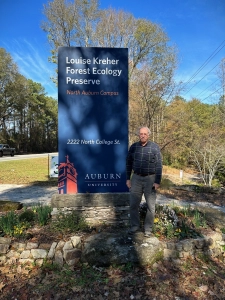
Chris Stuhlinger, a fellow retired forester and Auburn graduate, secured tickets for the 2023 Iron Bowl (11/25; Alabama vs. Auburn) and invited me to attend. I leaped at the chance. I had not attended a game at Jordan-Hare since the fall of 2000. Because the game did not start until 2:30, we visited Auburn’s Kreher Nature Center and Forest Ecology Preserve that morning. I offer observations, reflections, and photographs from our abbreviated one-hour visit.

KreherKreher


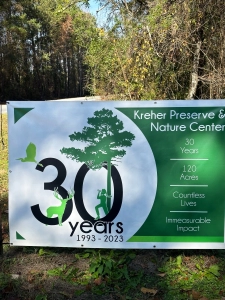
Just eight years from its inception when I departed Auburn University in 2001, the venerable Center and Preserve is now celebrating 30 years of immeasurable impacts on countless lives! I had no trouble visualizing eager learners of all ages across three decades. I did not expect many visitors on an Auburn Iron Bowl Saturday.

Kreher


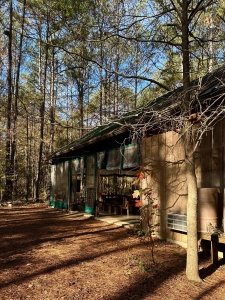
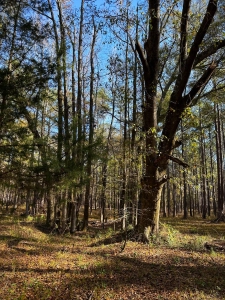
The primary education building sits comfortably within a loblolly and mixed hardwood forest that appears to be of old field origin. I hope to return to Kreher some day when not rushed by Iron Bowl engagements on campus. I’d like a full tour, complete with Center and Preserve chronology and land use history of the 120 acres. I had visited Kreher a time or two during my five years (1996-2001) at Auburn. If only my memories were more vivid. The forest was nearly a quarter of a century younger then. Here in the deep south, forests develop and grow rapidly. I would like to see photos from the Center’s establishment.

Kreher


I am a tireless advocate for facilities such as this immediately launching a program to establish permanent photo plots throughout the property. The steps are simple:

  • Identify 10-20 points in the vicinity of special landmarks, ecotypes, streams, etc.
  • Sink a four-by-four treated wood post, with the four sides oriented to the cardinal directions
  • Cap it with a numbered metal plate
  • Decide the date to take the periodic photos. For example January 15 and July 15 every ten years.

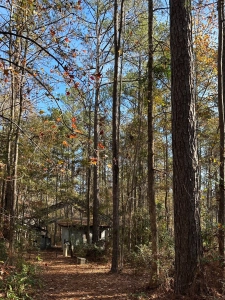
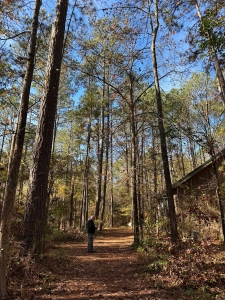
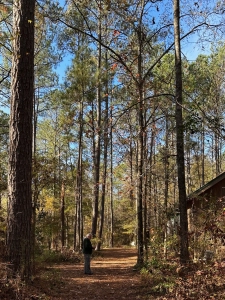
During the fall 2023 Osher Lifelong Learning Institute at the University of Alabama in Huntsville semester, I took a course on Taking Better Nature Photographs. The instructor opened my eyes to a few tricks of the trade. Toying with one suggestion, I experimented with my iPhone, exploring my perspective preference with these two images. The photo at left derives straight from the camera, the lens peering into the forest horizontally. The view draws the more distant features (down the path and up into the canopy) toward the vanishing point; the trees appear to lean together. The image at right employs a finishing application that physically adjusts the image to eliminate the lean. The vanishing point, with the manipulation, in fact vanishes. I will continue to review my personal preference. For the moment, I am a lifelong resident of a world that operates with a vanishing point. I prefer the image below left. I’ll continue to experiment and share the results in these Great Blue Heron Posts.

KreherKreher


Education Amenities


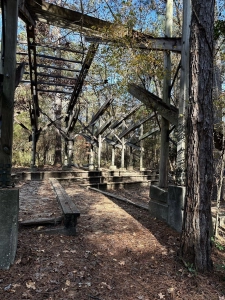
The Center includes a wooden amphitheater, open to air and partial sunshine, ideally allowing participants to feel and see the pulse of woodland Nature. Effective Nature education is a contact sport. I’ve learned as much through outdoor osmosis as sterile indoor lecture. My most vivid learning endeavor involved muddy boots, chill breezes, and miles in a SUNY van slipping into New Hampshire’s White Mountains to study and experience watershed management at the US Forest Service’s Hubbard Brook Experimental Forest during spring break of my junior year. Young people visiting Kreher will not suffer Nature Deficit Disorder while on-site.

Kreher


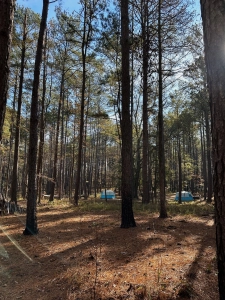
Some participants experience 24/7 immersion via overnight tent accommodations.

Kreher


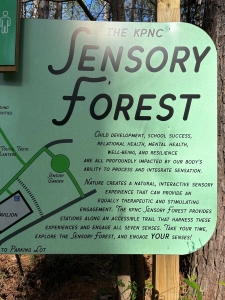
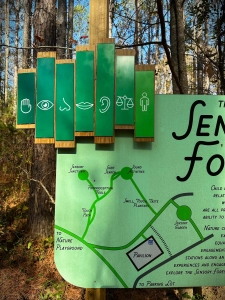
Again, I see a future Kreher visit, complete with a knowledgeable tour host and extended time for fully experiencing features like the KPNC Sensory Forest. The Kreher sign narrative strikes a chord with me:

Child development, school success, relational health, mental health, well-being, and resilience are all profoundly impacted by our body’s ability to process and integrate sensation.

Nature creates a natural, interactive sensory experience that can provide an equally therapeutic and stimulating engagement. The KPNC Sensory Forest provides stations along an accessible trail that harness these experiences and engage all seven senses. Take your time, explore the Sensory Forest, and engage YOUR senses!

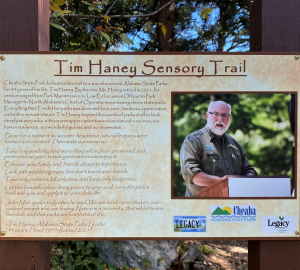
Cheaha State Park also has a Sensory Trail (below right).

Kreher

Cheaha


I like the seven senses images. I wonder, as I visit local trails and greenways, how many visitors are lost in their earbuds…sensory-deprived, experiencing only digitally what their device is pouring into their heads. For them, I fear, their senses image portfolio may include only a single symbol (below right).


Soil: The Essence of Terrestrial  Life


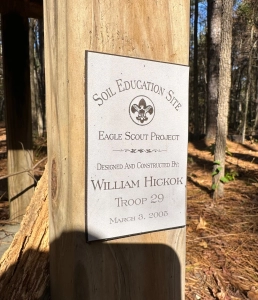
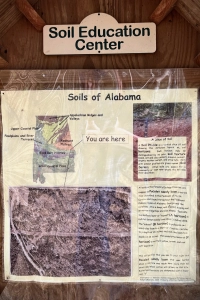
Soil is the fundamental substrate for nearly all terrestrial life. I loved my undergraduate courses in forest soils. I spent four of my dozen years with Union Camp Corporation leading the company’s tree nutrition and forest fertilization research program, an exceedingly soil-centered endeavor. I left the company to pursue my PhD, which evaluated soil-site relationships in the Allegheny Hardwood forests of NW Pennsylvania and SW New York. To this day, I consider myself an aging soil scientist. All that to explain why I like this 2015 Eagle Scout project at KPNC, the Soil Education Site.

Kreher


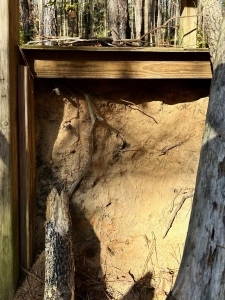
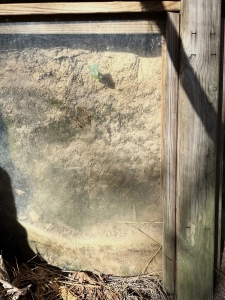
My compliments to William Hickok! He envisioned and created a soil profile display for the KPNC site, one open (left) and the other glass-encased (right).

Kreher


Young Mr. Hickok explained:

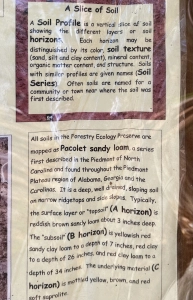
A soil profile is a vertical slice of soil showing the different layers, or soil horizons. Each horizon may be distinguished by its color, soil Texture (sand, silt, and clay content), mineral content, organic matter, and structure.

All soils in the Forestry Ecology Preserve are mapped as Pacolet sandy loam…

The soil profile that you see is a Pacolet sandy loam that was buried when a terrace was made here more than 60 years ago when cotton was grown on this site.

Kreher


Eagle Scout Hickok thus confirmed y earlier observation: The primary education building sits comfortably within a loblolly and mixed hardwood forest that appears to be of old field origin.

Several older hardwood residuals stand along a natural drain dating back into the agricultural production period. Picture a cultivated field with young hardwoods sprouting along the drainage feature.

Kreher


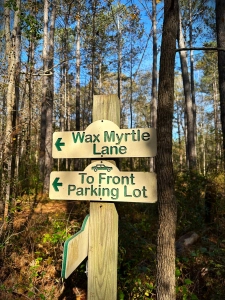
The trail signage professes a fairyland lilt, a youth-oriented theme, for the young and young at heart.

Kreher


I embrace the notion of young at heart. My knees somehow have aged and declined far beyond the pace of the young man residing contentedly within the 72-year-old body! The young man who today achieves a case of misty eyes celebrating a grand woodland morning accented by the slanted rays of a late November dawn. Oh, how different would the scene have been 70 years ago with terraced fields and cotton stubble?

Kreher


Southern Pine Beetles


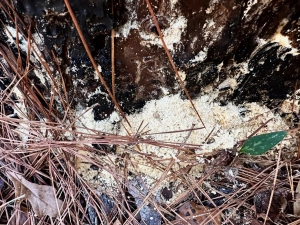
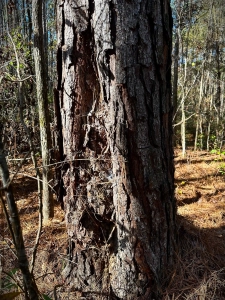
Forestry studies require that we understand the insects and diseases acting within the forests we manage. Because I studied forestry in Upstate New York, I learned first hand of more northern insects and diseases. I didn’t encounter southern pine beetles until I hired on with Union Camp in 1973 in southeastern Virginia, where SPB infestations occurred periodically, necessitating monitoring, sanitation, and salvaging. I hope that KPNC staff have noticed the SPB infestation progressing on site. Pitch tubes offer the first evidence of infestation. When female adults enter a tree to lay eggs under the bark in the cambium, the tree reacts by exuding pitch to overwhelm the invading insects. However, when the beetles attack en masse, tree death proceeds rapidly. When large numbers of pitch tubes appear, the tree is likely already dead, its crown a reddish brown. So, usually, it is the dead crown that evidences infestation. Although when we stumbled upon the Kreher pitch tubes (left), the crowns were already dead (right).

Kreher


Another telltale sign is sawdust around the tree base, generated from larvae feeding under the bark.

Kreher


Fusiform rust (Cronartium) is a common southern pine disease. Tree improvement programs selected mother trees for seed orchards based upon fusiform resistance. Rust is not necessarily fatal, yet it reduces commercial value and can lead to breakage.

Kreher


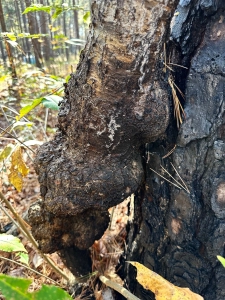
We found this severely contorted black cherry infected with black knot. This individual looks grotesque, a gruesome personality by appearance alone.

Kreher


Insects and diseases are part of Nature’s great life and death continuum. As with many things in Nature, where we stand depends on where we sit. In the case of KPNC, each of these ecosystem features opens yet another educational moment.


Thoughts and Reflections


I offer these observations:

  • The Kreher Nature Center and Forest Ecology Preserve is celebrating 30 years of immeasurable impacts on countless lives!
  • Child development, school success, relational health, mental health, well-being, and resilience are all profoundly impacted by our body’s ability to process and integrate sensation.
  • Environmental education is a contact sport!
  • Insects and diseases are part of Nature’s great life and death continuum.

Inhale and absorb Nature’s elixir. May Nature Inspire, Inform, and Reward you!


Note: Unless otherwise noted, all blog post images are created & photographed by Stephen B. Jones. Please circulate images with photo credit: “©2024 Steve Jones, Great Blue Heron LLC. All Rights Reserved.”

Another Note: If you came to this post via a Facebook posting or by another route, please sign up now (no cost… no obligation) to receive my Blog Post email alerts: http://eepurl.com/cKLJdL

And Third: I am available for Nature-Inspired Speaking, Writing, and Consulting — contact me at steve.jones.0524@gmail.com


A reminder of my Personal and Professional Purpose, Passion, and Cause

If only more of us viewed our precious environment through the filters I employ. If only my mission and vision could be multiplied by untold orders of magnitude:

Mission: Employ writing and speaking to educate, inspire, and enable readers and listeners to understand, appreciate, and enjoy Nature… and accept and practice Earth Stewardship.

Vision:

  • People of all ages will pay greater attention to and engage more regularly with Nature… and will accept and practice informed and responsible Earth Stewardship.
  • They will see their relationship to our natural world with new eyes… and understand their Earth home more clearly.

Tagline/Motto: Steve (Great Blue Heron) encourages and seeks a better tomorrow through Nature-Inspired Living!


Steve’s Four Books

I wrote my books Nature Based Leadership (2016), Nature-Inspired Learning and Leading (2017), and Weaned Seals and Snowy Summits: Stories of Passion for Place and Everyday Nature (2019; co-authored with Dr. Jennifer Wilhoit) to encourage all citizens to recognize and appreciate that every lesson for living, learning, serving, and leading is either written indelibly in or is powerfully inspired by Nature.

I began writing books and Posts for several reasons:

  • I love sauntering and exploring Nature
  • I see images I want to (and do) capture with my trusty iPhone camera
  • I enjoy explaining those images — an educator at heart
  • I don’t play golf!
  • I do love writing — it’s the hobby I never needed when my career consumed me
  • Judy suggested my writing is in large measure my legacy to our two kids, our five grandkids, and all the unborn generations beyond
  • And finally, perhaps my books and Blogs could reach beyond family and touch a few other lives… sow some seeds for the future
Kreher


All three of my books (Nature Based LeadershipNature-Inspired Learning and LeadingWeaned Seals and Snowy Summits) present compilations of personal experiences expressing my (and co-author Dr. Wilhoit for Weaned Seals and Snowy Summits) deep passion for Nature. All three books offer observations and reflections on my relationship with the natural world… and the broader implications for society. Order any from your local indie bookstore, or find them on IndieBound or other online sources such as Amazon and LifeRich.

I now have a fourth book, published by Dutton Land and Cattle Company, Dutton Land & Cattle: A Land Legacy Story. Available for purchase directly from me. Watch for details in a future Post.