Posts

Gray Cemetery: Nature Across Two Centuries of Life, Living, and Dying!

Suburban housing and light commercial establishments surround Gray Cemetery in Madison, Alabama. Urged by friend Gilbert White to visit the 200-year-old cemetery, I (and my 17-year-old grandson, Jack) met him there on September 6, 2025, as a thunderstorm bore down on us. We returned for a leisurely, sunny Sunday afternoon with Gilbert the next day. Abandoned 100 years ago, the cemetery (courtesy of volunteers working feverishly over the past four years) is reappearing from the jungle of natural vegetation regrowth. My central observation is that Nature is adept at disappearing (i.e., hiding, obscuring, and concealing) the dedicated work of man.

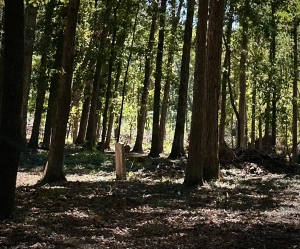
The new look will attract saunterers — mature forest, an open understory, and the deep and meaningful history tales told by the ~500 permanent residents whose remains are interred here.


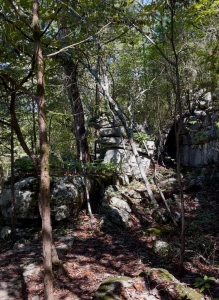
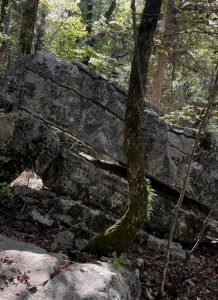
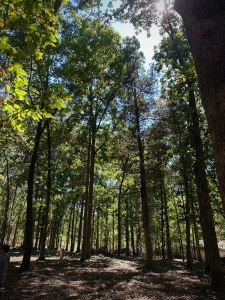
This incredible cemetery is a gem recovered from a jungle of natural vegetation and vibrant second-growth forest that strangled the cemetery for a full century. The new scene is park-like, the trees towering above the newly revealed historical site.


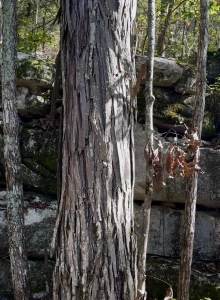
Diverse Tree Species


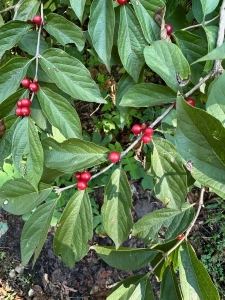
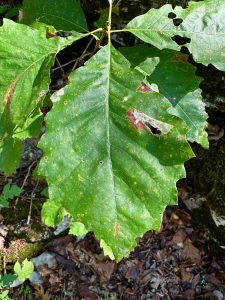
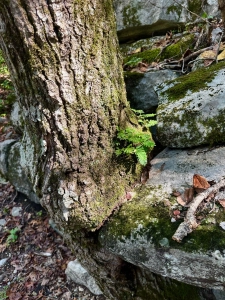
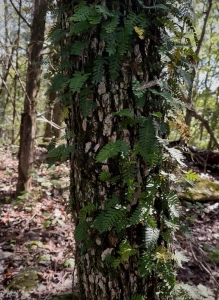
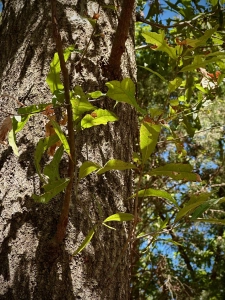
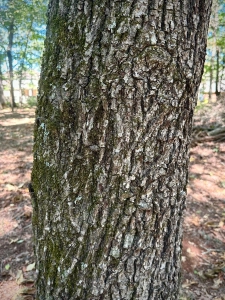
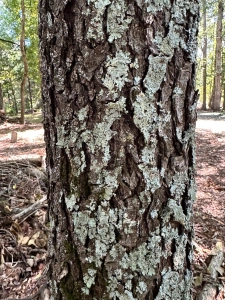
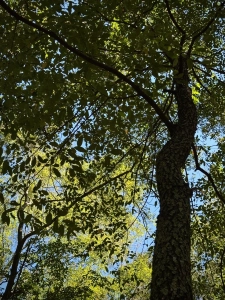
A diverse tree overstory complements the rich human history. I admit to total fascination with the forest that emerged from the grassy knoll that served as an early Madison, Alabama burial oasis. I won’t burden you with the messy dendrology of the species I discovered, admired, and celebrated.

White oak.


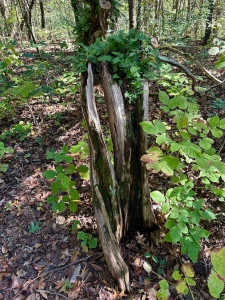
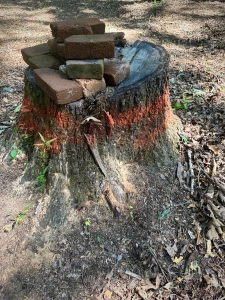
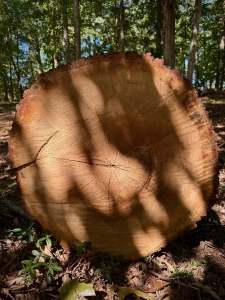
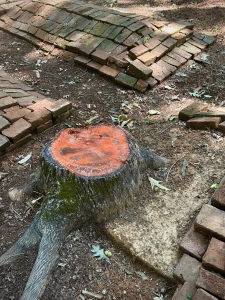
A white oak stump resulted when workers removed the tree decapitated by an F-1 tornado passing nearby earlier in the summer. I accepted the carnage as a gift, permitting me to do a ring count. The tree aged at 103 years, confirming that the tree regenerated at the time of cemetery abandonment and neglect.


The annual rings of oak are easy to count.


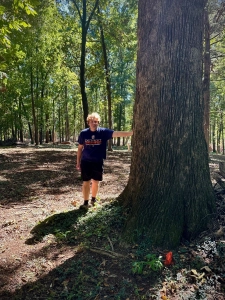
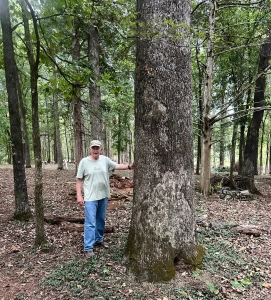
I assume that this 44-inch diameter white oak is older, and probably shaded a segment of the cemetery for decades prior to service and maintenance ceased.


See this spectacular white oak on my 27-second video:


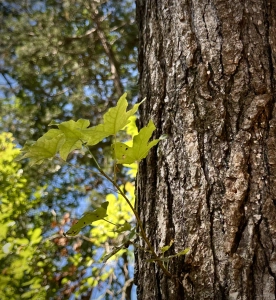
Sweetgum (left) is one of our common Alabama forest denizens. The species aggressively colonizes abandoned crop, pasture, grasslands, and cemeteries. Sugar maple (right).


Likewise, water oak is ubiquitous in our area.


As are species of hickory.


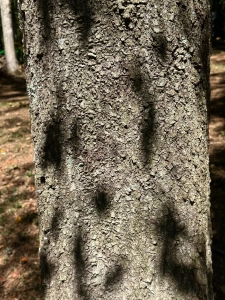
Black cherry, not a valuable timber species in northern Alabama, does regenerate valiantly and works its way into the intermediate canopy.


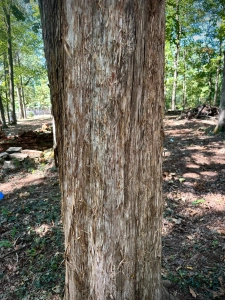
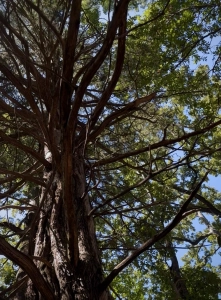
Eastern redcedar is a prolific pioneer species. This one is notably large and vibrant. What a magnificent crown, with laddered branching that reaches high above.


I recorded a 57-second video of the handsome Eastern redcedar tree.


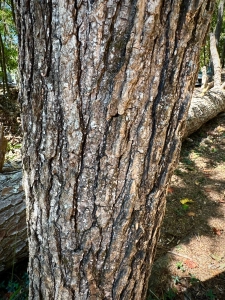
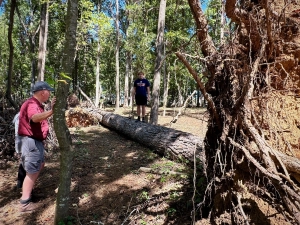
I mentioned the low intensity tornado that side-swiped the old cemetery. It toppled  a large loblolly pine.


The fallen pine, like most of the trees standing within the cemetery, probably dates back to abandonment.


Cemetery Remnants


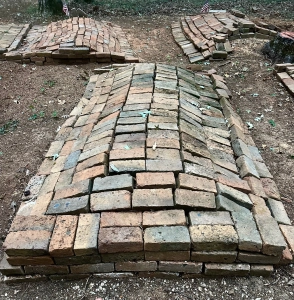
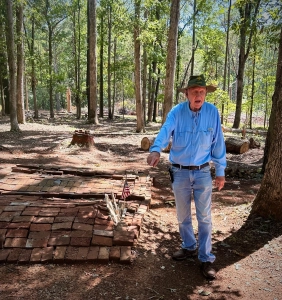
I had not previously seen such brick tombs.


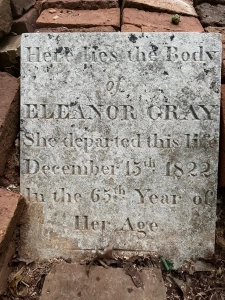
Here is the oldest interment at Gray Cemetery. I am sure that Mrs. Gray’s story is rich with life and living, and that many loved and loving descendents mourned her passing.


Local celebrated local historian John Rankin shared some time with us. He knows many of the stories that enrich our cemetery explorations and reflections.


I recorded this 60-second video showing the four types of tombs.


This is a box tomb.


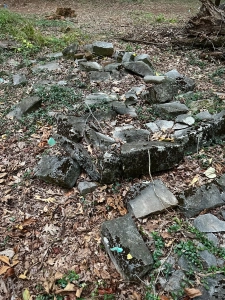
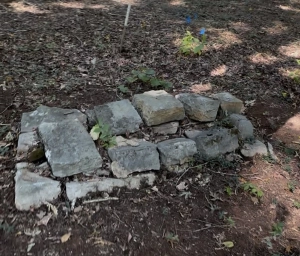
An Irish stone tomb.


And another example of a standard vertical tombstone.


Cemetery Critters


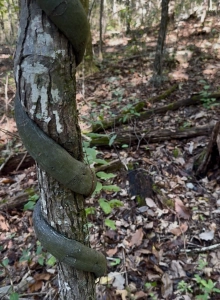
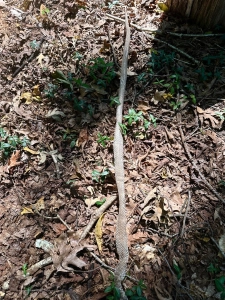
Among the departed humans, I found evidence of a current living resident — the shed skin of a grey ratsnake.


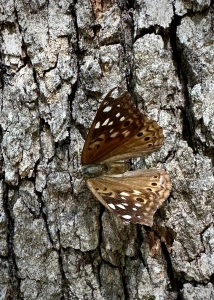
And a hackberry emperor butterfly.


Throughout our vibrant ecosystems, including the human realm, life and death are intertwined.


Thoughts and Reflections


I offer these observations:

  • Nature is adept at disappearing (i.e., hiding, obscuring, and concealing) the dedicated works of man. (Steve Jones)
  • Throughout our vibrant ecosystems, including the human realm, life and death are intertwined. (Steve Jones)
  • This incredible cemetery is a gem recovered from a jungle of natural vegetation and vibrant second-growth forest that strangled the cemetery for a full century. (Steve Jones)

Inhale and absorb Nature’s elixir. May Nature Inspire, Inform, and Reward you!


Note: All blog post images created & photographed by Stephen B. Jones unless otherwise noted. Please circulate images with photo credit: “©2025 Steve Jones, Great Blue Heron LLC. All Rights Reserved.”

I am available for Nature-Inspired Speaking, Writing, and Consulting — contact me at steve.jones.0524@gmail.com

Subscribe to my free weekly photo essays (like this one) at: http://eepurl.com/cKLJdL


Reminder of my Personal and Professional Purpose, Passion, and Cause


If only more of us viewed our precious environment through the filters I employ. If only my mission and vision could be multiplied untold orders of magnitude:

Mission: Employ writing and speaking to educate, inspire, and enable readers and listeners to understand, appreciate, and enjoy Nature… and accept and practice Earth Stewardship.

Vision:

  • People of all ages will pay greater attention to and engage more regularly with Nature… and will accept and practice informed and responsible Earth Stewardship.
  • They will see their relationship to our natural world with new eyes… and will understand more clearly their Earth home.

Tagline/Motto: Steve (Great Blue Heron) encourages and seeks a better tomorrow through Nature-Inspired Living!


Steve’s Four Books


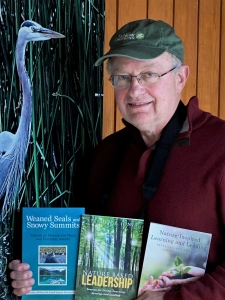
I wrote my books Nature Based Leadership (2016), Nature-Inspired Learning and Leading (2017), Weaned Seals and Snowy Summits: Stories of Passion for Place and Everyday Nature (2019; co-authored with Dr. Jennifer Wilhoit), and Dutton Land & Cattle: A Land Legacy Story (2023) to encourage all citizens to recognize and appreciate that every lesson for living, learning, serving, and leading is either written indelibly in or is powerfully inspired by Nature. All four of my books present compilations of personal experiences expressing my deep passion for Nature. All four books offer observations and reflections on my relationship with the natural world… and the broader implications for society. Order any from your local indie bookstore, or find them on IndieBound or other online sources such as Amazon and LifeRich.

I began writing books and Posts for several reasons:

  • I love hiking and exploring Nature
  • I see images I want to (and do) capture with my trusty iPhone camera
  • I enjoy explaining those images — an educator at heart
  • I don’t play golf!
  • I do love writing — it’s the hobby I never needed when my career consumed me
  • Judy suggested my writing is in large measure my legacy to our two kids, our five grandkids, and all the unborn generations beyond
  • And finally, perhaps my books and Blogs could reach beyond family and touch a few other lives… sow some seeds for the future


The Nature of Legendwood Development
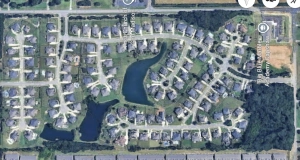
Judy and I closed on the house we built in Madison, Alabama’s Legendwood development, on December 24, 2015. I am posting this photo essay for two reasons. First, a tenth anniversary merits commemoration. Second, I feel compelled to remind my neighbors and friends how fortunate we are to reside in an enclave defined by Nature in a city and county growing explosively. Judy and I view our community as an oasis surrounded by busy roads, proliferating apartment buildings, and diminishing farmland and forests. Straying from my wildland-focused weekly Great Blue Heron Posts, I share these observations, reflections, photos, and two brief videos on Legendwood, a community of 124 homes, three ponds (the largest spanning 3.7 acres), a 5.2-acre woodlot along Balch Road, and a full, lighted sidewalk circuit totaling 3.48 miles.


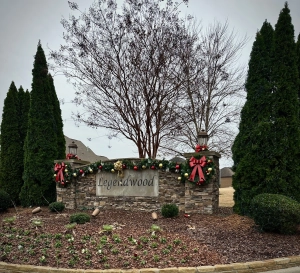
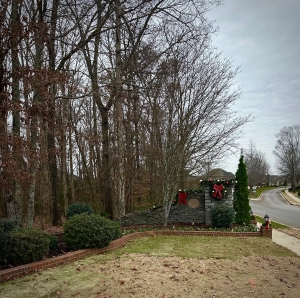
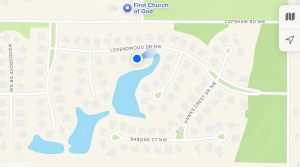
The Rockhaven Drive entrance from Capshaw Road (left) and Legendwood Drive entrance from Balch Road (right) are attractive portals to a desirable, high-quality residential community. The map defines our neighborhood.


Likewise, the aerial photo shows Balch as the eastern border and Capshaw to the north. Woodgrove Drive and its homes constitute the western extent. A long row of new apartments borders our southern boundary, crammed against backyards and fences.


I’ll begin this virtual walking tour from the Balch Road entrance. Our 5.2-acre woodlot lies along Balch south of the entrance. Oak, hickory, maple, poplar, and other deciduous species dominate. Barren in winter, the forest offers deep summer shade. I’ve heard musings about selling the wooded haven. Such a sale would generate income, even as it condemns us to another commercial or residential enterprise pressing against our eastern flank. I object strongly to selling it simply to generate a little HOA income. The woods offer a rich, biological ecosystem, a buffer to external negative development pressures. I will gladly conduct information and interpretive saunters for residents within the parcel at request (I have a 1973 Forestry BS and a doctoral degree in applied ecology).


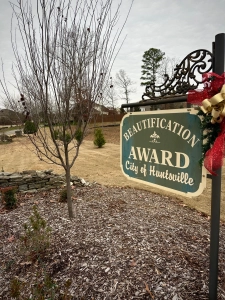
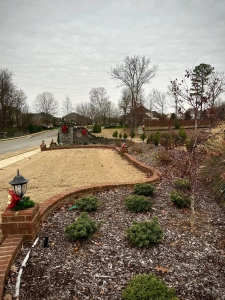
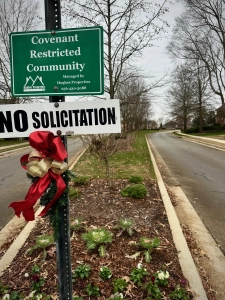
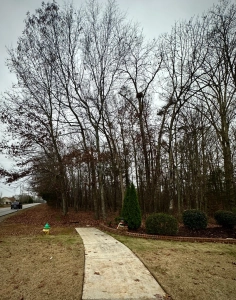
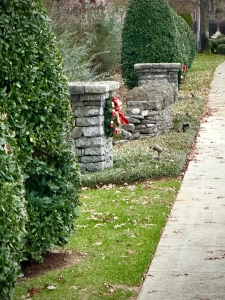
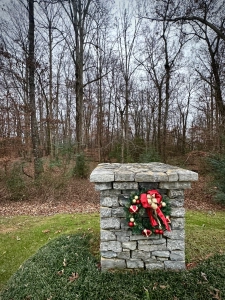
The south side of Legendwood beyond the Balch entrance welcomes residents and visitors with a touch of Nature (grassy lawn, beds, shrubs, trees, and hardscape), maintained contractually or by Board member and resident volunteers. Admittedly, the well-landscaped Legendwood roadside when a driver exits or is about to enter the Balch traffic flow, often escapes our notice and appreciation.


Judy and I walk an average of two miles daily through our community, ensuring our appreiation and enjoyment of the Nature of Legendwood. The northside amenities along Legendwood satisfy our quest for a home environment that nourishes body, mind, heart, soul, and spirit. Its no wonder our homes sell quickly and values outpace inflation.


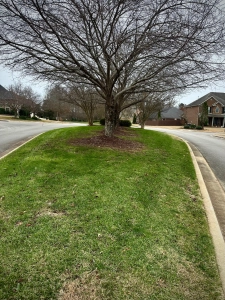
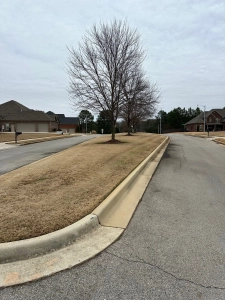
Imagine the classlessness and boredom of entering a neighborhood absent median strips (like the one within a 100 feet of the entrance) and landscaped cul-de-sacs (at the end of Springhaven). I compliment our Board for establishing and retaining high standards for community aesthetics and individual home appearance.

Springhaven


The intersection of Legendwood and Hawks Crest epitomizes the aesthetic richness of our community, a step above nearby developments with dull, unimaginitive narrower lanes, cars parked curbside, and no standards for home landscaping and maintenance.


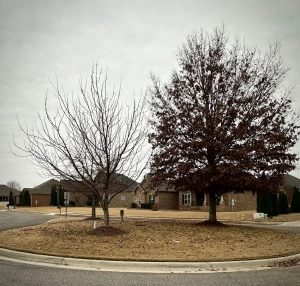
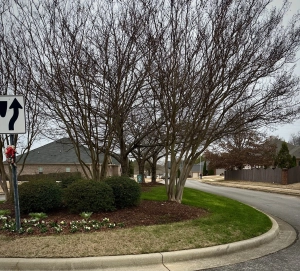
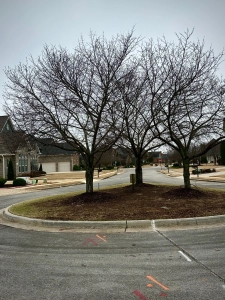
The cul-de-sac at the northern end of Hawks Crest features three nicely crowned ornamental trees, a small natural respite to a short street with seven homes, including the two along Legendwood.


At the southern end, few residents have reason to travel to Barons Court, yet Judy and I make a point to visit regularly on foot. A broad grassy expanse (a quarter-acre) beckons drivers at the south end of Hawks Crest where it meet Barons. Note: I suggest planting some trees early this coming spring.


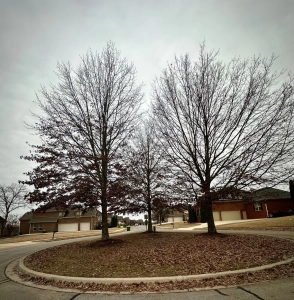
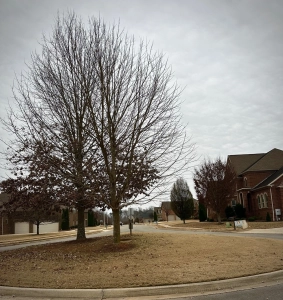
Cul-de-sacs at both eastern and western ends of Barons have three (east) and two (west) shade trees. How pleasant!


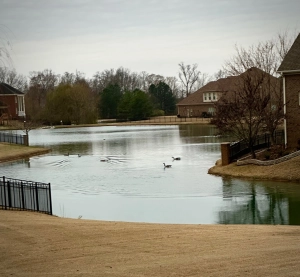
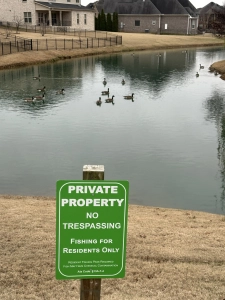
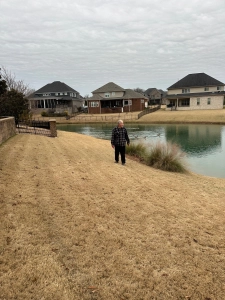
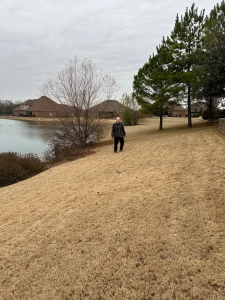
The largest pond sits along Legendwood. Both photos look to the south from community property, mowed and maintained by our HOA. Residents have shoreline access to the entire perimeter.


Even as a picture expresses a thousand words, a video speaks for a hundred photos. I recorded this 56-second video.


Judy and I live in the second house west of the above video camera point. We maintain (mowing, fertilizing, pest treaments) a strip of common property 30 feet from our line (the wall in photo at left) to the pond and 100 feet long, a total of 3,000 square feet. We established and care for two perennial beds within the strip for all to enjoy.


I recorded this 58-second video at pondside.


Rockhaven Drive’s maple-lined median carries us north to Capshaw.


At Capshaw, a lovely sinuous walkway extends west along Capshaw 660 feet. This entire area and its 1,122 foot counterpart to the east, also adjacent to Capshaw, are maintained by our HOA.


The eastern extension offers a large, tree and shrub-topped berm to shelter homes on the north side of Legendwood from the Capshaw traffic noise. The photo at right looks south across the berm to homes along Legendwood.


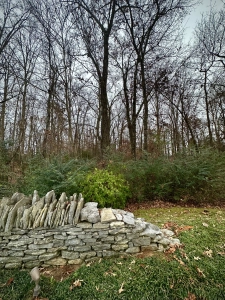
Our community owns a small lot on the south end of the Woodgrove cul-de-sac. Like all the other Legendwood community parcels, this lot requires HOA financial outlays.


Judy and I built in Legendwood because of its very Nature. We knew this would be our final relocation to an above ground residence. When we visited in spring 2015, a great blue heron stood at what was to be our shoreline…the heron is a meaningful family totem, a sort of avatar for my long-deceased Dad. We are grateful for whatever force beckoned us to Legendwood. I’ve observed as many as 24 bird species on a quiet morning from our patio. We have seen in our backyard squirrels, chipmunks, wildland rats, rabbits, skunks, raccoons, armadillos, and voles, among others. Throw in slider turtles and a huge snapper or two, bull frogs, garter and brown water snakes, and even an osprey. Ten years ago, we saw an occasional coyote and deer. We converted a vacant eroded lot to our own natural refuge.

I hike often in area State Parks, Land Trust Nature Preserves, the Wheeler National Wildlife Refuge, and diverse other nearby (as well as distant — domestic and international) natural areas. I publish a free weekly Great Blue Heron photo essay on what I term Nature-Inspired Life and Living!

Subscribe to my free weekly photo essays (like this one) at: http://eepurl.com/cKLJdL

Walking and enjoying Nature in our neighborhood is necessary, even if not sufficient. I encourage all of our fellow residents to explore segments of our 3.48 miles of heavenly, paved, nearly flat, lighted sidewalks and trails, and experience the Nature of Legendwood!

And if you want to understand more about our 5.2-acre woodland, send me an email (steve.jones.0524@gmail.com). We’ll set a date and time to explore, preferably before spring transitions to heat, humidity, ticks, redbugs, mosquitoes, and the like.


Thoughts and Reflections


I offer these observations:

  • The Nature of Legendwood is a compelling theme to distinguish our community from others. (Steve Jones)
  • There are some who can live without wild things and some who cannot. (Aldo Leopold)
  • Look deep into nature, and then you will understand everything better. (Albert Einstein)

Inhale and absorb Nature’s elixir. May Nature Inspire, Inform, and Reward you!


Note: All blog post images created & photographed by Stephen B. Jones unless otherwise noted. Please circulate images with photo credit: “©2025 Steve Jones, Great Blue Heron LLC. All Rights Reserved.”

I am available for Nature-Inspired Speaking, Writing, and Consulting — contact me at steve.jones.0524@gmail.com

Subscribe to my free weekly photo essays (like this one) at: http://eepurl.com/cKLJdL


Reminder of my Personal and Professional Purpose, Passion, and Cause


If only more of us viewed our precious environment through the filters I employ. If only my mission and vision could be multiplied untold orders of magnitude:

Mission: Employ writing and speaking to educate, inspire, and enable readers and listeners to understand, appreciate, and enjoy Nature… and accept and practice Earth Stewardship.

Vision:

  • People of all ages will pay greater attention to and engage more regularly with Nature… and will accept and practice informed and responsible Earth Stewardship.
  • They will see their relationship to our natural world with new eyes… and will understand more clearly their Earth home.

Tagline/Motto: Steve (Great Blue Heron) encourages and seeks a better tomorrow through Nature-Inspired Living!


Steve’s Four Books


I wrote my books Nature Based Leadership (2016), Nature-Inspired Learning and Leading (2017), Weaned Seals and Snowy Summits: Stories of Passion for Place and Everyday Nature (2019; co-authored with Dr. Jennifer Wilhoit), and Dutton Land & Cattle: A Land Legacy Story (2023) to encourage all citizens to recognize and appreciate that every lesson for living, learning, serving, and leading is either written indelibly in or is powerfully inspired by Nature. All four of my books present compilations of personal experiences expressing my deep passion for Nature. All four books offer observations and reflections on my relationship with the natural world… and the broader implications for society. Order any from your local indie bookstore, or find them on IndieBound or other online sources such as Amazon and LifeRich.

I began writing books and Posts for several reasons:

  • I love hiking and exploring Nature
  • I see images I want to (and do) capture with my trusty iPhone camera
  • I enjoy explaining those images — an educator at heart
  • I don’t play golf!
  • I do love writing — it’s the hobby I never needed when my career consumed me
  • Judy suggested my writing is in large measure my legacy to our two kids, our five grandkids, and all the unborn generations beyond
  • And finally, perhaps my books and Blogs could reach beyond family and touch a few other lives… sow some seeds for the future