Posts

Gray Cemetery: Nature Across Two Centuries of Life, Living, and Dying!

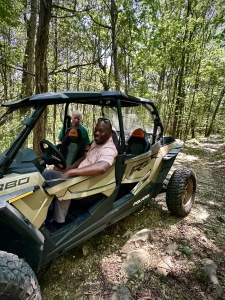
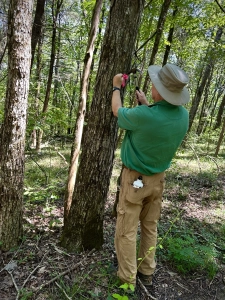
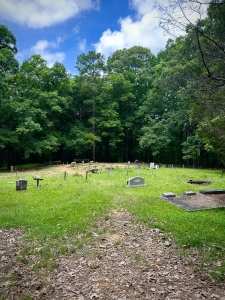
Suburban housing and light commercial establishments surround Gray Cemetery in Madison, Alabama. Urged by friend Gilbert White to visit the 200-year-old cemetery, I (and my 17-year-old grandson, Jack) met him there on September 6, 2025, as a thunderstorm bore down on us. We returned for a leisurely, sunny Sunday afternoon with Gilbert the next day. Abandoned 100 years ago, the cemetery (courtesy of volunteers working feverishly over the past four years) is reappearing from the jungle of natural vegetation regrowth. My central observation is that Nature is adept at disappearing (i.e., hiding, obscuring, and concealing) the dedicated work of man.

The new look will attract saunterers — mature forest, an open understory, and the deep and meaningful history tales told by the ~500 permanent residents whose remains are interred here.


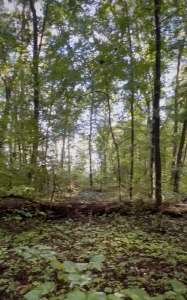
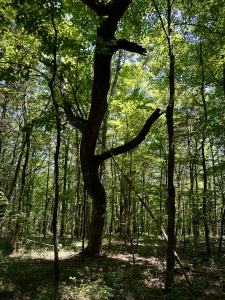
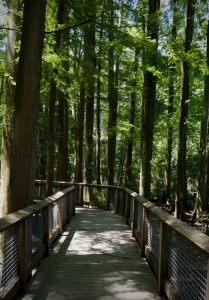
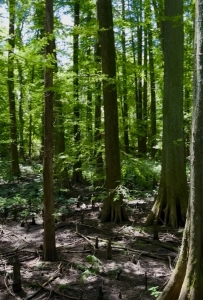
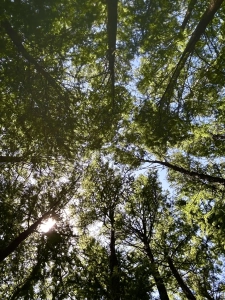
This incredible cemetery is a gem recovered from a jungle of natural vegetation and vibrant second-growth forest that strangled the cemetery for a full century. The new scene is park-like, the trees towering above the newly revealed historical site.


Diverse Tree Species


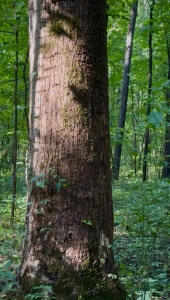
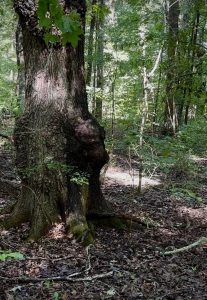
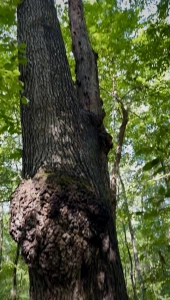
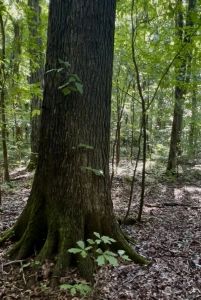
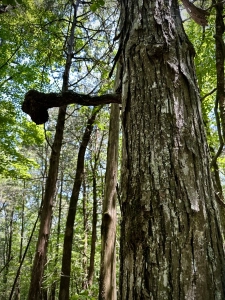
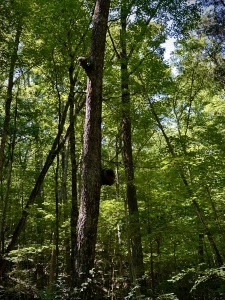
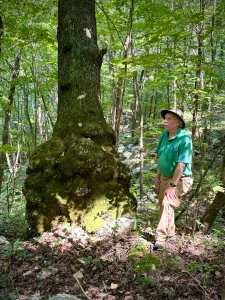
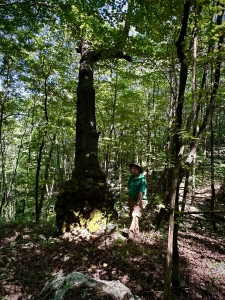
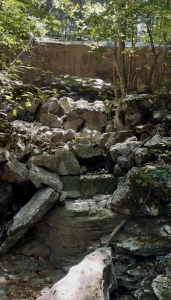
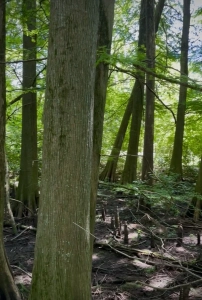
A diverse tree overstory complements the rich human history. I admit to total fascination with the forest that emerged from the grassy knoll that served as an early Madison, Alabama burial oasis. I won’t burden you with the messy dendrology of the species I discovered, admired, and celebrated.

White oak.


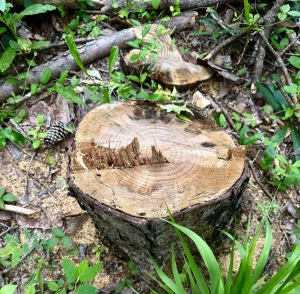
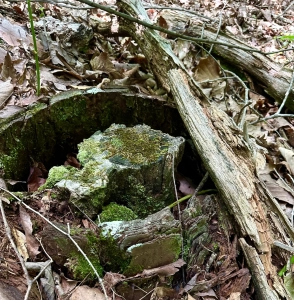
A white oak stump resulted when workers removed the tree decapitated by an F-1 tornado passing nearby earlier in the summer. I accepted the carnage as a gift, permitting me to do a ring count. The tree aged at 103 years, confirming that the tree regenerated at the time of cemetery abandonment and neglect.


The annual rings of oak are easy to count.


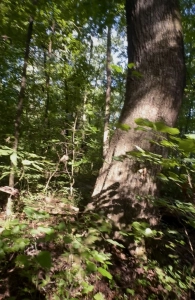
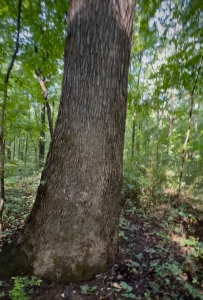
I assume that this 44-inch diameter white oak is older, and probably shaded a segment of the cemetery for decades prior to service and maintenance ceased.


See this spectacular white oak on my 27-second video:


Sweetgum (left) is one of our common Alabama forest denizens. The species aggressively colonizes abandoned crop, pasture, grasslands, and cemeteries. Sugar maple (right).


Likewise, water oak is ubiquitous in our area.


As are species of hickory.


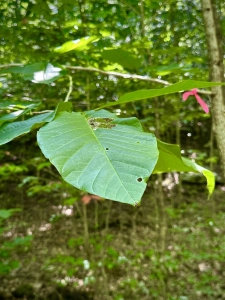
Black cherry, not a valuable timber species in northern Alabama, does regenerate valiantly and works its way into the intermediate canopy.


Eastern redcedar is a prolific pioneer species. This one is notably large and vibrant. What a magnificent crown, with laddered branching that reaches high above.


I recorded a 57-second video of the handsome Eastern redcedar tree.


I mentioned the low intensity tornado that side-swiped the old cemetery. It toppled  a large loblolly pine.


The fallen pine, like most of the trees standing within the cemetery, probably dates back to abandonment.


Cemetery Remnants


I had not previously seen such brick tombs.


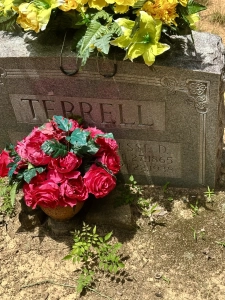
Here is the oldest interment at Gray Cemetery. I am sure that Mrs. Gray’s story is rich with life and living, and that many loved and loving descendents mourned her passing.


Local celebrated local historian John Rankin shared some time with us. He knows many of the stories that enrich our cemetery explorations and reflections.


I recorded this 60-second video showing the four types of tombs.


This is a box tomb.


An Irish stone tomb.


And another example of a standard vertical tombstone.


Cemetery Critters


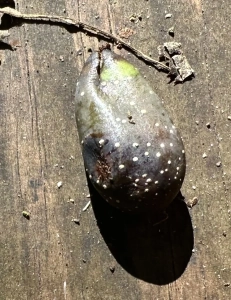
Among the departed humans, I found evidence of a current living resident — the shed skin of a grey ratsnake.


And a hackberry emperor butterfly.


Throughout our vibrant ecosystems, including the human realm, life and death are intertwined.


Thoughts and Reflections


I offer these observations:

  • Nature is adept at disappearing (i.e., hiding, obscuring, and concealing) the dedicated works of man. (Steve Jones)
  • Throughout our vibrant ecosystems, including the human realm, life and death are intertwined. (Steve Jones)
  • This incredible cemetery is a gem recovered from a jungle of natural vegetation and vibrant second-growth forest that strangled the cemetery for a full century. (Steve Jones)

Inhale and absorb Nature’s elixir. May Nature Inspire, Inform, and Reward you!


Note: All blog post images created & photographed by Stephen B. Jones unless otherwise noted. Please circulate images with photo credit: “©2025 Steve Jones, Great Blue Heron LLC. All Rights Reserved.”

I am available for Nature-Inspired Speaking, Writing, and Consulting — contact me at steve.jones.0524@gmail.com

Subscribe to my free weekly photo essays (like this one) at: http://eepurl.com/cKLJdL


Reminder of my Personal and Professional Purpose, Passion, and Cause


If only more of us viewed our precious environment through the filters I employ. If only my mission and vision could be multiplied untold orders of magnitude:

Mission: Employ writing and speaking to educate, inspire, and enable readers and listeners to understand, appreciate, and enjoy Nature… and accept and practice Earth Stewardship.

Vision:

  • People of all ages will pay greater attention to and engage more regularly with Nature… and will accept and practice informed and responsible Earth Stewardship.
  • They will see their relationship to our natural world with new eyes… and will understand more clearly their Earth home.

Tagline/Motto: Steve (Great Blue Heron) encourages and seeks a better tomorrow through Nature-Inspired Living!


Steve’s Four Books


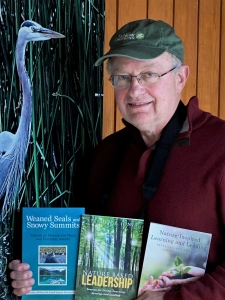
I wrote my books Nature Based Leadership (2016), Nature-Inspired Learning and Leading (2017), Weaned Seals and Snowy Summits: Stories of Passion for Place and Everyday Nature (2019; co-authored with Dr. Jennifer Wilhoit), and Dutton Land & Cattle: A Land Legacy Story (2023) to encourage all citizens to recognize and appreciate that every lesson for living, learning, serving, and leading is either written indelibly in or is powerfully inspired by Nature. All four of my books present compilations of personal experiences expressing my deep passion for Nature. All four books offer observations and reflections on my relationship with the natural world… and the broader implications for society. Order any from your local indie bookstore, or find them on IndieBound or other online sources such as Amazon and LifeRich.

I began writing books and Posts for several reasons:

  • I love hiking and exploring Nature
  • I see images I want to (and do) capture with my trusty iPhone camera
  • I enjoy explaining those images — an educator at heart
  • I don’t play golf!
  • I do love writing — it’s the hobby I never needed when my career consumed me
  • Judy suggested my writing is in large measure my legacy to our two kids, our five grandkids, and all the unborn generations beyond
  • And finally, perhaps my books and Blogs could reach beyond family and touch a few other lives… sow some seeds for the future


The Meadow at Pennsylvania’s Wolf Creek Narrows Natural Area

Wolf Creek Narrows Natural Area, owned and managed by the Western Pennsylvania Conservancy (WPC), is located in northwestern Butler County, Pennsylvania, just 30 minutes from where my son and his family reside north of Pittsburgh. Matt, his dog Oakley, and I circuited the 2.35-mile trail on the morning of September 22, the first day of autumn. My heart soared at the prospect of returning to an ecosystem shaped by a continental ice sheet just 13 millennia ago. This Post focuses on our passages (out from the trailhead and back) through a goldenrod-dominated autumn meadow.


The 243 acre Natural Area includes several distinct ecosystems: meadow; forest/field ecotone; upland forest, forested riparian zone; and the immediate Slippery Rock Creek. I like the openess of the meadow, accenting the vibrant autumn sky above. Meadows are temporary landscape features unless managed to short-circuit the natural successional impetus to transition to forest cover. I am not sure whether the ash sapling in the photo at right was planted or is a volunteer.


The perennial herbacious cover is dense, ideal for songbirds, small mammals, snakes, and other critters. As I drafted this text on December 2, 2025, western Pennsylvania was reporting several inches of fresh snow. I imagine diverse wildlife hunkered in the tangled vegetation beneath the snow.

I recorded this 58-second video in the luscious goldenrod meadow.


I can’t resist the image of goldenrod backdropped by the fall sky. The air, comfortable and clear, cut through my North Alabama mental fatigue with a long summer and a September dry spell. This a meadow still fresh, blooming, and vibrant, awaiting a first freeze, autumn rains, and an impending deep winter rest.


Hiking the meadow with Matt, sharing the autumn sunshine and exploration, reminded me of Einstein’s view of extending our life-reach beyond our own fleeting existence:

Our death is not an end if we can live on in our children and the younger generation. For they are us; our bodies are only wilted leaves on the tree of life. (Albert Einstein)

Some videos express the essence of a special place better without narration. I recorded this 59-second video focusing on the sounds of autumn breezes and late season insects.


An ideal stage for late season bloomers, the meadow celebrates the end of a full summer of generous meadow sunshine with goldenrod, New England aster, and smooth blue aster. Bright flowers will greet the icy fingers certain to come.


Supplemental wildlife accoutrements (a bluebird nesting box) enrich the meadow bird habitat.


As does the bat house at the meadow/forest edge.


I compliment the LConservancy for both the artificial nesting structures and the excellent interpretive signage.


Pear leaf crabapple is both an excellent wildlife food source and an early meadow colonizer in the successional steps toward natural forest regeneration.


The same is true of northern arrowwood. Both species are prolific producers of fruit that wildlife consumes, digestively scarifies its seeds, and disseminates to enable further colonization.


Two red oaks (left) and numerous sycamore saplings represent the advancing forest along the meadow’s north flank, which is a separate ecotone, neither meadow or forest. View the oak and sycamore saplings as scouts from the advancing forest army. Imagine a squierrel caching an acorn in rich soil under the goldenrod, and then losing track of it. The acorn sprouts with spring’s warmth. The seedling oak flourishes in full sunlight, partially protected by the 4-6-foot-high meadow vegetation from deer and rabbit browsing. The oaks are now out of easy reach of the hungry mammals. This day’s northwesterly breezes may be carrying windborne sycamore seed, potentially extending the forest deeper into the meadow.


The scouts will give way to an outright forest invasion. This isn’t the forest successionary army’s first rodeo. Just 13,000 years ago, the vast continental ice sheet yielded to a warming climate. Hundreds of millions of acres of once fertile and forested land emerged from the deep icepack barren and stark, stretching from the former ice edge near here far into the sub-Arctic Canadian Shield. That wild expanse, now ruchly forested, attests to Nature’s capacity to reclaim devastated territory, whether blasted by Mt. Saint Helens (1980), incinerated by the Big Burn (1910 in Washington, Idaho, and Montana), or savagely innundated by tropical storm remnants flushing western North Carolina river bottomland forests (The Great Flood of 1916). A beautiful postage stamp upland meadow in modern day Butler County Pennsylvania is just a bump in the road for an advancing vegetative front intent on expanding a forest.

I recorded this 59-second video at the meadow/woodland edge ecotone.


The real challenge falls to the Western Pennsylvania Conservancy managers. How do they hold the forest at bay, if indeed that is their objective, which I hope it is. I appreciate and value ecosystem diversity. I won’t attempt to recommend a treatment scenario. I have little relevant expertise, beyond thinking that fire may be among the alternatives.

I do know that the common garter snake we spotted in the meadow depends on the meadow ecotype, as do many other wildlife species.


How long will the meadow survive as a unique ecosystem without management practices, like bush-hogging, prescribed fire, selective herbicide treatments, and other alternatives? No matter where my Nature wanderings take me, I discover a constant: Nothing in Nature is Static. Nothing remains the same. In this case, human intervention will be necessary to keep the meadow…a meadow.

I often turn to John Muir for words that succinctly capture my sentiments…far better than my own feelings. Of my passion for the meadow, I turn to Muir:

Everybody needs beauty as well as bread, places to play in and pray in, where nature may heal and give strength to body and soul.


Thoughts and Reflections


I offer these observations:

  • Nothing in Nature is Static. Nothing remains the same. (Steve Jones)
  • Everybody needs beauty as well as bread, places to play in and pray in, where nature may heal and give strength to body and soul. (John Muir)
  • Our death is not an end if we can live on in our children and the younger generation. For they are us; our bodies are only wilted leaves on the tree of life. (Albert Einstein)

Inhale and absorb Nature’s elixir. May Nature Inspire, Inform, and Reward you!


Note: All blog post images created & photographed by Stephen B. Jones unless otherwise noted. Please circulate images with photo credit: “©2025 Steve Jones, Great Blue Heron LLC. All Rights Reserved.”

I am available for Nature-Inspired Speaking, Writing, and Consulting — contact me at steve.jones.0524@gmail.com


Subscribe to these free weekly Nature Blogs (photo essays) at: http://eepurl.com/cKLJdL


Reminder of my Personal and Professional Purpose, Passion, and Cause

If only more of us viewed our precious environment through the filters I employ. If only my mission and vision could be multiplied untold orders of magnitude:

Mission: Employ writing and speaking to educate, inspire, and enable readers and listeners to understand, appreciate, and enjoy Nature… and accept and practice Earth Stewardship.

Vision:

  • People of all ages will pay greater attention to and engage more regularly with Nature… and will accept and practice informed and responsible Earth Stewardship.
  • They will see their relationship to our natural world with new eyes… and will understand more clearly their Earth home.

Tagline/Motto: Steve (Great Blue Heron) encourages and seeks a better tomorrow through Nature-Inspired Living!


Steve’s Four Books


I wrote my books Nature Based Leadership (2016), Nature-Inspired Learning and Leading (2017), Weaned Seals and Snowy Summits: Stories of Passion for Place and Everyday Nature (2019; co-authored with Dr. Jennifer Wilhoit), and Dutton Land & Cattle: A Land Legacy Story (2023) to encourage all citizens to recognize and appreciate that every lesson for living, learning, serving, and leading is either written indelibly in or is powerfully inspired by Nature. All four of my books present compilations of personal experiences expressing my deep passion for Nature. All four books offer observations and reflections on my relationship with the natural world… and the broader implications for society. Order any from your local indie bookstore, or find them on IndieBound or other online sources such as Amazon and LifeRich.

I began writing books and Posts for several reasons:

  • I love hiking and exploring Nature
  • I see images I want to (and do) capture with my trusty iPhone camera
  • I enjoy explaining those images — an educator at heart
  • I don’t play golf!
  • I do love writing — it’s the hobby I never needed when my career consumed me
  • Judy suggested my writing is in large measure my legacy to our two kids, our five grandkids, and all the unborn generations beyond
  • And finally, perhaps my books and Blogs could reach beyond family and touch a few other lives… sow some seeds for the future


Brief-Form Post #52: Late October Afternoon Scouting for Eagles and Nests at Lake Guntersville State Park!

I am pleased to add the 52nd of my GBH Brief-Form Posts (Less than five minutes to read!) to my website. I get wordy with my routine Posts. I don’t want my enthusiasm for thoroughness and detail to discourage readers. So, I will occasionally publish these brief Posts.


Fellow retired forester Chris Stuhligher and I visited Lake Guntersville State Park (LGSP) on October 23, 2025, to scout a scheduled spring 2026 eagle view outing for the University of Alabama in Huntsville Osher Lifelong Learning Institute (OLLI). The LGSP map in hand, we stopped by several indicated locations. I present an overview of our afternoon ramblings, keeping the narrative brief and technically superficial.

The eagle at the lodge set the tone for our scouting venture.


We enjoyed lunch at the lodge restaurant, our table overlooking the lake.


Cabins Shoreline


Our first suggested viewing spot was the shoreline adjacent to the cabins. We were to search the opposite bank for a summer-foliage-obscured nest. We did not find it, yet we spotted a pair of eagles soaring above us, an adult and an immature.

Lake GSP


The photo at left shows the opposite shoreline, where the eagle’s nest, we were assured, lies hidden to our eyes. Regradless, who could not appreciate the cerulean sky, bright sunshine, and comfortable early autumn temperature!

Lake GSP


Here is my 58-second video from the cabins lakeshore.


I’m a sucker for tall loblollies and shoreline vistas.

Lake GSP


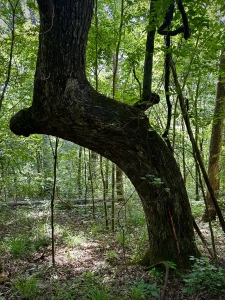
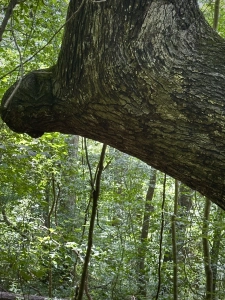
I wanted to revisit the nearby Cave Trail, hoping to quickly photograph the oak burled in the distinctive Big Foot image.


Brief Saunter at the Cave Trail


Here is my July 18, 2018 photo:


I intended to insert the new image here. However, just as there are days when I cannot remember what I had for lunch the day before, I failed to navigate us back the the infamous tree! I will try another day when we have more time for frivality. However, in searching, I did find a very unattractive, yet photo-worthy canker along the Cave Trail.

I recorded this 58-second grotesque Halloween canker video on an elm tree.


I sampled a twig from the elm and offer a still photo.

Lake GSPLake GSP


Town Creek Boat Launch


Our second viewing location forced us to look across the lake directly into the late afternoon sun. We imagined how much better the spot would be with the morning sun at our backs. However, the location kindly presented us with a great blue heron buffeted by persistent winds and surrounded by whitecaps.

I recorded this 59-second video of the windy great blue heron. Pardon the wind drowning out my narrative.


Unfortunately, the heron took graceful flight when I stopped recording.


As regular readers know, I am a huge fan of great blue herons.


Sunset Drive Greenway in Guntersville, Alabama


We drove to a final suggested site, this one off the State Park along Sunset Drive Greenway in the town of Guntersville. The shoreline and greenway are lovely. I intend to visit with Judy during the coming months, to enjoy a mid-morning stroll followed by lunch in Guntersville.

Lake GSP


A highlight for such a stroll will be the massive eagle’s nest in a grand loblolly pine.

My 60-second Sunset Drive Eagle’s Nest.

Ours was not an outing requiring months of planning, air travel, and expensive lodging. We needed no reservations. Instead, we boarded Chris’ car after adjouring our 10:00 to 11:30 AM National Parks (LearningQuest) class session at Hampton Cove, drove 45 minutes to the park, grabbed lunch at the lodge, and began our scouting. I am a firm advocate of enjoying Nature near at hand…making the most of special places and everyday Nature!

Closing


I accept the challenge of distilling these Brief-Form Posts into a single distinct reflection, a task far more elusive than assembling a dozen pithy statements.

I cannot offer a quote more poignantly apropos than this anonymous statement:

The strength of the bald eagle lies not just in its wings, but in its unyielding spirit…its symbol of purity, grandeur, wildness, mastery, freedom, independence, integrity, and Americanism. 


Nature’s special treats await our discovery, our understanding, and our interpretation!


Subscribe to my free weekly photo essays (like this one) at: http://eepurl.com/cKLJdL


The Northern Hardwood Forest at Pennsylvania’s Wolf Creek Narrows Natural Area

Wolf Creek Narrows Natural Area, owned and managed by the Western Pennsylvania Conservancy (WPC), is located in northwestern Butler County, Pennsylvania, just 30 minutes from where my son and his family reside north of Pittsburgh. Matt, his dog Oakley, and I circuited the 2.35-mile trail on the morning of September 22, the first day of autumn. I focus this photo essay on the exquisite old-growth northern hardwood forest.

My heart soared at the prospect of returning to an ecosystem shaped by a continental ice sheet just 13 millennia ago. The absolute freshness and newness stimulate wild conjecture and total admiration for Nature’s rapid recovery from thousands of feet of ice.

The Western PA Conservancy provided an online description:

Wolf Creek Narrows Natural Area is particularly known for its spectacular display of spring wildflowers. An active floodplain, mature northern hardwood forest, and scenic cliffs make this property one of WPC’s most popular. It is believed that the steep, narrow gorge of Wolf Creek Narrows originally formed when the ceiling of an ice-age cave eroded and collapsed due to runoff from the melting glacier. The site now consists of a high-quality stream meandering through towering 50-foot cliffs. These natural processes, including annual flooding and ice scouring, as well as limited human activities, have resulted in diverse natural communities.

We have lots of karst topography and abundant caves in my present home range of northern Alabama, but nothing so exciting as ice-age caves and ice scouring!

The meadow trail below led into the deep forest.


Okay, I’ve opened the portal to Wolf Creek Narrows. Now comes the tough part. How do I package 31 photos and two brief videos into a Post digestible within 15-minutes? Species resident to the Allegheny Hardwood forests of my 1984-85 NW PA and SW NY PhD field research welcomed me with warm and comforting embrace.


I’ve found that brief videos tell a richer tale than still photographs and written narrative. I recorded this 58-second video within the mixed forest. I hope that I’ve stimulated your interest in this special place.


The Narrows and Wolf Creek lie beyond the forest edge.


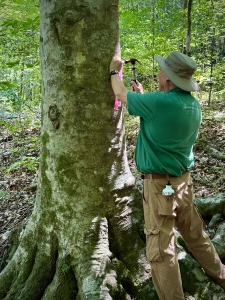
Matt stands six-feet tall, behind a 30-inch diameter American beech. The red oak beyond the beech (at left) is nearly 40-inches in diameter.


You don’t need my narrative to appreciate the beauty, magic, inspiration, and awe of this park-like northern hardwood wonderland.


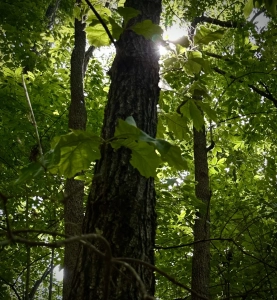
Take a look heavenward into this cathedral forest canopy.


I love the deep shade and open understory far below.


I frequently lead or co-lead organized woodland Nature excursions (saunters) in parks, preserves, refuges, and sanctuaries near my Madison, Alabama home. Like John Muir, I prefer sauntering in the woods…abhoring hurrying through the forest. I noticed that Oakley takes the same approach, sniffing and scenting her way within the woods, reading the signs, never missing an olfactory clue. My iPhone camera substitutes for scenting. So much of what I seek in Nature lies hidden in plain sight. I believe my own joy in discovery matches Oakley’s!


I can’t imagine Oakley concerned with steps, miles, time elapsed, or other metrics. For her, each sniff tells a tale. My objective is to learn from every Nature venture, intent upon constructing a meaningful tale in form of a photo essay like this one.

In fact, my retirement mission, practiced in these Posts, is to: Employ writing (and photography) to educate, inspire, and enable readers and viewers to understand, appreciate, and enjoy Nature… and accept and practice Earth Stewardship.

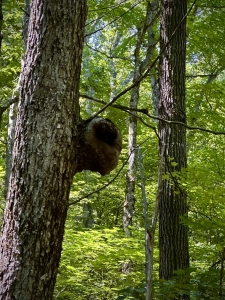
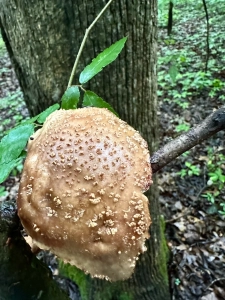
I keep my nose fine-tuned for sniffing tree form oddities and curiosities. A living, deeply decayed, cankered intermediate canopy sugar maple forced me to snap photographs of both the canker and the brown mushrooms above. How long ago did the fungus (or fungi) infect the sugar maple? How long will the tree survive? Death is a big part of life in the forest, whether west-central Pennsylvania or Alabama’s Tennessee River Valley.


Again, so much in Nature lies hidden in plain sight. Oakley discovered untold olfactory treasures. Most un-attuned hikers would not have seen, understood, and appreciated the visual treasures I encountered in our brief morning excursion. Allow me now to superficially catalog the more notable main canopy tree species.


Diverse Species Introductions


With little need for extensive narrative, I offer photos expressing the forest’s dominant upper canopy tree species. Yellow poplar reigns supreme at Wolf Creek Narrows, just as the species rules the high canopy at my favorite deep forest stand along the Wells Memorial Trail in Alabama’s Monte Sano State Park.


I recorded this 59-second video of the forest’s mixed species.


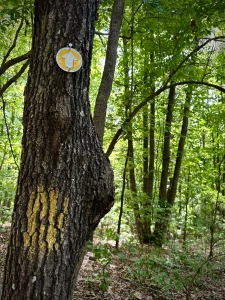
I conducted my doctoral field research in the Allegheny Hardwood forests within 80 miles of Wolf Creek…forests dominated by black cherry.  I revere the species for its beautiful high grade furniture wood, superior height growth, straight form, and handsome bark and foliage. The white-trail-marked black cherry (image below right) delivered a message meant for me. The species marked my professional development re-route. I worked 12 years after earning my Forestry BS for a southern paper and allied products manufacturing company that relied heavily on loblolly pine, a utility species here in the Southeast. Black cherry is anything but a utility species. It’s the filet mignon of furniture grade timber. Black cherry served as the North Star for my second career launch. The big white-blazed cherry signaled that the species remains a major emblem and totem for my path well into retirement. Among my fellow Union Camp foresters, I chose the path less traveled…one lined by black cherry trees (the other edged by loblolly pine) leading to a PhD and 35 years at nine universities.

Two roads diverged in a wood, and I—
I took the one less traveled by,
And that has made all the difference.

(Robert Frost)


American beech and yellow birch reminded me of my love for northern hardwood forests.


Basswood (tree and leaves) also ranges into northern Alabama, but the entire mixed species forest package at Wolf Creek represents a special orchestration that strokes my psyche and lifts my entire body, heart, mind, soul, and spirit. The assemblage reached me as Art Garfunkel belting his full-bodied Bridge Over Troubled Waters!


Black walnut tree and nut.


Bitternut hickory.


And nut.


Cucumber tree and leaf.


Red oak, deep memories, and an older gent feeling young-at-heart experiencing a symbolic step into his past…at home in a place he’d never been before.


Forests like this netted me decades ago, never completely allowing release. I think of Robert Service’s The Spell of the Yukon:

The freshness, the freedom, the farness–

O God! how I’m stuck on it all.

There’s a land–oh, it beckons and beckons,

And I want to go back–and I will.

It’s the great, big, broad land ‘way up yonder,

It’s the forest where silence has lease;

It’s the beauty that thrills me with wonder,

It’s the stillness that fills me with peace.

Some of me remains in the Far Northland of Alaska, where we lived 2004-08. Service nailed the place and my sentiment. In similar fashion, vestiges of these magnificent northern hardwood forests habituate my psyche. I want to go back–and I will, if only to the nearby Wells Memorial Trail, a suitable southern version of a rich upland forest.


Thoughts and Reflections


I offer these observations:

  • The rich northern hardwood forest is an orchestral composition, a natural Bridge Over Troubled Waters. (Steve Jones)
  • Black Cherry is a trail marker species, both a literal guide through the Wolf Creek Narrows forest…and a career/life path symbol and guidepost for me. (Steve Jones)
  • Mine is a story of passion for place and everyday Nature. (Steve Jones)

Inhale and absorb Nature’s elixir. May Nature Inspire, Inform, and Reward you!


Note: All blog post images created & photographed by Stephen B. Jones unless otherwise noted. Please circulate images with photo credit: “©2025 Steve Jones, Great Blue Heron LLC. All Rights Reserved.”

I am available for Nature-Inspired Speaking, Writing, and Consulting — contact me at steve.jones.0524@gmail.com

Subscribe to these free weekly Nature Blogs (photo essays) at: http://eepurl.com/cKLJdL


Reminder of my Personal and Professional Purpose, Passion, and Cause

If only more of us viewed our precious environment through the filters I employ. If only my mission and vision could be multiplied untold orders of magnitude:

Mission: Employ writing and speaking to educate, inspire, and enable readers and listeners to understand, appreciate, and enjoy Nature… and accept and practice Earth Stewardship.

Vision:

  • People of all ages will pay greater attention to and engage more regularly with Nature… and will accept and practice informed and responsible Earth Stewardship.
  • They will see their relationship to our natural world with new eyes… and will understand more clearly their Earth home.

Tagline/Motto: Steve (Great Blue Heron) encourages and seeks a better tomorrow through Nature-Inspired Living!


Steve’s Four Books


I wrote my books Nature Based Leadership (2016), Nature-Inspired Learning and Leading (2017), Weaned Seals and Snowy Summits: Stories of Passion for Place and Everyday Nature (2019; co-authored with Dr. Jennifer Wilhoit), and Dutton Land & Cattle: A Land Legacy Story (2023) to encourage all citizens to recognize and appreciate that every lesson for living, learning, serving, and leading is either written indelibly in or is powerfully inspired by Nature. All four of my books present compilations of personal experiences expressing my deep passion for Nature. All four books offer observations and reflections on my relationship with the natural world… and the broader implications for society. Order any from your local indie bookstore, or find them on IndieBound or other online sources such as Amazon and LifeRich.

I began writing books and Posts for several reasons:

  • I love hiking and exploring Nature
  • I see images I want to (and do) capture with my trusty iPhone camera
  • I enjoy explaining those images — an educator at heart
  • I don’t play golf!
  • I do love writing — it’s the hobby I never needed when my career consumed me
  • Judy suggested my writing is in large measure my legacy to our two kids, our five grandkids, and all the unborn generations beyond
  • And finally, perhaps my books and Blogs could reach beyond family and touch a few other lives… sow some seeds for the future
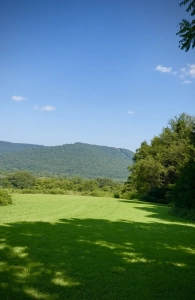


Brief-Form Post #50: Field to Forest in a WNWR Bottomland — Armed with a 1937 Aerial Photograph

I am pleased to add the 50th of my GBH Brief-Form Posts (Less than five minutes to read!) to my website. I don’t want my enthusiasm for thoroughness and detail to discourage readers. So, I will occasionally publish these brief Posts.


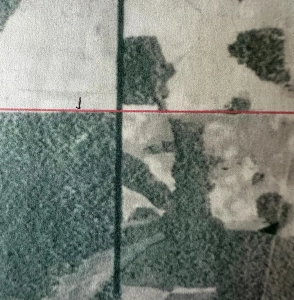
I’ve rambled through the bottomland forests of the Wheeler National Wildlife Refuge (WNWR) south of HGH Road routinely since my 2018 retirement to northern Alabama. Fellow retired forester Chris Stuhlinger recently secured 1937 aerial photographs of the area. The images confirm some of my suppositions of forest history and contradict others. I focus this brief-form post on the forest west of Jolly B Road and south of HGH Road, where the 88-year-old image validates my supposition that this area of mature forest was open farmland when engineers completed Wheeler Dam. I captured photographs and videos for this Brief-Form Post on August 30, 2025.

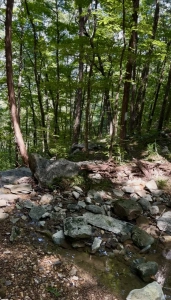
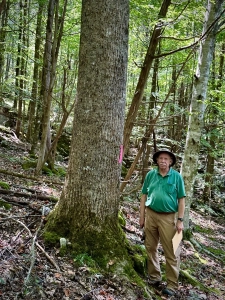
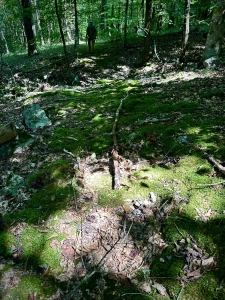
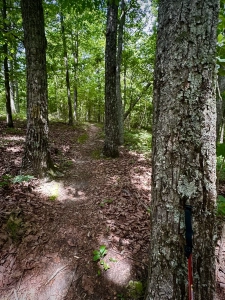
The red line on this 1937 aerial image depicts the location of today’s gravel HGH Road, separating private land to the north from WNWR south of the road. The aerial photo, even though of poor resolution, clearly shows open land where I captured the photographs and two brief videos, a few hundred feet east of the copse of trees north of the road. Today, everything south of HGH is a mature forest.

HGH Road


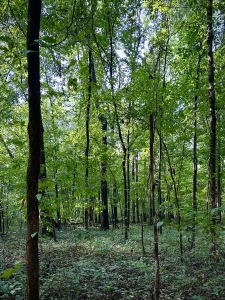
This is the mid-morning view to the east where I parked along HGH Road. To all appearances, a shady forest road.

HGH


I recorded this 59-second video at the same location with the former open land to the south (right).


I turned my camera to the south, where a mature forest stands in the once open field.

HGH


Pointing my camera to the west, I again captured a shady forest lane.

HGH


I recorded this 54-second video looking west with the former open land to the south (left).


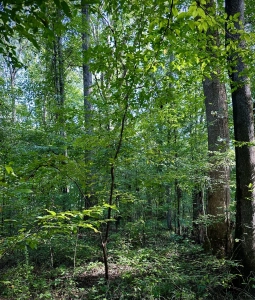
The two images below look into the towering mature forest where fields once grew agricultural crops.


Nothing in Nature is static. A century ago, these rich bottomlands, tended by farmers and mules, produced crops of corn, beans, and cotton. Priot to those years of sweat, anxiety, good years, and bad, other generations cleared the luxurious old growth forests to enable agriculture.


Nature always stands at the ready. The process is simple and long-practiced. Stop plowing, discing, and sowing. Nature fills the void with wind- and critter-born seeds. Bare land transitions to herbs, shrubs, seedlings, and eventually to vibrant stands of maturing trees.

This coming dormant season Chris and I will return to this old field mature forest for a deeper examination, without the company of mosquitoes, chiggers, ticks, and leafy poison ivy!

Closing


I accept the challenge of distilling these Brief-Form Posts into a single distinct reflection, a task far more elusive than assembling a dozen pithy statements. The great philosophers and physicists are attributed with exploring the notion of nature’s insistence on eliminating nothingness or emptiness. I say so be it; let them ponder the esoteric and say what they wish.

I adopt a simpler view, having learned through observation and experience that Nature hungrily fills every element and feature of any ecosystem I have observed. Vaporize 96,000 acres of forest on the footslopes of Mt. St. Helens in May of 1980; see the verdant slopes 45 years later. Scorch nearly 800,000 acres of Yellowstone National Park in 1988; see the wounds healing 37 years hence. My simpler view:

Nature abhors a vacuum.

I suppose I could attribute the wisdom to Henry David Thoreau:

Nature abhors a vacuum, and if I can only walk with sufficient carelessness I am sure to be filled.


Brief Form Post #49: Lessons and Observations from a Maryland Mountain Hardwood Forest Fire


I am pleased to add the 49th of my GBH Brief-Form Posts (Less than five minutes to read!) to my website. I get wordy with my routine Posts. I don’t want my enthusiasm for thoroughness and detail to discourage readers. So, I will publish these brief Posts regularly.


On July 29, 2025, my grandson, Jack (then 17), and I hiked the Evitts Mountain Homestead Trail at Western Maryland’s Rocky Gap State Park, ascending 1,100 feet to the summit of Evitts Mountain, a six-mile round trip. A mile from the parking area, an extensive burned area rose uphill on the east side of the mountain. The trail, an old jeep road, obviously served as an effective fire break. I estimated that the fire burned within the past three years, running hot enough to kill at least half of the upland hardwood (oak-hickory) main canopy trees and all of the understory trees and shrubs.


A hardwood forest fire of this intensity occurs only under special circumstances, generally a very windy spring day after forest ground surface fuel has dried. One may think intuitively that autumn’s leaf litter would be more likely to burn. High winds with low humidity occur more often in the spring. Autumn seldom brings the intense dry winds that follow a late spring cold front. By mid to late April in these Central Appalachian forests, the prior year’s leaf litter and fine fuels cure rapidly. In late April of 2016, such a day in nearby west-central Pennsylvania saw nearly 10,000 acres of hardwood forest burn, the largest Pennsylvania forest conflagration in 26 years.


I imagined such a day triggering the fire leaving the evidence I observed. The fire left an impression of a wildfire racing up the slope consuming understory and killing overstory trees, a fire more intense than I would expect from a prescribed fire.

However, my online search discovered a November 7, 2022, announcement (Cumberland Times-news.com) of a planned 90-acre prescribed fire in the park on the east slope of Evitts Mountain, the location where I snapped these photographs and recorded the video. Excerpts from the notice:

Controlled burns for forest and wildlife habitat management are always conducted with safety as the top priority. Burn staff are trained practitioners who monitor the weather leading up to and during a burn to ensure the fire remains at the desired intensity and smoke is carried up and away from roads and homes. If the required conditions for temperature, humidity, moisture levels, cloud cover, and wind are not met or they unexpectedly change, the burn will be postponed.
Foresters and ecologists recognize that fire is a critical ecological process for many environments, including the typical Appalachian forests of oaks, hickories and pines that cover most of western Maryland. Since the 1930’s however, a lack of fire has unintentionally harmed forest health.
The controlled burn at Rocky Gap State Park is being conducted to help a variety of fire-adapted native tree and plant species, including table mountain pine (which needs fire to regenerate), pitch pine, oak trees, blueberries, huckleberries, and many native wildflowers. A more open forest will also improve habitat for birds, bats, and other animals, while also making it harder for destructive pests like pine beetles to travel between trees.
Another significant benefit of controlled burns is the reduction of dry wood and organic matter on the forest floor that build up over time, which then reduces the likelihood and severity of dangerous wildfires.
Part of the controlled burn will also be conducted through the use of an ignition drone, which allows a drone operator to drop incendiary devices on the interior of the burn site. This not only results in a more precise ignition pattern, but also reduces the need for crew members to traverse difficult terrain near the active burn.

Unfortunately, I found no online commentary or YouTube videos of the fire or its results. Clearly, I view the burn rationale and intent as well-reasoned. The results, a full two growing seasons after the November 2022, prescribed fire, suggest that the burn exceeded the planned level of intensity. Too many main canopy oaks succumbed. Survivors suffered basal scarring that will allow heart rot to infect.

I’d like to see an official assessment of the burn. How do results compare to purpose and expectations?

I recorded this 58-second video of the burn area above the trail.


Midway through the third growing season after the burn, some areas (left) remain mostly barren of regrowth. Other areas, like the two photos above the video and the image at right show robust understory resurgence, including tree regeneration.


The stand beyond Jack shows the desired intact overstory and vigorous regeneration.


At my request, Jack ascended 75 feet above the trail to capture these images of the uphill side of a sawlog-size chestnut oak. Because leaf litter and fine fuels aggregate on the uphill side of trees, the fire burned hotter in the concentrated debris, killing the cambium. Witness the mushrooms from decay fungi already infecting the tree that is otherwise undamaged.


A closeup of the colony of decay fungi mushrooms.


We found a number of trees below the road that showed deep decay and hollowing of oak trees similarly scarred on their upslope side from a fire decades earlier.


Controlled fire can be a valuable tool for forest management:

Foresters and ecologists recognize that fire is a critical ecological process for many environments, including the typical Appalachian forests of oaks, hickories and pines that cover most of western Maryland. Since the 1930’s however, a lack of fire has unintentionally harmed forest health. [From the online announcement}

During my 12 years with Union Camp Corporation (1973-1985), I oversaw prescribed burning on tens of thousands of acres, including a single day in Alabama when we ignited 4,300 acres, intentionally (by aerial ignition) and under control.  Like all tools, the use of fire requires careful planning, responsible and informed implementation, and post-treatment assessment and learning. Again, I would like to see the review of this particular prescribed fire.

I will not pass judgement. I wasn’t there. I refuse to criticize. I can only posit that the result does not appear to have yielded what was intended.

All of us who have accomplished much, have missed our mark, fallen short, or failed from time to time. Always, our intentions were sound:

A good intention, with a bad approach, often leads to a poor result. (Thomas A. Edison)

The road to hell is paved with good intentions. (Samuel Johnson)

Over my career, I missed 9,000 shots; I was on the losing side of nearly 300 games; on 26 occasions when my teammates entrusted me to take the last minute winning shot, I missed. I’ve failed over and over and over again, and that’s why I succeeded. (Michael Jordan)

I hope the various agency planners and pratitioners learned from the November 2022 prescribed fire.


Closing


I accept the challenge of distilling these Brief-Form Posts into a single distinct reflection, a task far more elusive than assembling a dozen pithy statements. Thomas Edison implored that good intentions must be matched with a good approach. Russell Stevens focused his related admonition to prescribed burning:

Prescribed fire is a process and should be well planned to safely accomplish desired goals. (Noble Research Institute)


Note: All blog post images created & photographed by Stephen B. Jones unless otherwise noted. Please circulate images with photo credit: “©2025 Steve Jones, Great Blue Heron LLC. All Rights Reserved.”

I am available for Nature-Inspired Speaking, Writing, and Consulting — contact me at steve.jones.0524@gmail.com

Subscribe to my free weekly photo essays (like this one) at: http://eepurl.com/cKLJdL


Part Two 175-Year-Old C&O Canal Pawpaw Tunnel Hill Trail

I drafted this Post a dozen weeks ago. Oh, the sweet memories it rekindled…of the hike itself and of the deep recollections of my wanderings there with Dad, as well as with Judy and our kids. And on November 14, I will take Jack, who has since turned 18, for a second visit to Auburn University. Life races ahead of memories. I’m trying my best to keep up, yet I know that one day I will trundle along as only a memory, which spurs me to plant seeds, prompted by one of my favorite quotes from Robert Louis Stevenson:

Don’t judge each day by the harvest you reap but by the seeds that you plant.

I once again visited the Pawpaw Tunnel, located within the Chesapeake and Ohio (C&O) National Historical Park, on July 28, 2025. Alabama grandsons, Jack (17) and Sam (11), accompanied me. I grew up 30 miles upstream along the Potomac River in Cumberland, Maryland. I wanted the boys to experience the Nature, history, and engineering marvel of the tunnel and canal. We walked through the 3,600-foot tunnel, traversed a mile beyond it, and then hiked the Tunnel Hill Trail over the mountain to return to the parking area. Part One carried us through the tunnel (https://stevejonesgbh.com/2025/09/25/part-one-175-year-old-co-canal-pawpaw-tunnel-where-nature-meets-engineering-and-history/); Part Two took us back over the Tunnel Hill Trail.


Tunnel Hill Trail


The Tunnel Hill Trail rose from the towpath on the same route used extensively during the construction era 175+ years ago. Signage indicated where work crews resided during the 14-year construction period. We viewed a hollow filled to the brim with rock debris blasted and excavated from the tunnel and its east-end approach. Sam and Jack assumed a victorious pose on a more current debris mound. Jack and I rested beside a white oak tree.


Dare I admit that the 362-foot ascent winded us? We rested on logs at the gravel parking at the top of Sorrel Ridge, where a Green Ridge State Forest dirt road met the no-access terminus of the NPS tunnel hill jeep trail. Green Ridge State Forest holds deep sentimental and professional meaning for me. Between my junior and senior undergraduate academic years, I worked under the Green Ridge Forest Supervisor, the inimitable John Mash, who demonstrated the essential need to know the land…both its natural and human history…to effectively manage it.


Jack and Sam agreed that the view more than compensated for our effort on a hot summer mid-day. CaCapon Mountain rises in the distance above Pawpaw, West Virginia.


I recorded this 53-second video at the summit.


The overlook revealed far more than the scenery…sparking fragments of memory across seasons, decades, life stages, and generations.


Forest Life along the Trail


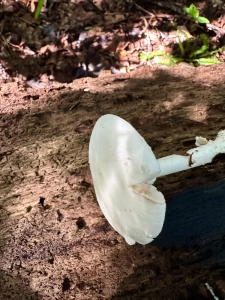
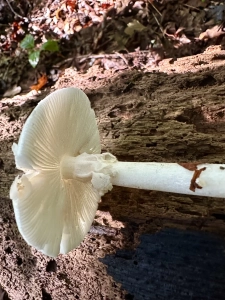
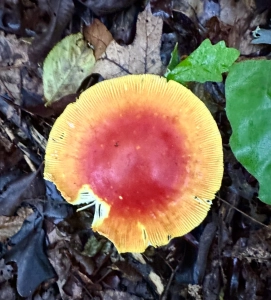
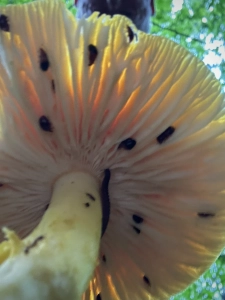
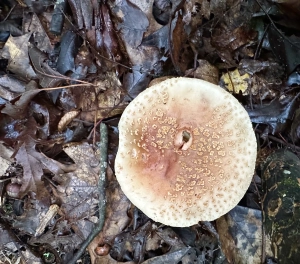
A forest ecosystem is a complex community of plants, animals, fungi, and the physical environment. I give you a sampling of photo-worthy life forms we encountered along the trail. View this as a teaser to what could have filled volumes. This Amanita beckoned us to look closely…side view and its gilled underside.


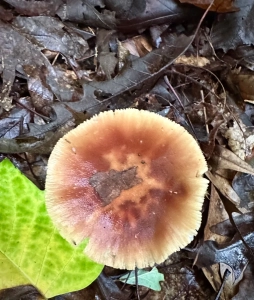
And its handsome top.


Old-man-of-the-woods grew among the green of a cushion of moss.


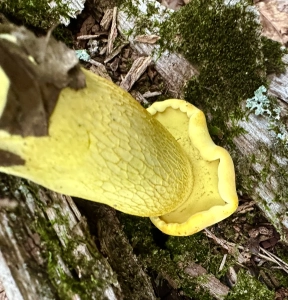
White-pored chicken of the woods stood silently along the trail, mocking me for all the times while foraging locally in Alabama, I found nothing approaching the size and quality of this specimen. We took home only a photo of this gem.


I delight in spring wildflowers even as I rally to see late summer beauties like these pigeonwings


The tunnel and nearby West Virginia town monikers suggest that Asimini triloba might grow abundamently in the area. We saw lots of pawpaw, an understory and lower canopy tree. Sam lends a personal touch to its elongate shade-tolerant foliage.


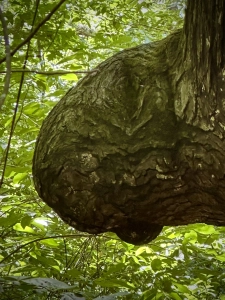
We found a contorted white oak trailside as we ascended. I can only conjecture what injuries, and subsequent fungal infections, owing to humans and their equipment along the trail, permanently marred the tree and its future growth.


Sam spotted this agreeable tiger moth larva.


Same for this black-and-gold flat millipede.


I will repeat the circuit (through the tunnel and over the Tunnel Hill Trail) another time, when I return, preferably during the dormant season. Like so many of my special places and the everyday Nature that defines them, the C&O Canal and Pawpaw Tunnel extend roots deep into my mind, body, heart, soul, and spirit. Where do those intense feelings and vivid memories go when we are called Home? Perhaps fragments will live on through my children, Matt and Katy, and in Jack and Sam, Katy’s boys. Robert Louis Stevenson nailed the sentiment:

Don’t judge each day by the harvest you reap but by the seeds that you plant.


A Post Script


Contemplating the inevitable, I once thought my ashes could be spread in Teton National Park, a majestic place where I once planned a sabbatical leave after securing promotion to Full Professor at Penn State. An ascending career path instead led me immediately to Auburn University, bypassing the sabbatic. Nearly 30 years have passed since then. From my current vantage point, the Tetons is a step too far. Upon considerable thought, why not have the five grandkids and children, Matt and Katy, leave a dusting at the Potomac River overlook…and another bit in the Cathedral Forest along the Wells Memorial and Sinks Trails on Monte Sano State Park.


Thoughts and Reflections


I offer these observations:

  • My Dad was called Home 29 years ago, yet he once again accompanied me (and two of his great grandchildren) in July 2025, as I covered ground we walked together many times in my youth. (Steve Jones)
  • I am hopelessly addicted to Nature. (Steve Jones)
  • My experiences from those formative years shaped me, sculpted my lifetime addiction to Nature…propelled me to a forestry degree, and a meaningful career committed to natural resources sustainability. (Steve Jones)

Inhale and absorb Nature’s elixir. May Nature Inspire, Inform, and Reward you!


Note: All blog post images created & photographed by Stephen B. Jones unless otherwise noted. Please circulate images with photo credit: “©2025 Steve Jones, Great Blue Heron LLC. All Rights Reserved.”

I am available for Nature-Inspired Speaking, Writing, and Consulting — contact me at steve.jones.0524@gmail.com

Subscribe to my free weekly photo essays (like this one) at: http://eepurl.com/cKLJdL


Reminder of my Personal and Professional Purpose, Passion, and Cause


If only more of us viewed our precious environment through the filters I employ. If only my mission and vision could be multiplied untold orders of magnitude:

Mission: Employ writing and speaking to educate, inspire, and enable readers and listeners to understand, appreciate, and enjoy Nature… and accept and practice Earth Stewardship.

Vision:

  • People of all ages will pay greater attention to and engage more regularly with Nature… and will accept and practice informed and responsible Earth Stewardship.
  • They will see their relationship to our natural world with new eyes… and will understand more clearly their Earth home.

Tagline/Motto: Steve (Great Blue Heron) encourages and seeks a better tomorrow through Nature-Inspired Living!


Steve’s Four Books


I wrote my books Nature Based Leadership (2016), Nature-Inspired Learning and Leading (2017), Weaned Seals and Snowy Summits: Stories of Passion for Place and Everyday Nature (2019; co-authored with Dr. Jennifer Wilhoit), and Dutton Land & Cattle: A Land Legacy Story (2023) to encourage all citizens to recognize and appreciate that every lesson for living, learning, serving, and leading is either written indelibly in or is powerfully inspired by Nature. All four of my books present compilations of personal experiences expressing my deep passion for Nature. All four books offer observations and reflections on my relationship with the natural world… and the broader implications for society. Order any from your local indie bookstore, or find them on IndieBound or other online sources such as Amazon and LifeRich.

I began writing books and Posts for several reasons:

  • I love hiking and exploring Nature
  • I see images I want to (and do) capture with my trusty iPhone camera
  • I enjoy explaining those images — an educator at heart
  • I don’t play golf!
  • I do love writing — it’s the hobby I never needed when my career consumed me
  • Judy suggested my writing is in large measure my legacy to our two kids, our five grandkids, and all the unborn generations beyond
  • And finally, perhaps my books and Blogs could reach beyond family and touch a few other lives… sow some seeds for the future
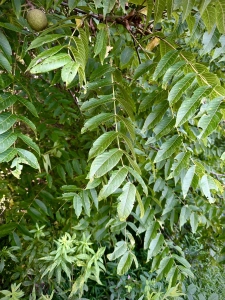


Brief-Form #48 : Demons, Ogres, Wraiths, Ghouls, and Other Halloween Forest Spectres!

I am pleased to add the 48th of my GBH Brief-Form Posts (Less than five minutes to read!) to my website. I get wordy with my routine Posts. I don’t want my enthusiasm for thoroughness and detail to discourage readers. So, I will occasionally publish these brief Posts.

Happy Halloween!

I wander (and wonder) in North Alabama’s forests during daylight hours. Even in full sunlight, I encounter spooky sights, sounds, and situations. Were I marauding the sylvan haunts in darkness, I might be more unsettled, deranged, and addled than I already am! Take a stroll with me among some of the weird forest demons, ogres, wraiths, and ghouls I’ve photographed since retiring to North Alabama.

I see an oaken dragon’s head — an eye, its ear, a smiling mouth, and a nostril. A friendly daytime image…but what visage materializes when we transition into deep dusk?


In the age of Harry Potter, a Whomping Chestnut Oak!


From my term as NC State University Vice Chancellor (2001-04), I see a red oak Wolfpack mascot!


A hickory-carved African tribal mask, its stern glance, forebodingly rigid brow, and flared nostril. Nothing amiable in that countenance!


A not-so-happy white oak’s wide mouth. How dare I trespass through his glen!


Reflecting the dark mood of the forest, one of Gary Larson’s best!


Trees can be unabashedly hostile, demonstrating their evil intent by devouring the human insult of posting metal signs. Beware!


A ram’s head awaits the unwary passer-by. Don’t bend over to tie that loose boot-lace!


This angry cycloptic black locust, glaring across the 200-year-old Mooresville Cemetery, sent a chill down my spine midday! There is no tolerance in that singular occular portal…malice prevails! My soul trembled.


I shivered standing within reach of the threatening smoke tree along the Green Mountain Halloween Forest Trail!


Fine literature expresses magic in words far more effectively than my photos and feeble narrative. Consider Washington Irving’s The Legend of Sleepy Hollow:

There is nothing like the silence and loneliness of night to bring dark shadows over the brightest mind.

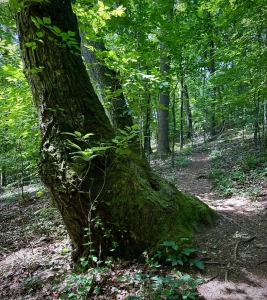
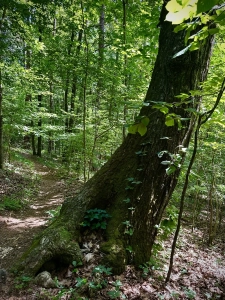
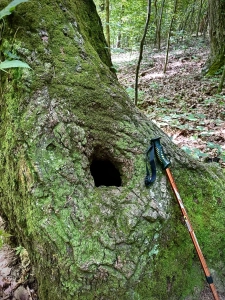
Startled by this bigfoot oak tree at Lake Guntersville State Park in 2018, I returned for a fresh photo on October 23, 2025, but could not find it. Where did it go? When might it reappear? Have any park guests been reported missing?


Grandson Sam and I risked life and limb under this creepy crawling oak carcass on Monte Sano State Park.


Most of these apparitions appeared when I’ve been alone. Would they have ventured forth were I sauntering with others? Perhaps being alone signals a confidence and power of which I was not aware. To be honest, I see far more when I wander alone. So much is hidden in plain sight. Companions can be a distraction…or at other times a visual catalyst. I embrace the wisdom in this poster. As a lifelong certifiable introvert, I accept the power and comfort of being alone!


I know that I am never truly alone in Nature. A mature white oak offered a branch stub stegosaurus head to greet me as I drifted past!


Among the strangest sights I’ve encountered are the bearded tupelo men in the Goldsmith-Schiffman Wildlife Sanctuary tupelo swamp.


Wherever my life and living have taken me, I’ve cherished the beauty, magic, wonder, awe, and inspiration of woodland Nature. I find myself again and again.


Contrary to the dark Halloween theme, I prefer the mood and tone of Robert Frost’s Stopping By Woods on a Snowy Evening:

The woods are lovely, dark and deep,
But I have promises to keep,
And miles to go before I sleep,
And miles to go before I sleep.

Closing


I accept the challenge of distilling these Brief-Form Posts into a single distinct reflection, a task far more elusive than assembling a dozen pithy statements.

I cannot offer a quote more poignantly apropos than Washington Irving’s from The Legend of Sleepy Hollow:

In the dark shadow of the grove, on the margin of the brook, he beheld something huge, misshapen, black, and towering. It stirred not, but seemed gathered up in the gloom, like some gigantic monster ready to spring upon the traveler.


Nature’s special treats await our discovery, our understanding, and our interpretation!


Subscribe to my free weekly photo essays (like this one) at: http://eepurl.com/cKLJdL

Hiking the Homesite Trail at Rocky Gap State Park


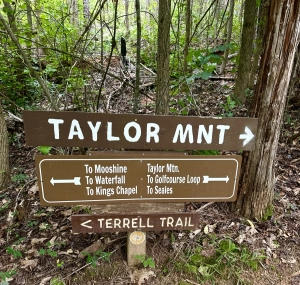
On July 29, 2025, my older Alabama grandson, Jack (17), and I hiked the Evitts Homestead Trail on Maryland’s Rocky Gap State Park. We ascended 1,100 feet from Lake Habeeb to Evitts’ 2,200-foot summit. I wanted to share the magic of the place with Jack and rekindle my aging memories. Still in high school, I had explored Rocky Gap Canyon and Evitts Mountain before authorities created the state park and built the dam. We discovered the beauty, magic, wonder, and awe of Nature hidden in plain sight along the trail.


Those youthful excursions are now two generations past. I was about 17; Jack’s age. He is my daughter’s son. Time marches on at 24 hours per day, just as it did 57 years ago, yet its relative pace accelerates. I heard my maternal grandmother say more than once, “The older I get, the faster time passes.” I thought she was old and confused; I now recognize her wisdom.


Ascending the Trail: Moss, Ferns, and Fungi


I recognize another truism: the older I get the more challenging trails become. I hiked this trail five years ago, prior to a series of surgeries: shoulder replacement; triple bypass; bilateral inguinal hernia repair; two total knee replacements; and kidney stone blasting. Add in a minor stroke. It’s no surprise that my recent hike proved tougher. I view summitting Evitts as a major recovery benchmark…and a family milestone. This time next year, Jack will have departed for college and a demanding and rewarding life journey. I pray that he carries the memory of his Evitts hike with Pap into a bright and promising future.

The trail is an old jeep path, rising at a steady rate. I noticed greater erosion and rutting since my 2020 ascent. Park crews are not controlling surface water flow. Instead, runoff is in control, seeking and finding a route with no concern for trail integrity. I saw no recent evidence of constructed water bars, broad-based dips, or other measures to usher overland flow from the trail. Without immediate attention, the trail will degrade beyond easy repair. Ongoing road maintenance cannot be ignored.


Okay, so much for critiquing park trails and their management. Across my decades of wandering eastern forests, moss is ubiquitous. Pincushion moss embraces tree bases and often covers rocks (right).


This patch of broom forkmoss welcomed the dappled sunshine penetrating the forest canopy. An online dictionary defines moss as a small flowerless green plant that lacks true roots, growing in damp habitats and reproducing by means of spores released from stalked capsules.


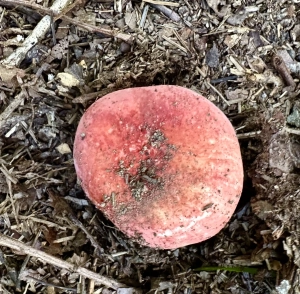
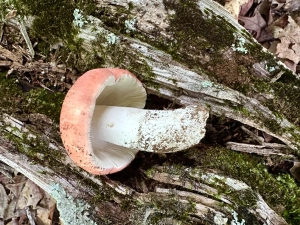
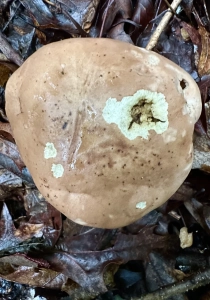
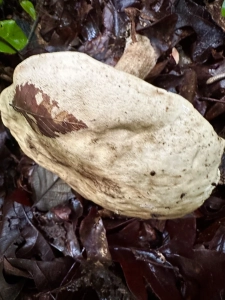
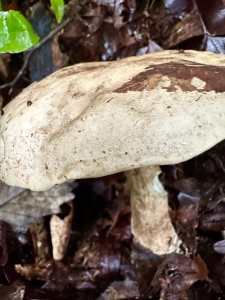
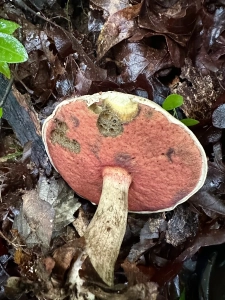
Ample rain during the early summer stimulated prodigous mushroom growth. Mushrooms are the reproductive (spore-producing) structures of common fungi in our eastern foressts. Fungi include tree disease organisms, decomposers, and mycorhizza. Two-colored bolete is a beautiful polypore mycorhizzal fungus, this one with a pink/red umbrella and a smooth cream/yellow undersurface. Although some boletes are choice edibles, I haven’t achieved a necessary level of confidence in distinguishing among the group members. This bolete is symbiotically engaged with oak species.


A distinctly polypore underside.


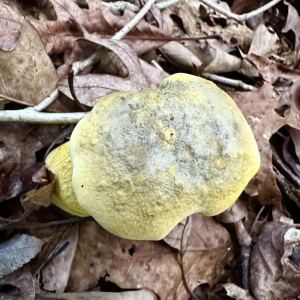
I like the moniker of yellow American blusher, another mycorhizzal fungus associated with oak. this one is gilled. Mushrooms of the Southeast offers an explanation of what prevents me from expanding my culinary foraging to species about which I am not 100 percent certain:

In North America Amanita rubescens has historically been considered edible and relatively distinctive; however, since it is related to some of the most toxic mushrooms, we cannot recommend eating it.

Life in our eastern upland hardwood forests is amazingly complex.


Yellowing rosy ruella, or brittlegills, is a gilled Russula mycorhizza fungus, common in hardwood forests. Considered edible but seldom occurs in numbers sufficient to collect.


iNaturalist identified these tiny golden mushrooms as clubs and corals, genus Clavulinopsis. Mushrooms of the Southeast steered me to golden fairy club, C. laeticolor, but the book image differed somewhat from my photographs. One reference declared this fungus a mycorhizza; another said that it’s a forest litter decomposer.


I am a mushroom novice. My fascination with their unique kingdom of life grows with each woodland Nature excursion, where I learn how little I know.

White-pored chicken-of-the-woods (or sulphur shelf) is a decay fungus at home on both living trees, primarily oak, or dead individuals of the same host group. The speices is a choice edible when young and tender, like this one growing at the trail edge.


Were I wandering closer to home other than on a state park, where the rule is to take only what you bring, I would have made several meals from this perfect specimen! I wondered how many more flourished within 100 feet of our six-mile circuit.


Umbilicaria mammulata, smooth rock tripe, is among the largest lichens in the world. The species forms large sheets (rarely, up to 2′ across), like aged curling leather sheets, on cliffs and boulders. This patch is on a sandstone boulder. The sheets are attached at only a single point (hence the genus Umbilicaria). They are reddish- or grayish-brown on top, and velvety black below.


From an online source regarding edibility:

An hour of boiling is said to convert this leather-like lichen into an edible source of protein, palatable by itself or when added to soup or stews. Soak for 2-3 hours first to remove acids that, while not dangerous, may send you running to the bathroom in a hurry. Even after all this soaking and boiling, you’d better be good and hungry—many say it still tastes like shoe leather.

I will not be adding this species to my foraging list!


I recall moist forests in Maryland, Pennsylvania, New York, and New Hampshire, all former woodlands haunts where I’ve rambled, covered with common bracken fern. I noticed only this single specimen.


Our journey covered the distance with as much haste as I could muster. I would do it again on a mid-60s-degree October day, devoting hours to extensive study and exploration. Drafting this narrative reminds me to saunter future wanderings with greater attention to full discovery, seeking more than a surficial inventory of what lay hidden in plain sight.


Ascending the Trail: Turtles, Millipedes, Invasive Plants, and Sign-Eating Tree!


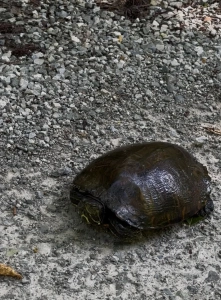
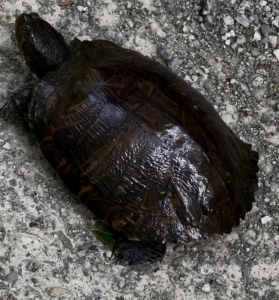
An eastern box turtle hurried across the trail. Yes, he moved quickly, not at an exagerated turtle’s pace.


I captured his rapid gate in this 21-second video.


An American giant millipede compelled us to take a closer look.


A dense growth of mile-a-mintute-vine infesting at least an acre of forest, stopped me cold.


A Penn State Cooperative Extension online resource tells the tale of this aggressive invasive:

Mile-a-minute (Persicaria perfoliata) is a trailing vine with barbed stems and triangular leaves. In contrast to other invasive vines, mile-a-minute is an herbaceous annual, meaning it dies each fall and new plants grow from germinating seeds in the spring. Originally from India and East Asia, this species was first reported in York County, Pennsylvania, in the 1930s in contaminated nursery soil. Mile-a-minute is listed as a “Class B” noxious weed by the State of Pennsylvania, a designation that restricts sale and acknowledges a widespread infestation that cannot feasibly be eradicated. The dense foliage of this invasive weed blankets and slowly suffocates native vegetation, making it extremely destructive and persistent despite being an annual plant.


I wondered whether park managers are aware of this infestation. When we returned to the Lake Habeeb dam I told a maintenance worker of our discovery. He seemed concerned. Enough to take action?

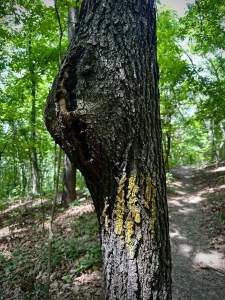
I always remain alert for tree form oddities and curiosities, including sign-consuming black cherry trees!


I love the Central Appalachian forests of my childhood and early professional days. Rocky Gap State Park drew memories, warm and fuzzy, from more than five decades ago. At age 74, I can say with confidence and satisfaction that those were the good old days…and that blessedly these, too, are the good old days. Life was…and is…good!


Thoughts and Reflections


I revisited my October 10/15/20 post from the prior Evitts Mountain ascent: https://stevejonesgbh.com/2020/10/15/a-tough-hike-and-deep-reward-at-rocky-gap-state-park-in-western-maryland/

I offered three lessons from my late September, 2020, solitary trek:

  • The extraordinary Nature of place is indelibly written in my head, heart, mind, body, and soul. I am a creature and product of place… place defined by Nature.
  • Countless days in Nature define my life across these 69 years — I look, see, and feel Nature’s beauty, magic, wonder, and awe… and find immeasurable lift.
  • My connection to Nature is unmistakably SACRED!

Today, five years later, I would modify only minimally: My connection (across these 74 years) to Nature (and Family) is unmistakably SACRED!

Inhale and absorb Nature’s elixir. May Nature Inspire, Inform, and Reward you!


Note: All blog post images created & photographed by Stephen B. Jones unless otherwise noted. Please circulate images with photo credit: “©2025 Steve Jones, Great Blue Heron LLC. All Rights Reserved.”

I am available for Nature-Inspired Speaking, Writing, and Consulting — contact me at steve.jones.0524@gmail.com


Reminder of my Personal and Professional Purpose, Passion, and Cause


If only more of us viewed our precious environment through the filters I employ. If only my mission and vision could be multiplied untold orders of magnitude:

Mission: Employ writing and speaking to educate, inspire, and enable readers and listeners to understand, appreciate, and enjoy Nature… and accept and practice Earth Stewardship.

Vision:

  • People of all ages will pay greater attention to and engage more regularly with Nature… and will accept and practice informed and responsible Earth Stewardship.
  • They will see their relationship to our natural world with new eyes… and will understand more clearly their Earth home.

Tagline/Motto: Steve (Great Blue Heron) encourages and seeks a better tomorrow through Nature-Inspired Living!


Steve’s Four Books


I wrote my books Nature Based Leadership (2016), Nature-Inspired Learning and Leading (2017), Weaned Seals and Snowy Summits: Stories of Passion for Place and Everyday Nature (2019; co-authored with Dr. Jennifer Wilhoit), and Dutton Land & Cattle: A Land Legacy Story (2023) to encourage all citizens to recognize and appreciate that every lesson for living, learning, serving, and leading is either written indelibly in or is powerfully inspired by Nature. All four of my books present compilations of personal experiences expressing my deep passion for Nature. All four books offer observations and reflections on my relationship with the natural world… and the broader implications for society. Order any from your local indie bookstore, or find them on IndieBound or other online sources such as Amazon and LifeRich.

I began writing books and Posts for several reasons:

  • I love hiking and exploring Nature
  • I see images I want to (and do) capture with my trusty iPhone camera
  • I enjoy explaining those images — an educator at heart
  • I don’t play golf!
  • I do love writing — it’s the hobby I never needed when my career consumed me
  • Judy suggested my writing is in large measure my legacy to our two kids, our five grandkids, and all the unborn generations beyond
  • And finally, perhaps my books and Blogs could reach beyond family and touch a few other lives… sow some seeds for the future
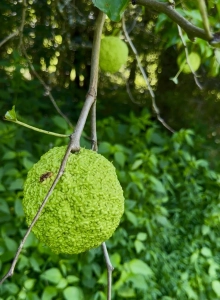


Part One 175-Year-Old C&O Canal Pawpaw Tunnel: Where Nature Meets Engineering and History
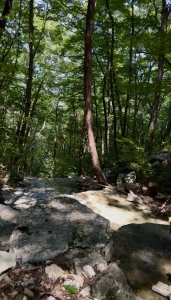
I once again visited the Pawpaw Tunnel on the Chesapeake and Ohio (C&O) National Historical Park on July 28, 2025. Alabama grandsons, Jack (17) and Sam (11), accompanied me. I grew up 30 miles upstream along the Potomac River in Cumberland, Maryland. I wanted the boys to experience the Nature, history, and engineering marvel of the tunnel and canal. We walked east through the 3,600-foot tunnel, traversed a mile beyond it, and then hiked the Tunnel Hill Trail over the mountain to return to the parking area. Part One (this Post) carries us through the tunnel; Part Two takes us back over the Tunnel Hill Trail.


The Tunnel


Jack and Sam stand above the west end of the tunnel, completed in 1850 (175 years ago!). The structure has stood the test of time. The east end is a pinprick of distant light. Midway through, the darkness is near total.
 

Here is my 59-second video at the west (upstream) entrance.
 

I’ve been to the tunnel scores of times across my seven decades. Camping with my parents and siblings beside the tunnel-tender’s canal-era house adjacent to the river. Fishing on the bank, often at night for catfish. I recall once Dad and me holding frantically to tent poles during a fierce storm that threatened to tear away our shelter. Cooking chili on a Coleman stove. Breakfasts of sauage, eggs, and hashbrowns. The list of indelible memories reaches endlessly. My experiences from those formative years shaped me, sculpted my lifetime addiction to Nature…propelled me to a forestry degree, a meaningful career committed to natural resources sustainability, and a retirement dedicated to:

Employing writing and speaking to educate, inspire, and enable readers and listeners to understand, appreciate, and enjoy Nature… and accept and practice Earth Stewardship.


Because I neglected to photograph the tunnel’s interior in July, I borrowed a photo I took in November 2019.

C&O Canal


The east (downstream) end of the tunnel is forever etched in my memory. Immigrant laborers with picks and shovels, black powder, wheelbarrows, drag-sleds, and horse/mule carts began construction in 1836; the first boats passed through 14 years later. Crews worked from both ends and from two 360-foot vertical shafts. I’d like to visit in 2036, the centennial anniversary of pickaxes first striking the shale. Eleven years hence takes me to age 85. What are the chances of me retaining life, health, vigor, endurance, and mental acuity for another 4,015 sunrises? There is no guarantee even that I or any one of us will witness tomorrow’s dawning. I take comfort that I will seek the goal one step after another, visiting special places and enjoying everyday Nature as I’m able.


This photo from the National Park Service Pawpaw Tunnel brochure during operations more than 100 years ago shows little difference from today’s image. The tunnel is timeless, except that the decades have moved beyond it. I can’t imagine much change between now and 2036.
 

Interestingly, the brochure notes:

In the span of a lifetime, canals faded from beacons of a dawning age to quaint reminders of a bygone era. From 1828 to 1850 thousands of immigrants found work–and hope for a new life–building a canal. Families worked and lived on the long, narrow boats, and children often tended the mules. 

Nature doesn’t care about the blossoming and disappearance of technologies, the tough life of hopeful humans tending the boats, or the miserable fights among immigrant laborers. Moss grows on the dripping sidewalls at the tunnel exit, shrubs sprout on the shale scree, and spring rains temporarily flow in the long-abandoned channel. Decomposers relentlessly attack the wooden decking. My ken is to follow the process over the fleeting years of my lifetime, when little of the tunnel’s countenance has changed from the quaint reminder I relish.


I recorded this 53-second video at the east portal.


I ponder whether Jack and Sam will catch the fever enough to visit when I and my Pawpaw Tunnel Blog are little more than their own quaint reminder. I wonder who else will care. From the east end exit, the boardwalk stretches through the cut into the distance. How far into the decades will my passion persist?


Those thoughts accompanied me as the boys and I sauntered beyond the tunnel and its deep cut through the shale. Perhaps a better verb suggests that my ruminations haunted me. Lift lock 66, numbered consecutively upstream from the Georgetown terminus, captured our interest and spurred our imagination. Like the tunnel, the lock resonated with faint echoes of the thousands of long-gone souls who worked, lived, played, and prayed along the canal. This was the future…fading to a quaint reminder. Nature lives on, finding and claiming its place. My role in leading our trek, planting seeds for tomorrow in the boys, and probing was to encapsulate our experiences in this weekly photo essay.


I recorded a 58-second lift-lock video, chronicling Nature finding and claiming its place.

Nothing in Nature is static, including the works of man. Were the 184.5 miles of the canal not preserved as a National Historical Park, Nature would hve revegetated the towpath, canal, infrastructure, and associated memories to obscurity. I recall celebrating in 1971, when the tireless efforts of Supreme Court Justice William O. Douglas prompted Congress and the President to secure protection and preservation for the important recreational and environmental landmark. There was talk of converting the landmark to a Blue Ridge Parkway kind of roadway. Douglas penned a seminally persuasive letter to the Washington Post:

I feel that if your editor did [walk the towpath with Douglas], he would return a new man and use the power of your great editorial page to help keep this sanctuary untouched. … He would see strange islands and promontories through the fantasy of fog; he would discover the glory there is in the first flower of spring, the glory there is even in a blade of grass; the whistling wings of ducks would make silence have new values for him. Certain it is that he could never acquire that understanding going 60, or even 25, miles an hour.

I was 20 years old, a junior in forestry school, and already addicted to the magic of the C&O Canal. My memories run deep and indelibly for this sacred (to me) recreational and environmental landmark!

I will repeat the circuit another time, when I return, preferably during the dormant season. Like so many of my special places and the everyday Nature that defines them, the C&O Canal and Pawpaw tunnel extend tendrils deep into my mind, body, heart, soul, and spirit. Where do those intense feelings and vivid memories go when we are called Home? Perhaps fragments will live on through my children, Matt and Katy, and in Jack and Sam, Katy’s boys. Robert Louis Stevenson nailed the sentiment:

Don’t judge each day by the harvest you reap but by the seeds that you plant.


Thoughts and Reflections


I offer these observations:

  • Nature is a mosaic of place, time, and use; every landscape reflects the past and portends the future. (Steve Jones)
  • Nature lives on, finding and claiming its place. (Steve Jones)
  • My experiences from those formative years shaped me, sculpted my lifetime addiction to Nature…propelled me to a forestry degree, and a meaningful career committed to natural resources sustainability. (Steve Jones)

Inhale and absorb Nature’s elixir. May Nature Inspire, Inform, and Reward you!


Note: All blog post images created & photographed by Stephen B. Jones unless otherwise noted. Please circulate images with photo credit: “©2025 Steve Jones, Great Blue Heron LLC. All Rights Reserved.”

I am available for Nature-Inspired Speaking, Writing, and Consulting — contact me at steve.jones.0524@gmail.com


Reminder of my Personal and Professional Purpose, Passion, and Cause


If only more of us viewed our precious environment through the filters I employ. If only my mission and vision could be multiplied untold orders of magnitude:

Mission: Employ writing and speaking to educate, inspire, and enable readers and listeners to understand, appreciate, and enjoy Nature… and accept and practice Earth Stewardship.

Vision:

  • People of all ages will pay greater attention to and engage more regularly with Nature… and will accept and practice informed and responsible Earth Stewardship.
  • They will see their relationship to our natural world with new eyes… and will understand more clearly their Earth home.

Tagline/Motto: Steve (Great Blue Heron) encourages and seeks a better tomorrow through Nature-Inspired Living!


Steve’s Four Books


I wrote my books Nature Based Leadership (2016), Nature-Inspired Learning and Leading (2017), Weaned Seals and Snowy Summits: Stories of Passion for Place and Everyday Nature (2019; co-authored with Dr. Jennifer Wilhoit), and Dutton Land & Cattle: A Land Legacy Story (2023) to encourage all citizens to recognize and appreciate that every lesson for living, learning, serving, and leading is either written indelibly in or is powerfully inspired by Nature. All four of my books present compilations of personal experiences expressing my deep passion for Nature. All four books offer observations and reflections on my relationship with the natural world… and the broader implications for society. Order any from your local indie bookstore, or find them on IndieBound or other online sources such as Amazon and LifeRich.

I began writing books and Posts for several reasons:

  • I love hiking and exploring Nature
  • I see images I want to (and do) capture with my trusty iPhone camera
  • I enjoy explaining those images — an educator at heart
  • I don’t play golf!
  • I do love writing — it’s the hobby I never needed when my career consumed me
  • Judy suggested my writing is in large measure my legacy to our two kids, our five grandkids, and all the unborn generations beyond
  • And finally, perhaps my books and Blogs could reach beyond family and touch a few other lives… sow some seeds for the future